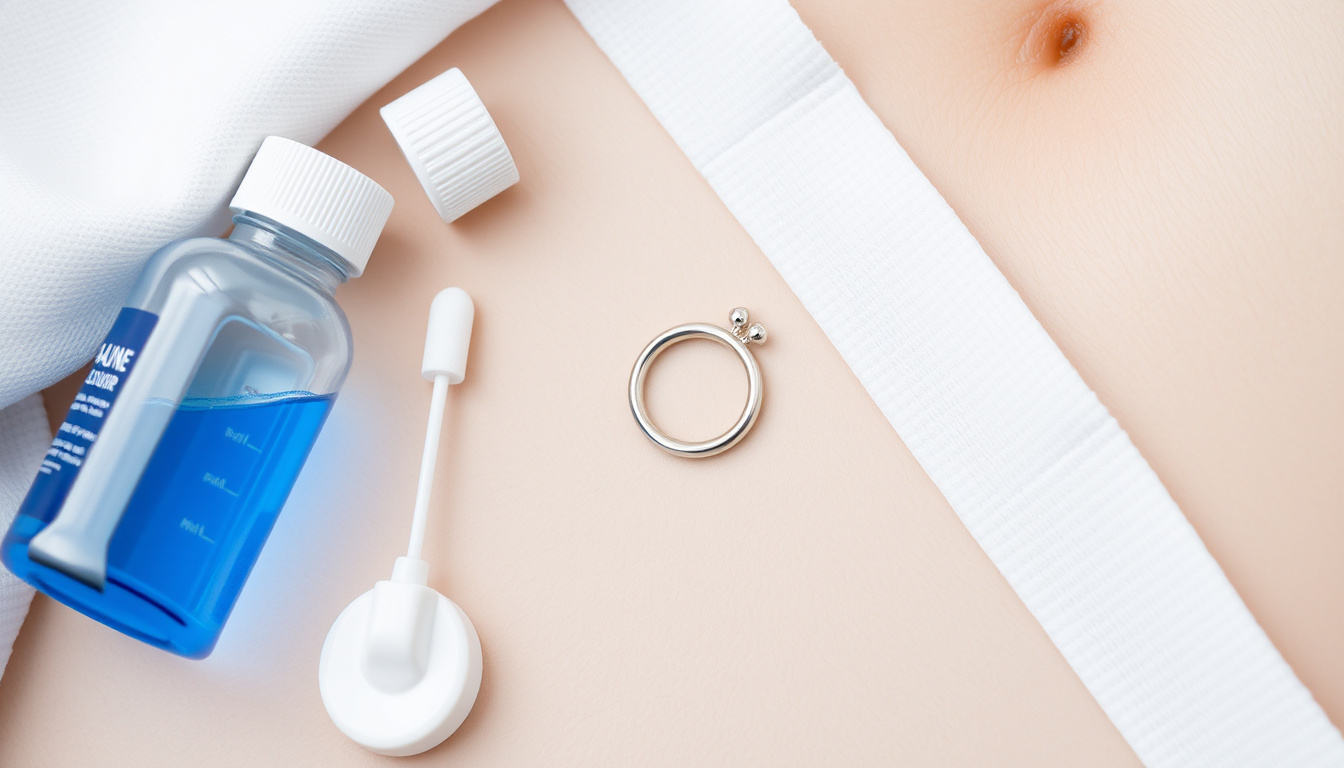
Getting your belly button pierced feels like a rite of passage — a small, shiny decision with a surprisingly long recovery period attached. The healing process for a belly piercing routinely stretches six months to a full year, according to Cleveland Clinic Health Essentials, which puts it in the slow lane of body modifications.
Average healing time: 6 to 12 months ·
Pain rating: 4 out of 10 ·
Infection risk: 10-20% ·
Popularity: One of the most common piercings
Quick snapshot
- 6–12 months (Cleveland Clinic Health Essentials)
- Stages: initial wound healing, maturation (Cleveland Clinic Health Essentials)
- Avoid swimming during healing (Cleveland Clinic Health Essentials)
- Infection 10-20%
- Rejection possible
- Allergy to metals
- Pregnancy
- Diabetes
- Keloid-prone skin
Five key facts at a glance — one pattern: the health reality of belly piercings is more complex than the jewelry suggests.
A belly piercing is not as simple as picking a ring. Expect a year-long healing regimen instead of a short-term fashion accessory.
| Category | Detail |
|---|---|
| Piercing type | Navel (belly button) |
| Common jewelry | Curved barbell, banana ring |
| Healing time | 6–12 months |
| Pain level | 4/10 average |
| Infection risk | 10-20% |
How painful is a belly piercing?
The short answer: the actual piercing lasts only a few seconds, and most people describe the sensation as a sharp pinch. On a scale of 1 to 10, the average pain rating hovers around 4/10, as documented by WebMD.
The catch: the piercing itself is the easiest part. The real test comes during healing, when tenderness, garment friction, and accidental snags can cause intermittent discomfort for months.
What are the top 3 most painful piercings?
- Nipple piercings — often cited as the most intense due to dense nerve endings
- Cartilage (ear) piercings — the tough tissue means more pressure during insertion (Healthline)
- Dermal anchor piercings — the subcutaneous depth creates sustained discomfort
Belly piercings do not rank among the top three most painful, though individual pain tolerance plays a major role.
Pain comparison to other piercings
Compared with earlobe (1-2/10) or tongue piercings (3/10), a navel piercing sits in the moderate range. It is less painful than cartilage or genital piercings but more noticeable than soft-tissue locations. The WebMD guide on belly piercing notes that the navel’s thin skin and relative lack of dense nerve endings make the initial piercing fairly tolerable.
The pain rating of 4/10 matters less than the healing duration. Someone considering a belly piercing should weigh six to twelve months of aftercare against a few seconds of sharp pinch — not the other way around.
The implication: pain should not be the deciding factor. The healing commitment is the real consideration.
What is the disadvantage of a belly piercing?
Infections, rejection, and scarring are the three main drawbacks that every prospective piercer should understand.
Health risks
Localized skin infections are the most common complication of body piercings, according to VCU University Student Health Services. A belly button piercing is more prone to irritation than some other locations because of constant movement — bending, sitting, clothing rubbing against it.
Thick yellow pus, increasing pain, and heat at the site are signs of infection that go beyond normal healing, as described by Bodymod. NHS guidance on infected piercings lists swelling, warmth, marked redness, or darkening as warning signs that warrant professional evaluation.
Long healing time
With typical recovery ranging from six months to one year — and sometimes up to 18 months, per Cleveland Clinic — belly piercings demand more patience than almost any other common piercing. During this period, the piercing can remain easily irritated.
Scarring
If the jewelry is removed or the piercing is rejected, the navel area can develop noticeable scar tissue. People prone to keloids — raised, thick scars that extend beyond the original wound — face a higher risk of permanent disfigurement.
The aesthetic reward of a belly piercing comes with a higher complication rate than earlobe or eyebrow piercings because of the navel’s anatomy and constant friction. Every year of wearing the jewelry means continuous aftercare attention.
How long do belly button piercings take to heal?
A new belly piercing goes through two distinct healing stages, and the full process is measured in months, not weeks.
Healing stages
- Stage 1: Initial wound healing (weeks 1–6). The skin closes around the jewelry. Redness, mild swelling, itching, crusting, and minor bleeding can all be normal during this period, according to Essential Beauty.
- Stage 2: Maturation (months 2–12+). The deeper tissue strengthens. Even once the external opening looks healed, the internal channel remains vulnerable. Cleveland Clinic notes that belly button piercings can remain irritated for months and that prolonged healing is common.
Aftercare do’s and don’ts
- Do: Clean twice daily with mild, fragrance-free, alcohol-free soap and saline solution, as recommended by Live By The Sword Tattoo.
- Do: Wash your hands thoroughly before touching the piercing (Live By The Sword Tattoo).
- Don’t: Change jewelry too soon — wait until the full healing period has passed.
- Don’t: Swim in pools, hot tubs, lakes, or oceans during healing.
- Don’t: Wear tight or rough clothing that rubs against the piercing. WebMD advises that loose-fitting clothing reduces friction and trauma in the first days.
- Don’t: Touch, twist, or play with the jewelry. Pierced Universe notes that handling the piercing disrupts healing and raises infection risk.
The six-month mark is not an expiration date on aftercare. The Association of Professional Piercers advises that gentle cleaning and minimizing irritation should continue until the channel is fully mature — and that may take a full year.
The pattern: the longer healing period for belly piercings is not a sign something went wrong. It is the normal timeline. What becomes a problem is when aftercare routines get abandoned at month three because the piercing looks fine on the outside.
What does a belly ring symbolize?
Belly rings are a jewelry choice that carries different meanings depending on context.
In many cultures — particularly in South Asian traditions — the navel piercing held cultural and aesthetic significance long before the Western fashion boom of the 1990s. Today, a belly ring signals personal style and body confidence more than any fixed cultural meaning, though a red, itchy rash spreading beyond the piercing can indicate an irritation or allergy, as warned by the Association of Professional Piercers.
Why this matters: the symbolic weight is personal, but the health implications are universal. A belly ring that causes allergic reaction or keloid scarring changes the meaning from fashion statement to medical issue.
Who shouldn’t get a belly piercing?
Medical contraindications
- Diabetes: Poor circulation and slower wound healing increase infection risk and complication rates.
- Keloid-prone skin: If you have a history of keloids — thick, raised scars — a navel piercing may lead to permanent scar tissue.
- Pregnancy: As the abdomen expands, the piercing can stretch, migrate, or tear. Most practitioners recommend removing the jewelry during pregnancy.
- Autoimmune disorders or conditions that require immunosuppressant medications can delay healing significantly.
Lifestyle factors
Regular contact sports, occupations involving heavy lifting or frequent bending, and daily wear of high-waisted or tight clothing can all interfere with healing. Healthline notes that belly button piercings are more prone to irritation from movement and clothing than other piercing locations.
The trade-off: even with perfect aftercare, some bodies simply reject piercings. The Association of Professional Piercers acknowledges that between anatomy, lifestyle, and individual healing response, not everyone is a good candidate for a navel piercing.
Confirmed facts vs. what’s unclear
Confirmed facts
- Belly piercings take 6–12 months to fully heal (Cleveland Clinic).
- Infection is a possible complication, with localized infections being the most common body-piercing complication (VCU University Student Health Services).
- Pain is moderate and short-lived (4/10 average, per WebMD).
- Conservative treatment for minor infections includes warm compresses and topical antibiotics when indicated (StatPearls / NCBI Bookshelf).
- Redness, itching, crusting, and mild inflammation can be normal and are not automatically infection (Essential Beauty).
What’s unclear
- Exact pain level varies by individual, and reported averages may not apply to everyone.
- Long-term effects of navel piercings on skin elasticity are not well documented in peer-reviewed literature.
- Cultural symbolism differs significantly across communities, and no single meaning applies universally.
- Long-term jewelry wear’s impact on scar formation and tissue change remains understudied.
Expert perspectives
“Navel piercings can take a long time to heal, with typical recovery often described as six months to one year and sometimes up to 18 months.”
— Cleveland Clinic Health Essentials (tier-1 medical institution)
“Belly button piercings can be more prone to irritation from movement, clothing, and anatomy than some other piercing locations.”
Frequently asked questions
Does a belly piercing hurt?
Most people report a sharp pinch lasting seconds, rated around 4 out of 10 on average. The discomfort during healing can be more persistent than the initial piercing itself.
How do I know if my belly piercing is infected?
Signs include thick yellow pus, increasing pain, heat at the site, swelling, and marked redness or darkening. Redness, itching, and clear crusting can be normal — but if the symptoms worsen over several days, consult a healthcare provider. NHS guidance recommends seeking medical advice if the area feels hot or shows spreading redness.
Can I change my belly ring after 3 months?
No. Belly piercings generally need 6–12 months to fully heal. Changing jewelry too early can disrupt the internal channel, leading to irritation or closure.
What jewelry is best for a new belly piercing?
A curved barbell or banana ring made of surgical steel, titanium, or niobium. Avoid cheap metals containing nickel, which can cause allergic reactions. The Association of Professional Piercers advises against low-quality jewelry that can irritate the healing channel.
Does a belly piercing close up if I remove the ring?
Yes, especially in the first year. Even after full healing, some piercings shrink or close over time if left without jewelry.
Can I sleep on my stomach after getting a belly piercing?
It is best to avoid stomach sleeping for the first several weeks. Pressure and friction can irritate the new piercing and slow healing.
How should I clean my belly piercing?
Wash your hands first. Use mild, fragrance-free, alcohol-free soap and a saline solution twice daily. Pat dry with a clean paper towel. The Association of Professional Piercers emphasizes gentle cleaning — no twisting, no harsh chemicals.
Related reading
Related stories





Richard Vane is Senior Reporter at MorningTimes.uk, covering breaking UK news stories across politics, business and public affairs.