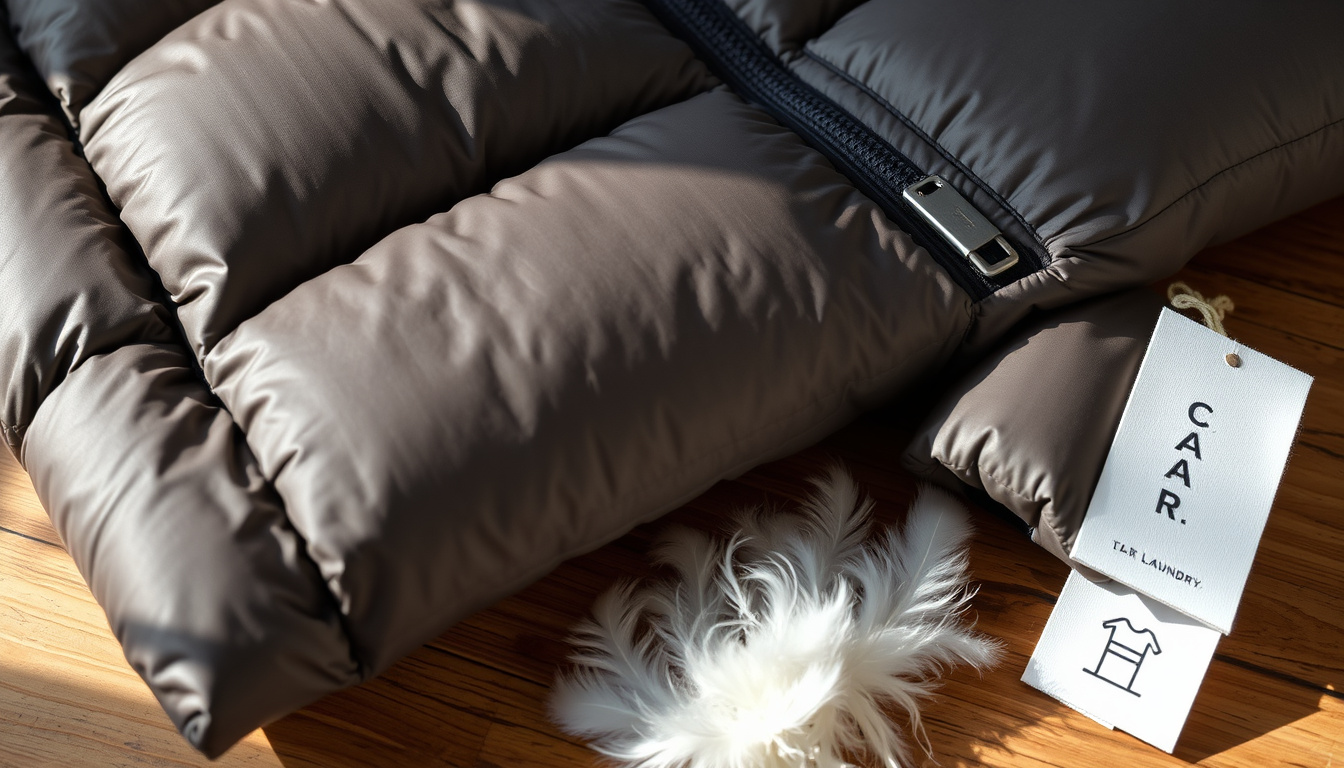
Anyone who’s faced a damp British winter knows the difference between a jacket that looks warm and one that actually keeps you warm. A good down jacket is the latter — light enough to pack away, yet capable of trapping enough heat to see you through sub-zero mornings.
Typical fill power range: 550 to 900 (cubic inches per ounce) ·
Average lifespan with proper care: 10 to 15 years ·
Weight ratio vs synthetic for same warmth: Down is 30-50% lighter ·
Key insulation mechanism: Trapped air pockets from goose or duck plumage
Quick snapshot
- Down jackets use goose or duck plumage for insulation (Wikipedia (reference work))
- Fill power measures loft and correlates with warmth (Wikipedia (reference work))
- Wet down loses nearly all insulating ability (Millets (UK outdoor retailer)) (Wikipedia (reference work))
- Proper care extends lifespan to 10–15 years (GO Outdoors (UK outdoor retailer)) (Wikipedia (reference work))
- Exact temperature rating varies by activity level and wind chill (Mammut (Swiss outdoor brand))
- The precise rate of thermal performance loss from repeated wetting is not precisely quantified (Millets (UK outdoor retailer)) (Mammut (Swiss outdoor brand))
- The exact drying time for down jackets is not standardized and depends on machine and load (GO Outdoors (UK outdoor retailer)) (Mammut (Swiss outdoor brand))
- The degree to which water-resistant down treatments degrade over time is not well-documented (Millets (UK outdoor retailer)) (Mammut (Swiss outdoor brand))
- Wash every 1–2 seasons or when visibly soiled (Montane (UK outdoor brand))
- Reproof when water stops beading on the shell (Millets (UK outdoor retailer)) (Montane (UK outdoor brand))
- Replace when loft is permanently lost or shell fabric tears (Montane (UK outdoor brand))
- Water-resistant down treatments becoming standard in premium models
- Improved synthetic blends closing the warmth-to-weight gap
- Traceable down and ethical sourcing gaining traction among UK buyers
Here is a quick reference of key facts about down jackets.
| Insulation material | Goose or duck down plumage |
|---|---|
| Fill power range | 550 – 900 cu in/oz |
| Typical weight | 200 – 600 grams |
| Average lifespan | 10 – 15 years |
| Wet performance | Loses 90%+ insulation when saturated |
What is a down jacket?
A down jacket is an insulated coat filled with the soft, fine under-feathers of geese or ducks. These tiny feathers, called down, create millions of air pockets that trap body heat and keep the wearer warm without the bulk of traditional heavy coats. Unlike synthetic insulation, which uses man-made fibers, down is a natural material prized for its exceptional warmth-to-weight ratio.
How down insulation works
- Down clusters trap air in small pockets, creating a thermal barrier (Wikipedia (reference work))
- The more air trapped, the warmer the jacket — this is why loft matters
- Body heat warms the trapped air, which stays close to the skin
Down insulation is essentially a portable air-trapping system. Each cluster of down filaments intertwines to form a three-dimensional structure that holds warm air in and keeps cold air out. That’s why a jacket filled with 600-fill-power down can feel warmer than a synthetic jacket twice its weight.
What is fill power?
- Fill power measures how many cubic inches one ounce of down occupies when lofted (Wikipedia (reference work))
- Range: 550 (entry-level) to 900 (premium) cubic inches per ounce
- Higher fill power means more warmth for less weight and better compressibility
Fill power is the single most important spec for a down jacket. A 900-fill jacket packs smaller and feels lighter than a 550-fill jacket offering the same warmth. For UK conditions, 600–750 fill power hits the sweet spot for everyday winter use, while 800+ fill suits alpine or expedition needs.
Types of down: goose vs duck
- Goose down typically has larger clusters and higher fill power potential
- Duck down is more affordable and widely available but can have a slight odour when wet
- Both provide excellent insulation; the difference is marginal at the same fill power rating
The implication: for everyday UK use, a 650-fill duck down jacket is a practical, cost-effective choice that rivals premium goose down in warmth.
Why do they call it a down jacket?
Origin of the term ‘down’
- The word “down” comes from the Old Norse “dúnn,” meaning soft feathers (Wikipedia (reference work))
- Down refers specifically to the fine under-feathers beneath the outer contour feathers of waterfowl
- The term distinguishes the jacket from those filled with synthetic fibres or solid feathers
Birds have two feather layers: the tough outer feathers you see and the soft, fluffy under-layer close to the skin. That under-layer is down. Jackets filled with this material are called down jackets to differentiate them from “synthetic” or “fleece” jackets that use manufactured insulation. For those interested in high-end garment terminology, see our Louis Vuitton: Price, Origin & Who It’s For guide.
Down vs other jacket types
- Down jacket: natural fill, lightweight, warm, poor when wet
- Synthetic jacket: man-made fibres, heavier, less warm per weight, performs well when wet
- Fleece jacket: open weave, breathable, not windproof, minimal insulation in still cold
The implication: calling a jacket “down” tells you the fill material is natural plumage. That signals a specific set of trade-offs — superior warmth and packability, paired with a need for careful handling in wet weather.
What is the difference between down and puffer jackets?
Many people use “down jacket” and “puffer jacket” interchangeably, but they are not the same thing. A puffer jacket describes the quilted, baffled construction style, while a down jacket refers to the fill material. A puffer can be filled with down or synthetic insulation — and the performance difference is significant.
Down vs synthetic fill
- Down: natural plumage, lighter, warmer per gram, packs smaller (Millets (UK outdoor retailer))
- Synthetic: polyester fibres, heavier, less warm per gram, retains warmth when wet
- Down requires a waterproof shell for wet conditions; synthetic does not
Which is warmer, a puffer or a down jacket?
Down jackets are generally warmer than puffer jackets of the same weight because down has a higher warmth-to-weight ratio. However, when wet, down loses insulation, while synthetic puffers retain warmth. So for dry cold, down is warmer; for damp conditions, synthetic may be better.
Warmth and weight comparison
- Down is 30–50% lighter than synthetic for the same warmth level
- A typical 650-fill down jacket weighs 350–500 grams; a comparable synthetic puffer weighs 500–750 grams
- Down compresses to about half the packed volume of synthetic
The trade-off: if you walk to the train station in dry 2°C weather, a down jacket is perfect. If you cycle through drizzle, a synthetic puffer may serve you better.
Durability and weather resistance
- Down jackets can last 10–15 years with proper care (GO Outdoors (UK outdoor retailer))
- Synthetic puffers typically last 5–8 years before the fibres degrade
- Repeated wetting and drying reduces down’s thermal performance over time (Millets (UK outdoor retailer))
What this means: a down jacket is a long-term investment that demands careful maintenance. A synthetic puffer is cheaper to replace and more forgiving of wet conditions, but it won’t last as long.
Is it worth getting a down jacket?
Pros and cons of down jackets
Upsides
- Superior warmth-to-weight ratio — down is 30–50% lighter than synthetic for the same warmth
- Long lifespan — 10–15 years with proper care (GO Outdoors (UK outdoor retailer))
- Highly compressible — packs down small for travel or storage
- Natural, renewable material with a lower carbon footprint than synthetic alternatives
Downsides
- Loses 90%+ of insulating ability when wet (Millets (UK outdoor retailer))
- Higher upfront cost — quality down jackets range from £120 to £400+
- Requires special care — down-specific detergent, low-heat drying, no fabric softener (Montane (UK outdoor brand))
- Ethical concerns around live-plucking and force-feeding in some supply chains
Cost vs lifespan
- A £200 down jacket lasting 12 years costs about £17 per year of use
- A £100 synthetic puffer lasting 6 years costs about £17 per year — same annual cost
- Down holds its loft and warmth longer, making it better value over time
The pattern: spread across a decade, down and synthetic cost roughly the same. The difference is experience — down feels lighter, warmer, and more comfortable day-to-day.
Best use cases for down
- Dry, cold conditions: 0°C to -20°C, low humidity, clear skies
- Static activities: standing at a bus stop, watching outdoor sports, photography
- Layering under a waterproof shell: combines down warmth with wet-weather protection
- Travel: packable down jackets are ideal for variable climates
What is the best down jacket for UK adventures in 2026?
Look for a jacket with 650–750 fill power, a DWR-treated outer shell, and RDS-certified down. Popular models include the Rab Microlight Alpine, the Mountain Equipment Lightline, and the Patagonia Down Sweater. Each offers a balance of warmth, weight, and weather resistance suited to UK conditions.
How many years should a down jacket last?
Factors affecting durability
- Storage: hang loosely or stuff loosely — never compress long-term (Mammut (Swiss outdoor brand))
- Cleaning: wash with down-specific detergent every 1–2 seasons (Montane (UK outdoor brand))
- Drying: tumble dry on low heat with dryer balls to restore loft (Millets (UK outdoor retailer))
- Wear: abrasion from backpack straps, sharp objects, and frequent washing shorten lifespan
A well-cared-for down jacket can deliver 10–15 years of reliable service. The key is consistent, gentle maintenance — not letting dirt build up, never storing it compressed, and always drying it thoroughly after washing.
Signs a down jacket needs replacement
- Permanent loss of loft — the jacket no longer fluffs up after washing
- Feathers constantly poking through the shell fabric
- Tears or holes that cannot be repaired with a patch kit
- Odour that persists after washing (sign of bacterial growth in the down)
A £300 down jacket that lasts 12 years and a £100 synthetic puffer that lasts 6 years cost the same per year. But the down jacket feels warmer, lighter, and more comfortable every single day you wear it. That’s the real value.
The implication: if you can afford the upfront cost and commit to care, a down jacket offers a better daily experience for the same annual spend.
What happens if a down jacket gets wet?
Down jacket care after getting wet
- Wet down loses nearly all insulating ability — the clusters collapse and stop trapping air (Millets (UK outdoor retailer))
- Shake off excess water, then air dry or tumble dry on low heat (GO Outdoors (UK outdoor retailer))
- Use dryer balls or clean tennis balls to break up wet clumps during drying (Mammut (Swiss outdoor brand))
- Drying can take 2–4 hours — check and fluff every 15 minutes (GO Outdoors (UK outdoor retailer))
Getting a down jacket wet is not a disaster, but it requires prompt action. The key is to re-loft the down as quickly as possible by drying it thoroughly with agitation. Never leave a wet down jacket crumpled in a bag — it will stay damp, lose loft, and develop odours.
Waterproofing options
- Water-resistant down (e.g., Nikwax Hydrophobic Down) repels moisture at the feather level
- DWR (Durable Water Repellent) treatment on the outer shell makes water bead off (Millets (UK outdoor retailer))
- Wearing a waterproof shell over a down jacket is the most reliable solution for wet UK winters
For UK shoppers, the choice is not between down and synthetic — it’s between down with a waterproof shell and synthetic without one. A down jacket under a lightweight rain shell gives you the best of both worlds: down warmth and wet-weather protection.
The pattern: a down jacket paired with a waterproof shell is a versatile year-round system for the UK’s variable climate.
At what temperature do you need a down jacket?
Temperature ranges for down jackets
- Light down (550–650 fill): 5°C to -5°C — ideal for UK autumn and mild winter
- Mid-weight down (650–750 fill): 0°C to -10°C — suitable for most UK winter days
- Expedition down (800+ fill): -10°C to -20°C — for alpine or Scottish winter conditions
These ranges assume a standard long-sleeve base layer underneath. Activity level changes everything: walking briskly at 0°C may feel warm in a light down jacket, while standing still at the same temperature may require a mid-weight model.
Layering with down
- Base layer (merino or synthetic): wicks sweat away from skin
- Mid layer (fleece or thin down): adds insulation for colder conditions
- Outer shell (waterproof or windproof): blocks wind, rain, and snow
The catch: down jackets work best as a mid or outer layer, not as a next-to-skin layer. They trap heat, but they don’t wick moisture. If you wear a down jacket directly over bare skin and start sweating, the down will absorb moisture and lose loft.
The implication: for most UK winter activities, a down jacket worn over a base layer and under a shell provides the best balance of warmth and weather protection.
Down vs Puffer: comparison table
Five key differences, one clear pattern: down wins on pure warmth and weight, but synthetic wins on wet-weather reliability.
| Feature | Down Jacket | Synthetic Puffer Jacket |
|---|---|---|
| Fill material | Goose or duck plumage | Polyester or other synthetic fibres |
| Warmth-to-weight ratio | Superior — 30–50% lighter for same warmth | Good but heavier |
| Wet performance | Poor — loses 90%+ insulation when saturated (Millets (UK outdoor retailer)) | Good — retains warmth when wet |
| Lifespan | 10–15 years (GO Outdoors (UK outdoor retailer)) | 5–8 years |
| Packed volume | Very small — compressible | Moderate — less compressible |
| Price range | £120 – £400+ | £50 – £200 |
The pattern: choose down for lightweight warmth in dry cold; choose synthetic for wet-weather reliability at a lower cost.
Down jacket specifications at a glance
Six specs that matter for UK buyers, one pattern: fill power and weight tell you the most about warmth, while care requirements determine longevity.
| Specification | Typical range |
|---|---|
| Fill power | 550 – 900 cu in/oz |
| Jacket weight | 200 – 600 grams |
| Lifespan | 10 – 15 years |
| Wet performance | Loses 90%+ insulation when saturated |
| Best temperature range | 5°C to -20°C |
| Care cycle | Down-specific detergent, low-heat dry with dryer balls (Montane (UK outdoor brand)) |
| Water-resistant treatment | DWR or hydrophobic down optional |
| Ethical certification | Responsible Down Standard (RDS) or similar |
The takeaway: a 650-fill down jacket with DWR treatment and RDS certification is the most versatile choice for UK conditions.
How to wash and care for a down jacket
Step-by-step washing guide
- Check the care label and close all zips and Velcro (Montane (UK outdoor brand))
- Clean the detergent drawer to avoid residue (GO Outdoors (UK outdoor retailer))
- Use down-specific detergent (e.g., Nikwax Down Wash) (Millets (UK outdoor retailer))
- Wash on a cold, gentle cycle at 30°C (Mammut (Swiss outdoor brand))
- Run an extra rinse cycle to remove all detergent
- Drip dry first, then tumble dry on low heat with 2–3 dryer balls (Millets (UK outdoor retailer))
- Dry for 2–4 hours, fluffing every 15 minutes, until full loft returns (GO Outdoors (UK outdoor retailer))
Drying and restoring loft
- Never dry a down jacket on a radiator or in direct sun (Mammut (Swiss outdoor brand))
- Dryer balls or clean tennis balls break up clumps and restore loft (Millets (UK outdoor retailer))
- Shake the jacket after drying to redistribute the down evenly (Montane (UK outdoor brand))
Standard laundry detergent strips the natural oils from down and damages the water-repellent coating on the outer shell. Using the wrong detergent is the fastest way to shorten a down jacket’s lifespan. Always use a down-specific cleaner.
The implication: proper washing is not just about cleanliness — it’s the critical factor in preserving the jacket’s thermal performance and longevity.
Expert perspectives on down jackets
“Down is nature’s best insulator because it traps air in tiny pockets that your body heats. No synthetic material has matched its warmth-to-weight ratio.”
— Columbia Sportswear product description
“In damp conditions, synthetic fill performs better because it doesn’t collapse when wet. Down is warmer when dry, but you need a waterproof shell to protect it in UK weather.”
— Outdoor gear expert review
“The most common mistake people make is using fabric softener or standard detergent. Down needs a gentle, specialised cleaner to maintain its loft and water resistance.”
— Rab care guide
Summary: what matters for UK buyers
A down jacket is one of the best investments you can make for UK winters — if you choose the right fill power, pair it with a waterproof shell, and commit to proper care. The warmth-to-weight advantage is real, and a 10- to 15-year lifespan makes it cost-effective over time. The trade-off is that down demands more attention than synthetic: special detergent, careful drying, and protection from rain. For the UK shopper who wants a jacket that truly keeps them warm from November through March, the choice is clear: buy a quality down jacket with a DWR-treated shell, wash it twice a season with Nikwax Down Wash, and store it uncompressed. That jacket will still be performing a decade from now.
millets.co.uk, gooutdoors.co.uk, mammut.com, perfectmoment.com, odsdesignerclothing.com, walkersheaven.co.uk, xn--pivnmedia-v2ac.fi
Frequently asked questions
Can down jackets be washed in a washing machine?
Yes, but on a cold, gentle cycle (30°C) with down-specific detergent. Never use fabric softener or bleach. Always dry thoroughly on low heat with dryer balls to restore loft. (Mammut (Swiss outdoor brand))
Are down jackets cruelty-free?
Not all, but many brands now source down certified by the Responsible Down Standard (RDS), which prohibits live-plucking and force-feeding. Look for RDS certification on the label.
Do down jackets lose warmth over time?
Yes, if not cared for properly. Dirt, body oils, and moisture degrade the down’s loft. Regular washing with down-specific detergent and thorough drying restore its insulating ability. A well-maintained jacket retains warmth for 10–15 years. (GO Outdoors (UK outdoor retailer))
Can down jackets be repaired if torn?
Minor tears can be repaired with a patch kit or tenacious tape. Larger tears may require professional repair. Many brands like Rab and The North Face offer repair services for their jackets.
Is a down jacket suitable for skiing?
Yes, but only under a waterproof ski shell. A mid-weight down jacket (650–750 fill) worn under a shell provides excellent warmth for skiing. Avoid wearing a down jacket as the outer layer if it’s snowing or raining.
What is the best down jacket for UK adventures in 2026?
Look for a jacket with 650–750 fill power, a DWR-treated outer shell, and RDS-certified down. Popular models include the Rab Microlight Alpine, the Mountain Equipment Lightline, and the Patagonia Down Sweater. Each offers a balance of warmth, weight, and weather resistance suited to UK conditions.
How should I store a down jacket in summer?
Store it loosely in a cotton or mesh bag — never compressed in a stuff sack. Hang it in a cool, dry wardrobe away from direct sunlight. Compression over months permanently damages the down’s loft. (Mammut (Swiss outdoor brand))
Related stories





Richard Vane is Senior Reporter at MorningTimes.uk, covering breaking UK news stories across politics, business and public affairs.