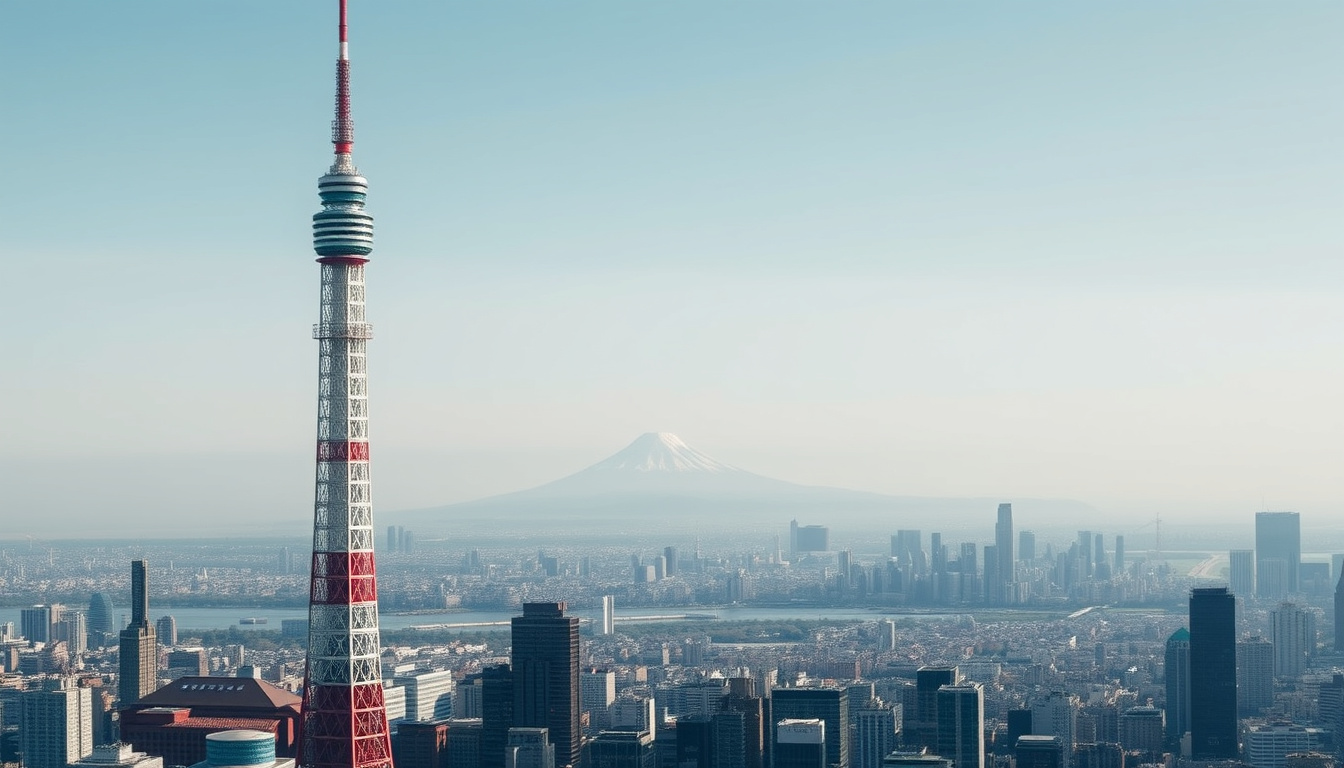
Deciding between Tokyo Skytree and Tokyo Tower can feel like choosing between the future and the past — one is a sleek 2012 broadcasting giant, the other a nostalgic 1958 Eiffel-inspired landmark. We dug into the specs and prices to determine which gives you the best experience for your money.
Height: Skytree 634 m vs. Tokyo Tower 333 m · Top Observation Deck: Skytree 451 m vs. Tower 250 m · Year Opened: 2012 vs. 1958 · Tallest Tower in Japan: Skytree Yes
Key Facts at a Glance
- Tokyo Skytree stands at 634 m, making it the world’s second-tallest structure after the Burj Khalifa (828 m).Official Tokyo Skytree Specifications
- Tokyo Tower is 333 m tall, meaning Skytree beats it by 301 m.Rakuten Travel
- Skytree is the tallest tower in Japan and the second-tallest tower globally, trailing only Merdeka 118.Official Tokyo Skytree Specifications
- Skytree’s lower deck (Tembo Deck) sits at 350 m, already above Tokyo Tower’s highest observation point.Visit Tokyo Skytree
- Skytree’s top deck (Tembo Galleria) reaches 451 m, the highest observation deck in the world.Visit Tokyo Skytree
- Tokyo Tower’s Main Deck is at 150 m, and its Top Deck Tour climbs to 250 m.Tokyo Tower Official Site
- Skytree is a modern complex with the Solamachi shopping mall at its base, offering a full day out.Tokyo Tourism
- Tokyo Tower is a nostalgic, retro landmark surrounded by Shiba Park, with a distinctly old-Tokyo atmosphere.Insider Marke Vision
- Skytree’s observation elevators hit 600 m/min (10 m/s), among the fastest in the world.Official Tokyo Skytree Specifications
- Mount Fuji is visible from both towers on clear days, especially in winter or early morning.Japan Highlights
- Skytree’s greater height means it often sits above low clouds, giving a clearer panorama on hazy days.Visit Tokyo Skytree
- Tokyo Tower’s lower altitude can mean it’s below the cloud layer, limiting the view on overcast days.Visit Tokyo Skytree
| Specification | Value |
|---|---|
| Height | 634 m (2,080 ft) |
| Year opened | May 22, 2012 |
| Primary use | Broadcasting and observation |
| Architect | Nikken Sekkei |
| Number of elevators | 13 total (4 high-speed observation) |
| Top speed of observation elevators | 600 m/min (10 m/s) |
Pros and Cons at a Glance
Tokyo Skytree
- Pros: World’s highest observation deck (451 m), largest panoramic view, modern Solamachi mall, Mount Fuji visible on clear days, fastest elevators in Japan.
- Cons: Higher ticket price, can be crowded, located east of central Tokyo, enclosed decks (no open-air experience at top).
Tokyo Tower
- Pros: Cheaper main deck, nostalgic retro vibe, central Minato location, shorter queue, open-air sections at Top Deck Tour, quick visit (1–1.5 hours).
- Cons: Lower observation height (250 m max), smaller view, fewer on-site attractions, may be below clouds on hazy days.
Height Comparison: The 301-Meter Difference
The numbers are stark, but they only tell part of the story. Tokyo Skytree’s 634 m height was certified by Guinness World Records on November 17, 2011, as the world’s tallest tower—a title it still holds in the “tower” category. Tokyo Tower, at 333 m, is less than a third shorter, but in urban observation terms, that gap is colossal.
| Metric | Tokyo Skytree | Tokyo Tower |
|---|---|---|
| Total height | 634 m (2,080 ft) | 333 m (1,093 ft) |
| World ranking (towers) | 2nd (after Merdeka 118) | Outside top 20 |
| Observation deck heights | 350 m + 451 m | 150 m + 250 m |
| Top deck ceiling | 451 m (world’s highest) | 250 m |
What this means for visitors: Skytree’s lower deck at 350 m is already 100 m higher than Tokyo Tower’s highest point. That’s not just a bragging-rights stat—it translates directly to a broader, more expansive view that includes the entire Tokyo Bay area and, on clear days, Mount Fuji stretching across the horizon.
The implication: For first-time visitors seeking the biggest possible view, Skytree’s height advantage is the single most important factor.
Ticket Prices and Value for Money
Budget-conscious travelers often ask which tower offers better value. The answer depends on what you’re measuring: raw height per yen, or the surrounding experience. Skytree’s ticket prices are generally higher because you’re paying for two decks and a 360-degree view that beats anything else in the city. Tokyo Tower’s Top Deck Tour is cheaper, but the view is lower and the deck is smaller.
| Deck | Tokyo Skytree | Tokyo Tower |
|---|---|---|
| Main/Lower deck | ¥2,100 (Tembo Deck, 350 m) | ¥1,200 (Main Deck, 150 m) |
| Top deck upgrade | +¥1,000 (Tembo Galleria, 451 m) | +¥1,800 (Top Deck Tour, 250 m) |
| Combined ticket | ¥3,100 | ¥3,000 |
When you calculate cost per meter of view, Skytree actually offers better value: ¥3,100 gets you a 451 m view, while a similar spend at Tokyo Tower tops out at 250 m. But here’s the twist—Tokyo Tower is often less crowded, and the Sumida area around Skytree can feel touristy. For a calm, contemplative sunset, Tokyo Tower’s smaller crowds might be worth the lower altitude.
The catch: Budget travelers who prioritize a quiet atmosphere may find Tokyo Tower’s lower crowd levels worth the altitude sacrifice.
“The Tembo Galleria at 451 m offers a 360-degree panorama unlike any other in Tokyo.” — Official Tokyo Skytree websiteOfficial Tokyo Skytree Observation
What You See from the Top
The viewing experience is where the two towers diverge most clearly. Skytree’s Tembo Galleria at 451 m is the world’s highest observation deck, offering a circular walk with a glass floor that gives a thrilling look straight down. From there, on a clear winter morning, Mount Fuji appears as a snow-capped, near-perfect cone to the west. Tokyo Tower’s Top Deck at 250 m also offers Fuji views on clear days, but the perspective is lower, so the mountain looks smaller and less imposing.
- From Skytree, you see Tokyo Bay, Odaiba, and the Rainbow Bridge in one sweeping arc.
- From Tokyo Tower, the view is dominated by Tokyo’s central wards—Ginza, Shibuya, and Shinjuku are all visible, but with a tighter frame.
- Skytree’s glass floor at 451 m is a unique thrill; Tokyo Tower’s highest deck has solid flooring throughout.
- Both towers have telescopes (paid) and digital zoom features, but Skytree’s are newer and sharper.
One underappreciated trick: go to Tokyo Tower first, then Skytree on a different day. The contrast in perspectives makes both visits feel fresh. If you only have one clear day, prioritize Skytree, because its height often puts it above the city’s haze.
The pattern: Visitors who prioritize a bird’s-eye map of Tokyo will prefer Skytree, while those seeking an intimate city portrait will favor Tokyo Tower.
“Incredible view of Tokyo’s size — you can see the city stretch all the way to the bay.” — TripAdvisor reviewerTripAdvisor Tokyo Skytree
Time Needed for a Visit
Your schedule will likely dictate which tower is practical. Skytree is a full half-day commitment: the elevator ride alone is 50 seconds to the first deck, and the Tembo Galleria circular pathway is designed to be walked slowly, with benches and photo spots. Tokyo Tower is quicker—most visitors are done in 45 minutes, including the Top Deck Tour.
- Tokyo Skytree: expect 2–3 hours with the Solamachi mall shopping, food, and the souvenir floors.
- Tokyo Tower: 1–1.5 hours if you skip the aquariums and other attractions in the building’s base.
- Skytree’s observation elevators ascend at 600 m/min (10 m/s)—the fastest in Japan—so the ride itself is part of the draw.
- Tokyo Tower’s elevators are slower but have a retro, nostalgic feel that some visitors prefer.
The bigger time factor is proximity. Skytree is in Sumida, a bit east of the main tourist hubs, though direct train connections from Asakusa make it easy. Tokyo Tower is in Minato, near Roppongi and the Zojoji Temple, making it a natural stop on a central Tokyo itinerary.
The takeaway: For travelers with a packed schedule, Tokyo Tower’s shorter visit duration is a strong advantage.
Proximity to Other Attractions
The surroundings of each tower are as different as the towers themselves. Tokyo Skytree sits atop the Solamachi complex, a massive shopping center with hundreds of stores, an aquarium, a planetarium, and a post office with exclusive stamp designs. Tokyo Tower is anchored by Zojoji Temple and Shiba Park, offering a photo-worthy juxtaposition of the 1950s tower with the ancient temple gate.
- Skytree is a 10-minute walk from Asakusa’s Senso-ji Temple—a classic day route.
- Tokyo Tower is a 15-minute walk from Roppongi Hills and its observation deck, giving you a third comparison point.
- Solamachi at Skytree has a dedicated Pokémon Center, which is a major draw for families.
- Tokyo Tower’s base has a One Piece Tower theme park (now closed) and a variety of restaurants with a retro Showa-era vibe.
The implication: Choose Skytree if you want a full-day family outing; choose Tokyo Tower if you want a quick cultural stop.
Which One Is Better, Skytree or Tokyo Tower?
After comparing height, views, cost, time, and surroundings, the answer boils down to your priorities. Skytree wins for sheer scale and a modern mega-attraction experience; Tokyo Tower wins for nostalgia, speed, and a quieter atmosphere.
- Best for first-time visitors seeking a bucket-list view: Tokyo Skytree
- Best for repeat visitors or those short on time: Tokyo Tower
- Best for families: Tokyo Skytree (Pokémon Center, aquarium)
- Best for budget travelers: Tokyo Tower (cheaper main deck)
Shibuya Sky vs Tokyo Skytree
Shibuya Sky offers an open-air rooftop deck at 229 m, making it a cheaper, outdoor alternative. It provides a lower but unobstructed view of Shibuya Crossing. For travelers who want a rooftop experience without the indoor glass walls, Shibuya Sky is a compelling option — but its height is less than half of Skytree’s.
Is It Worth Going Up the Tokyo Skytree?
So, which one is worth it? If you want the city’s definitive panorama, Tokyo Skytree’s height advantage is undeniable—you’ll see more, see farther, and see above the haze. But Tokyo Tower offers something Skytree can’t: a retro romance, a quieter crowd, and a view of the city that feels like a living postcard. The real winner depends on whether you’re chasing a futuristic spectacle or a nostalgic classic. For most first-time visitors, the pragmatic pick is Skytree for the sheer scale; for repeat travelers or those with limited time, Tokyo Tower delivers a charming, intimate experience that many find more memorable.
Can You See Mount Fuji from Tokyo Skytree?
Yes, on clear days Mount Fuji is visible from both towers, especially in winter and early morning. Skytree’s higher elevation (451 m top deck) puts it above most cloud layers, making Fuji appear more prominent and unobstructed compared to Tokyo Tower’s 250 m deck.
Is Tokyo Skytree the Tallest Tower in the World?
No. Tokyo Skytree is the second-tallest tower in the world. The tallest tower is Merdeka 118 in Kuala Lumpur at 678.9 m. The Burj Khalifa (828 m) is the tallest structure overall, but it is classified as a building, not a tower.
What Are the Top 10 Tallest Towers in the World?
- Merdeka 118 (678.9 m) – Kuala Lumpur, Malaysia
- Tokyo Skytree (634 m) – Tokyo, Japan
- Shanghai Tower (632 m) – Shanghai, China (building, not tower)
- Abraj Al-Bait Clock Tower (601 m) – Mecca, Saudi Arabia
- Canton Tower (600 m) – Guangzhou, China
- CN Tower (553 m) – Toronto, Canada
- One World Trade Center (541 m) – New York, USA
- Ostankino Tower (540 m) – Moscow, Russia
- Milad Tower (435 m) – Tehran, Iran
- KL Tower (421 m) – Kuala Lumpur, Malaysia
Which Is Taller, the Eiffel Tower or the Tokyo Skytree?
Tokyo Skytree is significantly taller. The Eiffel Tower stands at 330 m (including antennas), while Skytree reaches 634 m — nearly double the height. Skytree opened in 2012; the Eiffel Tower opened in 1889.
en.wikipedia.org, artvisitguide.com, watabi.org, japanfromwithin.com, girlonazebra.com, japantravelplanning.com
Frequently Asked Questions
Which tower is taller, Tokyo Skytree or Tokyo Tower?
Tokyo Skytree is 634 m tall, while Tokyo Tower is 333 m. Skytree is taller by 301 m, making it the world’s second-tallest tower (after Merdeka 118) and the tallest in Japan. This fact is confirmed in official Skytree specifications and multiple travel guides.
Which tower gives you the better view of Mount Fuji?
Both towers offer Mount Fuji views on clear days, especially in winter or early morning. However, Skytree’s higher elevation (451 m top deck) puts it above most cloud layers, so Fuji appears more prominent and unobstructed compared to Tokyo Tower’s 250 m deck.
Are ticket prices similar for both towers?
Combined tickets are nearly identical (¥3,100 at Skytree vs. ¥3,000 at Tokyo Tower). But Skytree’s package gives you a 451 m view, while Tokyo Tower’s tops out at 250 m. On a per-meter basis, Skytree offers better value, though Tokyo Tower’s lower price for the main deck might suit budget visitors.
Which tower takes longer to visit?
Tokyo Skytree requires 2–3 hours, especially if you add the Solamachi mall, aquarium, and dining. Tokyo Tower can be experienced in 1–1.5 hours, making it a quicker stop that’s easier to fit into a busy itinerary.
Can you see Tokyo Skytree from Tokyo Tower, and vice versa?
Yes, on clear days each tower is visible from the other. Tokyo Skytree, being taller, is more prominently visible from Tokyo Tower’s observation decks, while Tokyo Tower’s distinctive red-and-white lattice shows up well from Skytree’s higher vantage point.
Related stories





Richard Vane is Senior Reporter at MorningTimes.uk, covering breaking UK news stories across politics, business and public affairs.