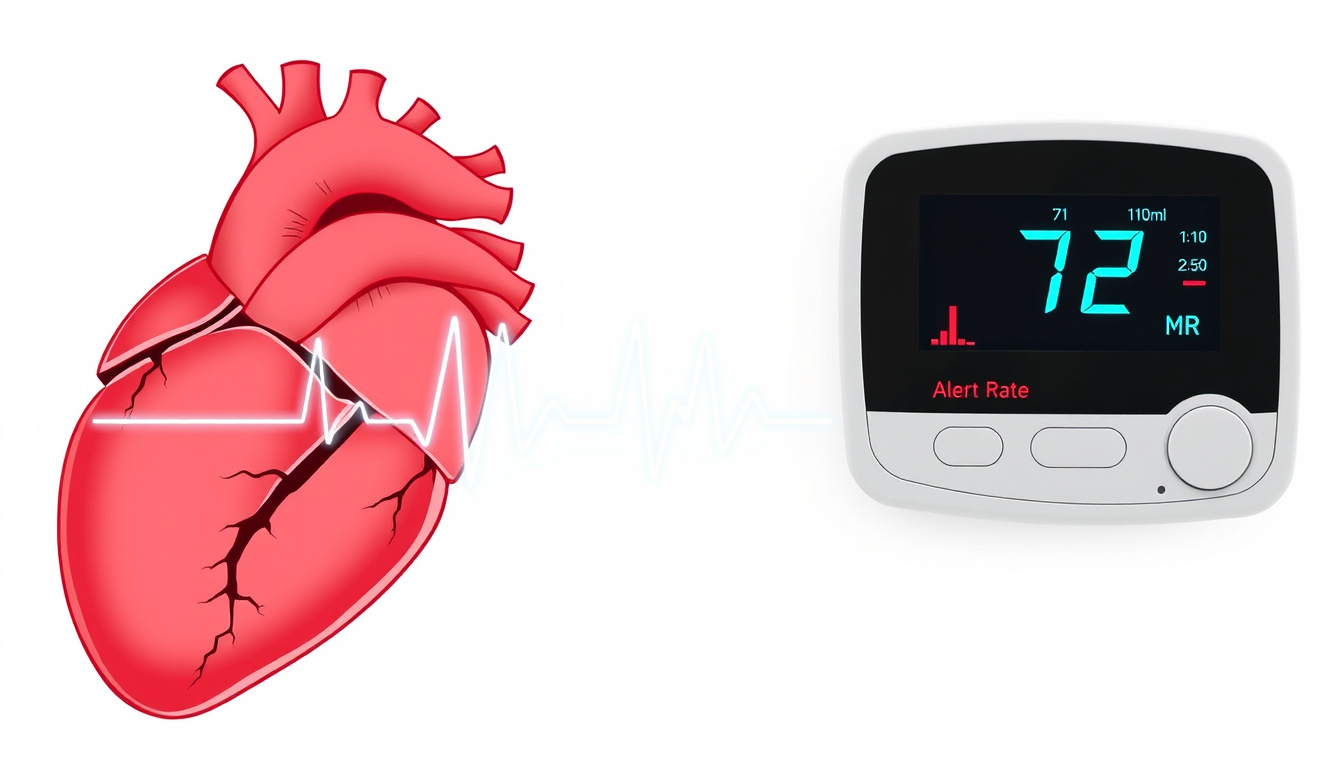

You’ve probably checked your pulse and wondered whether that number is something to worry about. Resting heart rate is one of the simplest vital signs to measure, yet it holds surprisingly deep clues about your overall health.
Normal resting heart rate range for adults: 60–100 bpm ·
Typical range for highly fit individuals: 40–60 bpm ·
Bradycardia threshold: Below 60 bpm (symptomatic below 50) ·
Tachycardia threshold: Above 100 bpm at rest ·
Average for men: 70–72 bpm ·
Average for women: 78–82 bpm
Quick snapshot
- 60–100 bpm for adults (American Heart Association)
- 55–85 bpm optimal (Harvard Health Publishing)
- Varies with age, fitness, and medications (American Heart Association)
- >100 bpm at rest is tachycardia (American Heart Association)
- Can indicate stress, dehydration, or heart condition
- Persistent ≥100 bpm should be evaluated
- <60 bpm is bradycardia (Cleveland Clinic)
- Athletes can safely have 40–60 bpm (Cleveland Clinic)
- Symptoms like dizziness require medical check (Cleveland Clinic)
- Heart rate >120 or <40 with symptoms
- Chest pain, shortness of breath, fainting
- Call 911 or go to ER immediately
Seven key numbers sum up what every adult needs to know about resting heart rate.
| Metric | Value |
|---|---|
| Normal range for adults | 60–100 bpm |
| Ideal range for healthy adults | 55–85 bpm |
| Bradycardia cutoff | Below 60 bpm |
| Tachycardia cutoff | Above 100 bpm |
| Athlete typical | 40–60 bpm |
| Average for women | 78–82 bpm |
| Average for men | 70–72 bpm |
What is an ideal resting heart rate by age?
Infants and children
- Newborns (birth to 4 weeks): 100–205 bpm (Cleveland Clinic)
- Infants (4 weeks to 1 year): 100–180 bpm
- Toddlers (1–3 years): 98–140 bpm
- Preschool (3–5 years): 80–120 bpm
- School-age (5–12 years): 75–118 bpm
- Adolescents (13–17 years): 60–100 bpm
Children’s hearts beat faster — a newborn’s normal range starts at 100 bpm, nearly double that of a healthy adult. The pattern: as the cardiovascular system matures, the resting rate gradually drops toward adult levels.
Adults 18–65
The American Heart Association defines a normal resting heart rate for adults as 60 to 100 beats per minute. However, Harvard Health says the range for most healthy adults is 55 to 85 bpm — a tighter window that reflects a more favorable cardiovascular profile. For men, the average sits around 70–72 bpm; for women, 78–82 bpm. For comparison, learn about normal blood pressure ranges for men by age.
A resting heart rate in the upper half of the 60–100 range doesn’t automatically signal trouble, but it may hint at lower fitness or higher stress load. The gap between “normal” and “optimal” is where lifestyle changes can make the biggest difference.
Older adults (65+)
- Age-related changes can slightly raise resting heart rate, but the 60–100 bpm range still applies.
- Medications (beta-blockers, calcium channel blockers) commonly lower resting heart rate into the 50s.
- Sudden increases may signal dehydration, infection, or arrhythmia — and warrant a checkup.
The catch: medications more than aging itself shift the numbers, so always evaluate in context of what’s normal for you.
Athletes and highly fit individuals
Well-conditioned athletes often have resting heart rates as low as 40 to 60 bpm, according to both the American Heart Association and Cleveland Clinic. A low rate in this group is a sign of an efficient heart, not a disorder.
The trade-off: the same number (say, 50 bpm) can be healthy for a runner but bradycardia for a sedentary person.
Is a 90 resting heart rate normal?
What 90 bpm means for your health
A resting heart rate of 90 bpm falls within the official normal range of 60–100 bpm, but Harvard Health considers it high-normal. Studies have linked persistently elevated resting rates (above 80–85 bpm) with increased cardiovascular risk over time.
- 90 bpm is not an emergency, but it’s worth understanding why it’s there.
- Consistent readings above 90 may indicate poor aerobic fitness, chronic stress, or an overactive thyroid.
If your resting heart rate sits at 90 bpm day after day and you haven’t changed your exercise or stress levels, a checkup is reasonable. The risk isn’t the number itself but what it might signal about underlying health.
Factors that can raise resting heart rate
- Stress and anxiety — cortisol and adrenaline increase heart rate.
- Dehydration — blood volume drops, heart works harder.
- Fever or infection — metabolic demand rises.
- Medications (e.g., decongestants, asthma inhalers).
- Poor sleep quality.
- High caffeine or alcohol intake.
The American Heart Association notes that stress, hormones, medication, and physical activity all affect heart rate.
When to consult a doctor
- Resting heart rate consistently above 100 bpm (tachycardia).
- Resting rate above 90 bpm with symptoms like palpitations, shortness of breath, or fatigue.
- Sudden change from your baseline.
The implication: a persistent high-normal rate is a reasonable conversation starter with your primary care provider, especially if you have other risk factors like high blood pressure or diabetes.
Is a resting rate of 55 good?
Bradycardia defined
The Cleveland Clinic defines bradycardia as a resting heart rate below 60 beats per minute. But whether it’s problematic depends entirely on symptoms and context.
- For athletes and very fit individuals: 55 bpm is normal and desirable — it reflects an efficient heart with a strong stroke volume.
- For sedentary or average individuals: 55 bpm may still be fine if there are no symptoms, but it warrants attention if accompanied by dizziness, fatigue, or fainting.
When a low heart rate is healthy
Endurance athletes regularly have resting rates between 40 and 60 bpm. The Cleveland Clinic states that people with high physical fitness can have a resting heart rate in the 40 to 60 bpm range. This is not bradycardia in the medical sense — it’s a training adaptation.
Symptoms of problematic bradycardia
- Dizziness or lightheadedness.
- Fatigue or weakness.
- Shortness of breath.
- Fainting (syncope).
- Confusion or difficulty concentrating.
The pattern: if you’re not an athlete and your resting rate regularly dips below 55, pay attention to how you feel. Symptom-free usually means no action needed; symptoms mean see a doctor.
What is the danger zone for resting heart rate?
Dangerously high resting heart rate (above 100)
A resting heart rate consistently above 100 bpm is called tachycardia and may indicate an arrhythmia, thyroid condition, or heart disease. The American Heart Association says any resting rate above 100 warrants medical evaluation unless it’s a temporary response to stress, fever, or exercise.
Tachycardia can feel like a racing heart, but some people with sustained high rates feel no symptoms at all — which makes regular checks important.
Dangerously low resting heart rate (below 50 with symptoms)
- Below 50 bpm in non-athletes is considered severe bradycardia.
- If accompanied by dizziness, chest pain, or fainting, it may indicate heart block or sick sinus syndrome.
- Even a rate of 45 bpm can be dangerous if the heart can’t increase output during activity.
The trade-off: low doesn’t automatically mean dangerous — context of fitness and symptoms is everything.
Heart rate and emergency warning signs
- Resting heart rate >120 bpm or <40 bpm with symptoms.
- Accompanied by chest pain, shortness of breath, fainting, or sudden confusion.
- These are signs to call 911 or go to the emergency room immediately.
The pattern: extreme heart rates with symptoms require immediate medical attention.
What are the four signs your heart is quietly failing?
Shortness of breath
- Feeling breathless during normal activities (climbing stairs, carrying groceries).
- Waking up gasping for air (paroxysmal nocturnal dyspnea).
- Need to prop yourself up with pillows to breathe comfortably.
Shortness of breath with a resting heart rate that’s higher than your baseline can be an early warning.
Swelling in legs and ankles
- Fluid buildup (edema) occurs when the heart isn’t pumping efficiently.
- Socks leave deep indentations; shoes feel tight.
- Pressing on the swollen area leaves a pit (pitting edema).
Fatigue and weakness
- Unexplained, persistent tiredness that rest doesn’t fix.
- Difficulty completing daily tasks that used to be easy.
- Resting heart rate may be elevated as the heart tries to compensate for reduced output.
Rapid or irregular heartbeat
- A resting heart rate that’s consistently above 100 bpm (or below 50 with symptoms).
- Sensations of fluttering, pounding, or skipped beats (palpitations).
- Any combination of these four signs warrants prompt medical evaluation (Cleveland Clinic).
Heart failure often develops gradually over months or years. Resting heart rate changes can be one of the earliest measurable clues — your heart working harder to maintain flow.
What this means: your resting heart rate is a key indicator, but only together with other signs does it point to heart failure.
Pros and Cons of Monitoring Your Resting Heart Rate
Upsides
- Early warning of health changes (fever, stress, overtraining).
- Helps gauge cardiovascular fitness progression.
- Non-invasive, simple, and free to measure.
- Can motivate lifestyle changes (sleep, hydration, stress management).
Downsides
- Day-to-day variability can cause unnecessary worry.
- Normal range is broad — a single number may not reflect overall health.
- False reassurance: a normal heart rate doesn’t rule out heart disease.
- Inaccurate measurement if not taken properly (after caffeine, movement, etc.).
The takeaway: monitoring is useful but not definitive — always interpret in context.
Clarity Check: What We Know and What’s Still Unclear
Confirmed facts
- A normal resting heart rate for adults is 60–100 bpm (Cleveland Clinic, American Heart Association).
- The optimal range for most healthy adults is 55–85 bpm (Harvard Health).
- Consistent resting heart rate above 100 bpm is tachycardia and may require treatment.
- Bradycardia is defined as a resting heart rate below 60 bpm.
- Athletes and highly fit individuals often have resting heart rates of 40–60 bpm.
What’s unclear
- The exact point at which a low heart rate becomes dangerous depends on symptoms and individual health.
- It is unclear whether a high-normal resting heart rate (e.g., 90–100) independently increases mortality risk without other risk factors.
- It is not known whether a single low resting heart rate reading in a non-athlete is cause for concern without accompanying symptoms.
The catch: individual context matters more than any single number.
Expert Perspectives on Resting Heart Rate
“For most adults, a normal resting heart rate is 60 to 100 beats per minute. But the best time to measure it is first thing in the morning, before you get out of bed.”
— Cleveland Clinic cardiology team
“The official normal resting heart rate range is 60 to 100 beats per minute, while the range for most healthy adults is 55 to 85 beats per minute.”
— Harvard Health Publishing
“An athlete or more active person may have a resting heart rate as low as 40 beats per minute.”
— American Heart Association
“Regular exercise strengthens the heart muscle, allowing it to pump more blood with each beat, which lowers the resting heart rate.”
— Johns Hopkins Medicine
These expert perspectives underscore the importance of fitness and symptoms in interpreting heart rate.
Summary: What Your Resting Heart Rate Really Tells You
A resting heart rate is a data point — not a diagnosis. The official 60–100 bpm range is broad, and what’s ideal for you depends on your age, fitness, medications, and daily habits. Track your numbers over time, not as snap judgments. For the average adult who is not an athlete, a resting heart rate consistently above 90 or below 50 with symptoms is worth a conversation with your doctor. For active individuals, lower rates are a badge of fitness, not a problem.
The implication: your resting heart rate is a conversation starter with your own body. Measure it right, interpret it carefully, and act on persistent changes — especially if they come with fatigue, breathlessness, or palpitations. For anyone relying on a smartwatch or pulse check for health clues, the choice is clear: pay attention to trends, not single numbers, or you risk chasing noise instead of the signal.
everlywell.com, blog.mercy.com, medanta.org, hopkinsmedicine.org
Understanding your normal heart rate ranges helps you identify when your pulse falls outside the 60–100 bpm benchmark discussed in this guide.
Frequently asked questions
Can stress increase my resting heart rate?
Yes. Stress triggers the release of cortisol and adrenaline, which raise heart rate. Chronic stress can keep your resting rate elevated, potentially increasing cardiovascular risk over time.
Does caffeine affect resting heart rate?
Caffeine stimulates the nervous system and can temporarily raise heart rate by 5–10 bpm. The effect varies by individual tolerance and habitual consumption. For a broader look at natural health interventions, see Is Cinnamon Good for You? Benefits, Risks & Daily Use Guide.
How do I measure my resting heart rate accurately?
Sit quietly for at least 5 minutes. Place two fingers on your wrist (radial pulse) or neck (carotid pulse) and count the beats for 60 seconds. Take the measurement before caffeine, exercise, or stress.
What is a normal heart rate while sleeping?
During deep sleep, heart rate can drop to 40–50 bpm even in non-athletes. This nighttime dip is normal and reflects the body’s resting state. A sustained rate below 40 during sleep may need evaluation if symptoms occur.
Can medications slow or speed up the heart rate?
Yes. Beta-blockers and calcium channel blockers lower heart rate. Decongestants, asthma inhalers, and some antidepressants can raise it. Always review medications with your doctor when interpreting heart rate changes.
Does posture affect resting heart rate?
Yes. Lying down typically produces the lowest reading; sitting adds a few bpm; standing can increase heart rate by 10–15 bpm due to gravity pulling blood downward. Always measure in the same posture for consistency.
Is it normal for heart rate to increase with age?
Resting heart rate tends to remain relatively stable across adulthood, though maximal heart rate declines with age. Age-related changes in arteries and heart tissue can sometimes push resting rate slightly higher.
What does a sudden spike in resting heart rate mean?
A sudden increase could be due to dehydration, fever, anxiety, a medication side effect, or an arrhythmia. If the spike is accompanied by chest pain, shortness of breath, or fainting, seek emergency care.
Related stories



James Holloway covers culture, lifestyle and society for MorningTimes.uk.