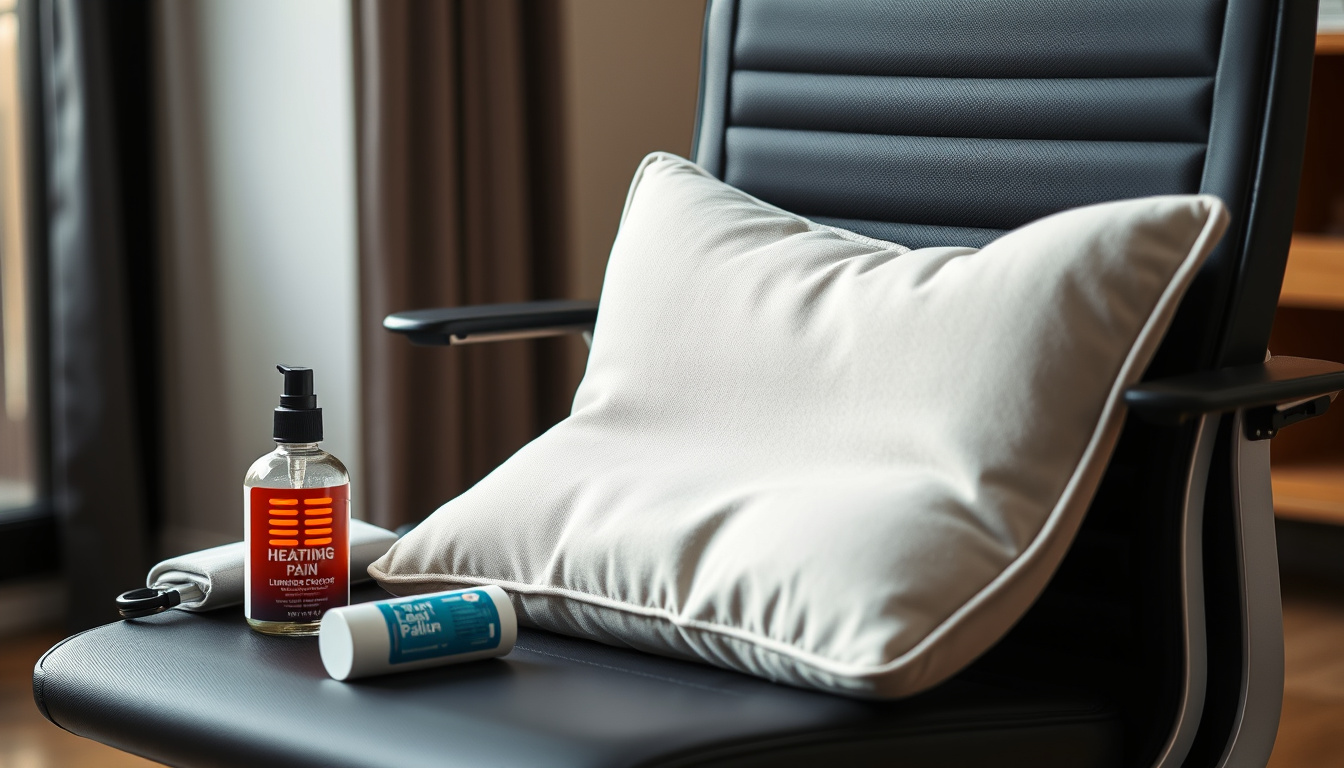

Anyone who’s felt that sudden, searing bolt in the lower back knows it stops you cold, but the opposite may be what you need. This guide walks through a layered plan for severe lower back pain relief — first checking for red flags that need a doctor, then using targeted exercises and smart sleep positioning to get through the worst of it.
Lifetime prevalence of lower back pain: 80% of adults ·
Leading cause of disability worldwide: Lower back pain (WHO) ·
Recurrence rate within one year: 50–80% of cases ·
Most common cause of missed work days: Back pain (BLS)
Quick snapshot
- Cold and heat therapy timed correctly (AARP health guide)
- Over-the-counter NSAIDs for inflammation (Emory Healthcare)
- Gentle movement, not bed rest (NHS)
- Five warning signs requiring urgent care (American Red Cross)
- Muscle vs disc pain clues (NHS on sciatica)
- Emergency symptoms (NHS) (American Red Cross)
- Curl-up for core stability (National Spine Health Foundation)
- Side plank for lateral trunk strength (National Spine Health Foundation) (National Spine Health Foundation)
- Bird dog for spinal stability (National Spine Health Foundation) (National Spine Health Foundation)
- Best sleeping positions for alignment (Cleveland Clinic)
- Pillow placement strategy (National Spine Health Foundation) (Cleveland Clinic)
- Mattress firmness recommendation (Cleveland Clinic) (Cleveland Clinic)
The following key facts illustrate the prevalence and impact of lower back pain:
| Key Facts | Value |
|---|---|
| Lifetime prevalence of lower back pain | 80% of adults (NHS) |
| Most common cause of disability in under 45s | Lower back pain (WHO) |
| Leading cause of sick leave in many countries | ~264 million work days lost annually in US (BLS) |
| Recurrence rate within one year | 50–80% (NHS) |
How to make lower back pain go away?
Step-by-step layered relief protocol
- Screening: Check for red flags (fever, loss of bladder control, etc.) — if present, seek medical care immediately.
- Apply cold therapy within the first 48 hours for acute injury to reduce inflammation.
- Take over-the-counter NSAIDs to manage inflammation and pain.
- Engage in gentle movement (walking on flat ground, simple stretches) — avoid bed rest.
- Optimize sleep posture (side-lying with pillow between knees or back-lying with pillow under knees).
- After the acute phase, incorporate the McGill Big 3 exercises (curl-up, side plank, bird dog) to build core stability and prevent recurrence.
The Big 3 exercises — curl-up, side plank, and bird dog — build core stability without compressing the spine.
Dr. Stuart McGill, spine biomechanics expert, *Back Mechanic*
How to relieve back pain fast at home?
- Apply cold therapy within the first 48 hours for acute injury — an ice pack wrapped in a towel reduces inflammation and numbs pain (AARP).
- Switch to heat therapy after 48 hours for muscle relaxation — a heating pad or warm bath calms muscle spasms by increasing blood flow (Cleveland Clinic).
- Over-the-counter NSAIDs like ibuprofen can reduce inflammation — Emory Healthcare confirms this as a first-line self-care step.
- Gentle stretching and walking are recommended over bed rest — NHS guidance advises staying active within pain limits.
How to get rid of back pain instantly?
- Try the knee-to-chest stretch — lie on your back, bring one knee toward your chest, hold 15–30 seconds, and repeat with the other leg (National Spine Health Foundation).
- Perform standing lumbar extension — stand, place hands on lower back, gently lean backward to relieve pressure from discs (AARP).
Quick fixes like ice and stretching can dull the pain, but without identifying whether the cause is muscular or disc-related, you risk aggravating the underlying injury. A 50–80% recurrence rate means relief isn’t the same as resolution.
The implication: Fast home relief works for acute flare-ups, but if the pain returns or intensifies, the next step is ruling out red flags that demand professional evaluation.
What to do when you can barely walk from lower back pain?
Why does severe lower back pain occur when walking or standing?
- Acute severe pain may indicate muscle spasm, disc injury, or nerve compression — the mechanical load of standing and walking stresses the lumbar spine (NHS on sciatica).
- Rest in a neutral spine position — side-lying with a pillow between the knees reduces torque on the lower back (Cleveland Clinic).
- Use assistive devices like a cane or walker if needed — taking the load off your spine can help you get through the worst hours (NHS).
- If unable to walk for more than 24 hours, seek medical evaluation — this signals possible nerve involvement requiring imaging (NHS).
The pattern: Inability to walk points to either a severe muscle spasm that locks the spine, or a disc herniation pressing on a nerve root. The side-lying position buys you time, but the 24-hour line is where self-care ends and clinical care begins.
If walking becomes impossible even after rest and positioning, the American Red Cross warns — numbness, weakness, or changes in bladder control are not “wait-and-see” symptoms. They’re reasons to call emergency services.
Staying active within pain limits is better than bed rest for most back pain.
NHS guidance
How should I sleep with lower back pain?
- Side sleeping with a pillow between the knees maintains spinal alignment — the Cleveland Clinic recommends this as the top position for low back pain.
- Back sleeping with a pillow under the knees reduces lumbar curve — the National Spine Health Foundation advises keeping the neck and spine neutral during sleep.
- Avoid stomach sleeping — it strains the lower back by extending the lumbar spine and rotating the neck (Cleveland Clinic).
- Use a medium-firm mattress — Cleveland Clinic notes a firm mattress works best, even suggesting placing a board under a too-soft mattress as a temporary measure.
Why this matters: You spend a third of your life sleeping. If that time is spent with the spine twisted or hyperextended, it counteracts everything done during the day. The pillow between the knees isn’t a nice extra — it’s the difference between waking up better and waking up worse.
What are 5 red flags of low back pain?
How to tell if lower back pain is muscle or disc?
- Red flags include: fever, unexplained weight loss, loss of bladder or bowel control, severe night pain, and numbness in the saddle area (around genitals and buttocks) — the American Red Cross and NHS both list these as urgent.
- Muscle pain tends to be localized and improves with movement — NHS distinguishes this from disc pain, which radiates to the buttock or leg (sciatica) and worsens with prolonged sitting.
- Disc pain often radiates to buttock or leg — NHS on sciatica confirms the hallmark sign is pain traveling below the knee.
- If red flags present, seek immediate medical attention — NHS advises calling emergency services if numbness around the genitals or loss of bladder/bowel control occurs.
The trade-off: Muscle pain can be managed at home with heat, movement, and time. Disc pain often requires physical therapy or, in severe cases, surgical evaluation. Misidentifying one for the other can waste weeks of ineffective treatment — or worse, delay care for cauda equina syndrome, a surgical emergency.
What is the Big 3 for lower back pain?
What’s the worst thing you can do for back pain?
- The McGill Big 3 exercises — curl-up, side plank, and bird dog — build core stability without compressing the spine (National Spine Health Foundation).
- Avoid heavy lifting and twisting during acute pain — AARP lists these as common triggers that worsen disc injuries.
- Staying active but modifying activities is better than complete rest — NHS states bed rest of more than 2–3 days weakens the supporting muscles.
What causes lower back pain in females?
- Common causes in females include pregnancy, menstrual cramps, and hormonal changes — these affect the pelvic girdle and lower back (NHS).
- Chronic pelvic pain conditions like endometriosis can radiate to the lower back, requiring gynecological assessment (NHS on endometriosis).
The pattern: The worst thing for an acute back is complete bed rest for days — it strips the core of the stability you need. The Big 3 exercises, taught by spine biomechanics expert Dr. Stuart McGill, are designed to restore that stability without loading the injured tissue.
The exercises that prevent future episodes — curl-ups, side planks, bird dogs — are exactly the movements you cannot do during a severe flare-up. That tension, between resting the acute injury and maintaining core function, is the central challenge of back pain management.
- Whether surgery is better than conservative care for disc herniation.
- Effectiveness of specific exercises varies by individual.
stretchmedstudios.com, ucfhealth.com, youtube.com, hingehealth.com
For a comprehensive guide on proven techniques for fast relief, the NHS and physiotherapy experts recommend starting with red-flag screening before attempting any exercises.
Frequently asked questions
Can stress cause lower back pain?
Yes — chronic stress leads to muscle tension, especially in the lower back, and can alter pain perception. NHS notes that psychological factors can worsen back pain.
Is walking good for lower back pain?
Short walks on flat ground are beneficial — they promote blood flow and keep the spine moving. NHS recommends staying active within pain limits.
When should I go to the ER for lower back pain?
Go to the ER if you have numbness around the genitals or buttocks, loss of bladder or bowel control, or weakness in both legs — NHS says these require immediate care.
Do back braces help with lower back pain?
Back braces may offer temporary support during acute pain but should not be used long-term, as they weaken core muscles. NHS advises caution.
What is the fastest way to relieve lower back pain?
Ice or heat applied immediately, combined with gentle stretching like knee-to-chest, can provide fast relief. AARP confirms ice or heat is the quickest home approach.
What exercises should I avoid with lower back pain?
Avoid sit-ups with straight legs, toe touches, double leg raises, and heavy squats during acute pain — AARP warns these can worsen disc injuries.
Can dehydration cause lower back pain?
Dehydration reduces the water content in spinal discs, making them less resilient and more prone to injury. NHS lists hydration as part of general back health.
The evidence shows that combining red-flag screening with immediate self-care and the McGill Big 3 exercises offers the best chance of breaking the cycle of recurrent back pain.
Related stories




James Holloway covers culture, lifestyle and society for MorningTimes.uk.