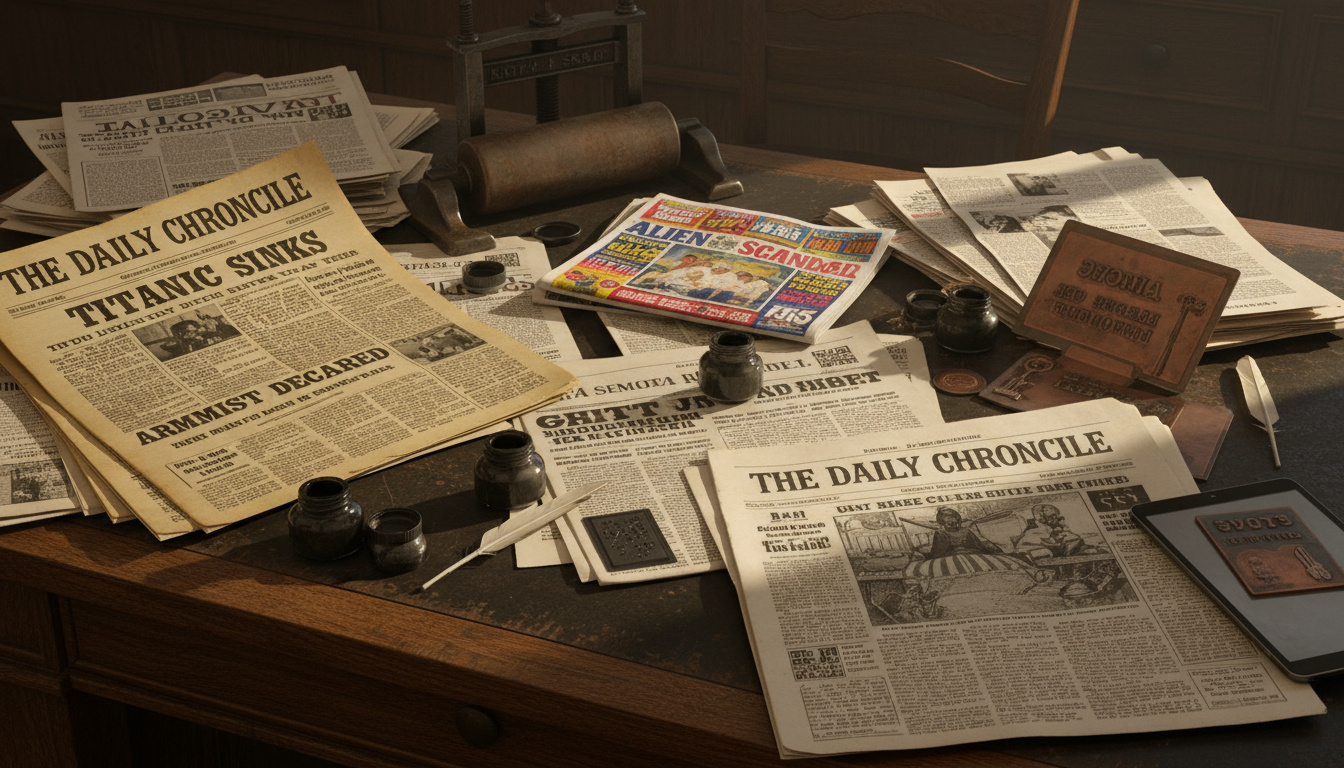

A newspaper is a periodical publication, typically issued daily or weekly, that delivers news, views, features, and public interest information. It is often funded by advertising and subscriptions, and printed on inexpensive paper.
This format has shaped public discourse for centuries, blending timely reporting with analysis and opinion.
From ancient precursors to today’s digital shifts, newspapers remain a cornerstone of information dissemination.
What is a newspaper?
| Characteristic | Description |
|---|---|
| Frequency | Typically daily or weekly |
| Content | News reports, features, opinions, politics, crime, business, entertainment, sports, ads |
| Funding | Advertising and subscriptions |
| Production | Printed on inexpensive paper |
- Newspapers trace origins to ancient Rome’s Acta Diurna in 59 BC.
- First printed newspaper appeared in Germany in 1605.
- Johannes Gutenberg’s press in the mid-1400s enabled mass production.
- Content covers breaking news in later editions.
- Various formats include broadsheet and tabloid.
- Geographic scopes range from national to ethnic.
- Modern versions often prioritise digital delivery.
| Year | Event | Location |
|---|---|---|
| 59 BC | Acta Diurna posts public records | Rome |
| 1566 | Handwritten news sheets | Venice |
| 1605 | Relation aller Fürnemmen und gedenckwürdigen Historien | Germany |
| 1621 | English corantos | England |
| 1665 | The London Gazette | England |
| 1702 | The Daily Courant, first English daily | England |
| 1785 | The Times | England |
| 1791 | The Observer | England |
| 1830s | New York Sun penny press | USA |
How did newspapers develop historically?
Newspapers originated with Rome’s Acta Diurna in 59 BC, posting events on metal or stone in public forums. Medieval traders relied on manuscript newsletters, while Venice began producing handwritten news sheets from 1566.
Johannes Gutenberg’s mid-1400s press enabled mass production, spreading newspapers worldwide by the 19th century across Europe, the Americas, Asia, and the Middle East.
Early printed publications
Europe saw the first printed newspapers in the early 17th century. Germany’s Relation aller Fürnemmen und gedenckwürdigen Historien in 1605 counts as the first true newspaper, followed by English corantos in 1621 and The Daily Courant as the first daily in 1702.
British and American milestones
Britain marked progress with The London Gazette in 1665, The Times in 1785, and The Observer in 1791. In North America, the 1830s New York Sun introduced the affordable penny press.
Growth factors
Censorship restricted early content to foreign news and prices. England’s 1695 lapse in censorship boosted expansion. High-speed presses in the 1830s cut costs. For deeper reading on Historical Development.
What are the different types and formats of newspapers?
Formats
Types include national dailies like Financial Times, metropolitan like Metro Daily, suburban like Daily Herald, and ethnic like Le Droit.
Frequency and scope
Frequency ranges from daily, like 1650s Einkommende Zeitung, to weekly, semi-weekly, bi-weekly, monthly.
National dailies cover countries; metropolitan focus regionally; suburban serve communities; ethnic target language groups.
Explore further in Types and Formats.
How have newspapers evolved in the modern era?
Print newspapers peaked in the 19th-20th centuries, challenged by radio and TV in the 1920s-1950s, then internet dominance.
Many now lead with online platforms, print secondary or discontinued; newspapers of record uphold editorial standards.
Programmes like UK’s Newsnight preview next-day papers.
What are the key milestones in newspaper history?
- : Acta Diurna in Rome posts public records.
- 1566: Handwritten news sheets in Venice.
- Mid-1400s: Gutenberg’s printing press revolutionises production.
- 1605: Germany’s Relation aller Fürnemmen und gedenckwürdigen Historien, first true newspaper.
- 1621: English corantos emerge.
- 1665: The London Gazette launches.
- 1702: The Daily Courant, first English daily.
- 1785: The Times begins.
- 1791: The Observer debuts.
- 1830s: New York Sun popularises penny press.
What facts about newspapers are established and what remains unclear?
| Established Information | Unclear or Debated |
|---|---|
| Definition as periodical delivering news, funded by ads and subscriptions | Precise boundaries between early precursors and true newspapers |
| Germany’s 1605 publication as first true printed newspaper | Specific examples for Berliner format |
| Shift to digital as primary medium | Exact impact of censorship variations across regions |
| Formats like broadsheet and tabloid with defined traits | Long-term viability of print amid digital growth |
What role do newspapers play in society?
Newspapers provide news reports, features, opinions on politics, crime, business, entertainment, sports, plus advertisements.
Later editions incorporate breaking news, informing public interest.
They foster informed debate through structured content delivery.
What do key sources say about newspapers?
A newspaper is a periodical publication, typically issued daily or weekly, that delivers news, views, features, and public interest information.
Newspapers trace their origins to ancient Rome’s Acta Diurna (59 BC).
To summarise, what defines newspapers today?
Newspapers blend tradition with adaptation, from historical roots and diverse formats to digital challenges, maintaining core roles in news and public information.
Frequently asked questions
What was Acta Diurna?
Ancient Rome’s 59 BC public records posted on metal or stone sheets in forums.
What is a broadsheet newspaper?
Large-format serious news for educated readers, like The New York Times.
What defines a tabloid?
Smaller size focusing on sensational stories, celebrities, sports, like The Sun.
When was the first English daily newspaper?
The Daily Courant in 1702.
How did the printing press affect newspapers?
Gutenberg’s mid-1400s invention enabled mass production and global spread by 19th century.
What are newspapers of record?
Outlets maintaining high editorial standards amid digital shifts.
What frequencies do newspapers have?
Daily, weekly, semi-weekly, bi-weekly, monthly.
Related stories





Marcus Bell covers UK politics, public policy and government for MorningTimes.uk.