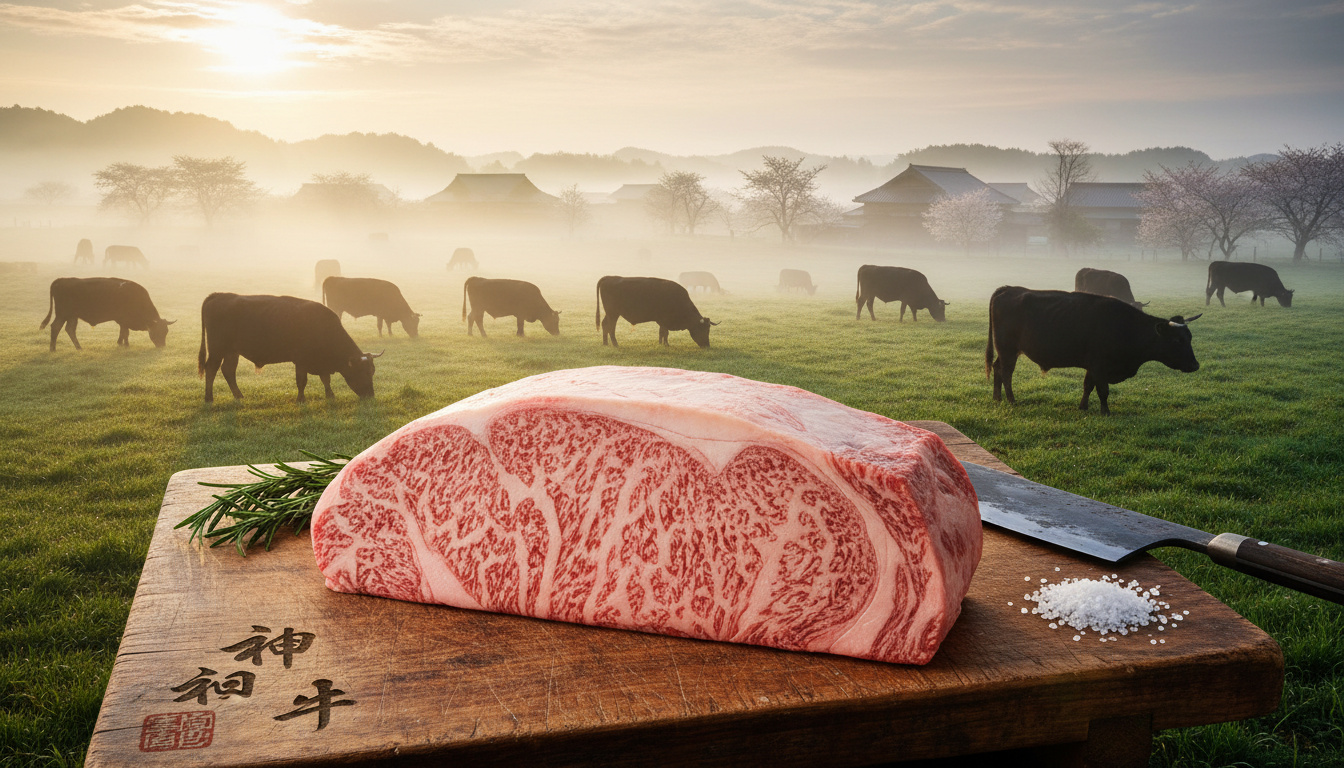

Wagyu beef stands as one of the most prized proteins in global gastronomy, distinguished by dense intramuscular fat deposits that create a distinctive marbled appearance. Unlike conventional cattle breeds raised primarily for muscle mass, Wagyu originates from four specific Japanese lineages genetically predisposed to store energy as fine flecks of fat within muscle tissue. This biological trait produces meat with a tender, buttery texture and pronounced umami flavor that commands premium prices in markets worldwide.
The term itself derives from the Japanese wagyū, literally translating to “Japanese cow.” While the beef enjoys contemporary fame as a luxury dining staple, its roots trace back over two millennia to draft animals bred for endurance in rice agriculture. Understanding Wagyu requires examining its genetic origins, strict classification systems, and the distinction between authentic Japanese products and international interpretations. Full Match History
What Is Wagyu Beef?
At its core, Wagyu refers to meat derived from four principal Japanese cattle breeds: Japanese Black, Japanese Brown, Japanese Polled, and Japanese Shorthorn. These animals carry genetic markers from native Asian cattle separated from other bovine lineages approximately 35,000 years ago, later refined through selective breeding for physical stamina. The resulting physiology stores energy as intramuscular fat rather than external fat layers, creating the signature marbling that defines the category.
Four Japanese breeds derived from native Asian cattle crossbred with European stock during the Meiji era
Extreme intramuscular marbling (BMS 1-12) with fat melting at 77°F for buttery texture
$100-500 per pound for premium grades, typically 5-10 times standard beef costs
Quick-seared steaks, thin-sliced shabu-shabu, sukiyaki, and high-end sushi preparations
Key Characteristics That Define Quality
- Genetic predisposition for distributing fat throughout muscle rather than concentrating it externally
- Japanese Black cattle represent approximately 90% of national production, with Tajima strain dominating
- Grade A5 represents the pinnacle: BMS scores 8-12, bright red coloration, and firm white fat
- American and Australian variants typically involve crossbreeding with Angus cattle for hybrid vigor
- Fatty acid profile contains higher monounsaturated fats compared to conventional beef
- Traditional raising periods extend 28-30 months versus 18 months for standard commercial beef
- Traceability systems track individual animals from birth through processing via DNA verification
| Attribute | Specification |
|---|---|
| Primary Breeds | Japanese Black, Japanese Brown, Japanese Polled, Japanese Shorthorn |
| Marbling Scale (BMS) | 1-12 (Japanese Standard) |
| Highest Carcass Grade | A5 (Yield Grade A + Quality Grade 5) |
| Genetic Lineage | 99.9% of Japanese Black trace to Tajiri-go bull |
| Fat Melting Point | Approximately 77°F (25°C) |
| Raising Duration | 28-30 months average |
| Historical Crossbreeding | European imports (Simmental, Shorthorn, Devon) 1868-1912 |
| Breed Formalization | 1944 official recognition |
| US Import History | Embryos and genetics available since 1975 |
| Certification Body | Japan Wagyu Registry Association |
Where Does Wagyu Beef Come From?
Ancient Origins as Agricultural Laborers
Wagyu cattle first appeared in Japan over 2,000 years ago, initially serving as draft animals for plowing rice fields in mountainous terrain. This functional purpose drove selective pressure toward animals capable of sustained physical effort, which biologically favored those storing readily accessible energy reserves within muscle tissue. Genetic evidence suggests these cattle separated from other bovine populations approximately 35,000 years ago, creating a distinct evolutionary branch that would eventually produce modern Wagyu characteristics. Source
The Meiji Restoration and European Crossbreeding
The modern identity of Wagyu emerged following the Meiji Restoration in 1868, when Japan opened to foreign trade and began importing European cattle breeds including Simmental, Shorthorn, Devon, Brown Swiss, and Ayrshire. Government-sponsored breeding programs launched around 1900 aimed to increase body size and meat yield while maintaining the desirable fat distribution traits of native stock. This crossbreeding period concluded definitively between 1910 and 1912, when policies halted further genetic infusions to preserve emerging breed characteristics. Source
Japan established prefectural registration systems in 1918 to track bloodlines, with official breed names standardized by 1937. The four distinct breeds received formal government recognition in 1944 under the designation “Improved Japanese Cattle,” creating the foundation for today’s traceability standards.
International Expansion Since 1975
While Wagyu remained strictly Japanese for decades, export opportunities emerged in 1975 when the first genetics reached the United States. Outside Japan, producers primarily work with Japanese Black and Brown (Kumamoto) strains, often crossing them with Angus cattle to improve calving ease and adaptability. These international operations lack the rigid grading and purity laws governing Japanese production, resulting in variable quality marketed under the Wagyu name. Source
Wagyu vs. Kobe Beef: Key Differences
Geographic and Genetic Boundaries
Kobe beef represents a strictly defined subset of Wagyu production, requiring animals to be purebred Japanese Black Tajima cattle raised exclusively within Hyogo Prefecture. While all Kobe qualifies as Wagyu, approximately all Wagyu qualifies as Kobe. The distinction parallels Champagne versus sparkling wine—territorial specificity determines authenticity. Kobe cattle must meet A4 or A5 grading standards and carry verifiable traceability through the Kobe Beef Distribution Promotion Association. Source
Grading and Certification Standards
Authentic Kobe appears rarely outside Japan due to strict export controls and limited production volumes. Domestic Japanese Wagyu operates under the Japan Meat Grading Association standards, evaluating yield (A-C) and quality (1-5) separately. International “Kobe-style” or “American Kobe” products lack certification from Hyogo Prefecture authorities, representing marketing terminology rather than protected designation of origin. Source
Why Is Wagyu Beef So Expensive?
Pricing reflects genuine scarcity and resource intensity. Wagyu cattle require 28 to 30 months to reach market weight compared to 18 months for conventional beef, significantly increasing feed, labor, and land costs. The extended timeline allows intramuscular fat to develop fully, but it ties up capital and reduces annual turnover for producers. Additionally, strict breeding protocols limiting genetic diversity create supply constraints that market demand cannot quickly resolve. Source
Production Complexity and Mythology
Popular culture frequently attributes Wagyu’s quality to practices like beer feeding and daily massages, though these represent occasionally documented anecdotes rather than industry standards. The genuine cost drivers involve specialized feed formulations, individual animal monitoring, and the biological reality that marbled cattle yield less usable meat per carcass than heavily muscled breeds. Source
Wagyu’s low melting point requires gentle heat application. Sear quickly to rare or medium-rare (120-130°F internal temperature) to prevent fat from liquefying completely, which would compromise the distinctive texture. Thin slicing suits hot pot preparations, while thicker cuts demand minimal manipulation beyond light seasoning.
Not all marbled beef qualifies as Wagyu, and not all Wagyu achieves A5 grading. USDA Prime beef equates roughly to BMS 4-5, well below Japanese A5 standards. Additionally, “Wagyu” labeling outside Japan often indicates crossbred animals (F1 generation) rather than fullblood genetics.
How Did Wagyu Evolve Through History?
- : Native Asian cattle arrive in Japan, eventually domesticated for agricultural labor in rice cultivation. Source
- : Meiji Restoration initiates importation of European cattle breeds for crossbreeding purposes. Source
- : Japanese government establishes organized crossbreeding programs to improve meat characteristics. Source
- : Policy officially ends further crossbreeding infusions; term “Improved Japanese Breed” enters usage. Source
- : Prefectural registration systems launch to document bloodlines and prevent genetic dilution. Source
- : Standardization of breed names including formal designation of Japanese Black. Source
- : Japanese government officially recognizes four distinct Wagyu breeds. Source
- : First Wagyu genetics exported to the United States, beginning international production. Source
What Do We Know About Authenticity?
| Established Facts | Uncertain or Disputed Areas |
|---|---|
| DNA traceability confirms pedigree through Japan Wagyu Registry | Specific sustainability metrics for carbon footprint per kilogram |
| Kobe beef requires Hyogo Prefecture origin and specific grading | Prevalence and standardization of “massage” practices across farms |
| Four breeds recognized in 1944 with closed genetic books | Long-term health impacts of high intramuscular fat consumption |
| American Wagyu Association certifies fullblood status outside Japan | Exact percentage of “Wagyu” labeled beef that is F1 crossbred |
| Crossbreeding ended definitively by 1912 per historical records | Comparative environmental impact versus conventional beef systems |
What Makes Wagyu Structurally Unique?
The biological distinction of Wagyu lies in its fat chemistry and distribution patterns. Intramuscular fat in these cattle contains higher proportions of monounsaturated fatty acids compared to subcutaneous fat, contributing to the meat’s characteristic sweetness and lower melting point of approximately 77°F. This temperature threshold means the fat begins rendering at human body temperature, creating the “melt-in-your-mouth” sensation often described by consumers. The fine, evenly distributed marbling—graded via the Beef Marbling Standard (BMS)—differs from the chunkier fat deposits seen in conventional beef, ensuring consistent texture throughout the cut rather than concentrated gristle or external trimming. Source
From a culinary perspective, this physiology demands adjusted preparation techniques. High-heat searing appropriate for leaner steaks risks liquefying Wagyu’s fat content too rapidly, effectively boiling the meat in its own juices and toughening the protein structure. Instead, cooking methods favor quick exposure to intense heat followed by rest, or minimal heat applications like paper-thin slicing for traditional Japanese hot pot preparations. The meat’s richness also means portion sizes typically run smaller than American steakhouse standards, with three to four ounces considered a satisfying serving due to the caloric density and intense flavor profile. Tour Dates and Tickets
Expert Sources and Industry Verification
“Authentic Wagyu represents one of the most tightly controlled livestock products globally, with Japanese registry systems tracking individual animals from birth through processing to prevent fraud and maintain genetic purity.”
— Japan Wagyu Registry Association standards, referenced via Wagyu documentation
“The confusion between Wagyu and Kobe creates significant consumer misunderstanding. Kobe is to Wagyu what a specific vintage is to wine—territorially restricted and quality-controlled, whereas Wagyu broadly describes the genetic heritage.”
— American Wagyu Association consumer guidelines, Wagyu.org
Understanding Wagyu’s Culinary Position
Wagyu beef occupies a unique position at the intersection of agricultural heritage, genetic science, and gastronomic luxury. Its value derives from specific biological traits refined through centuries of selective breeding, formalized through twentieth-century Japanese agricultural policy, and protected today through rigorous traceability systems. While international production has democratized access to marbled beef, the distinction between fullblood Japanese Wagyu and crossbred international variants remains significant for consumers seeking authentic characteristics. Understanding these gradations—from A5 Japanese Black to F1 hybrid products—enables informed purchasing decisions in a market frequently clouded by ambiguous labeling and premium pricing strategies.
Frequently Asked Questions
Is all Wagyu beef raised in Japan?
No. While authentic Japanese Wagyu originates solely from Japan, cattle raising occurs internationally. The United States and Australia maintain significant Wagyu operations using imported genetics, though these often involve crossbreeding with Angus cattle rather than maintaining pure Japanese bloodlines.
What specific practices characterize Wagyu cattle raising?
Extended raising periods of 28-30 months allow marbling to develop fully. Farmers provide high-energy feed rations and maintain stress-free environments, as anxiety can negatively impact fat distribution. Common myths regarding daily beer and massages represent occasional practices rather than universal standards.
Can authentic Wagyu production occur outside Japan?
Yes, though with qualifications. Fullblood Wagyu using 100% Japanese genetics can be raised abroad, certified by organizations like the American Wagyu Association. However, such products cannot carry Japanese grading designations (A5, etc.) and may differ slightly due to climate and feed variations.
How does Kobe beef differ from standard Wagyu?
Kobe beef requires Tajima-strain Japanese Black cattle born, raised, and processed in Hyogo Prefecture, achieving A4 or A5 grades. It represents less than 1% of Japanese beef production and requires certification from the Kobe Beef Distribution Promotion Association.
What do the letter and number grades indicate on Wagyu packaging?
Japanese grading uses letters (A-C) for yield percentage and numbers (1-5) for quality. Quality factors include marbling (BMS 1-12), meat color, fat color, and texture. A5 represents the highest possible combination of yield and quality, with BMS 8-12 marbling scores.
Why does Wagyu fat taste different from regular beef fat?
Wagyu intramuscular fat contains higher monounsaturated fat content and melts at 77°F compared to approximately 104°F for conventional beef. This lower melting point creates the characteristic texture, while the fine distribution ensures flavor permeates the meat rather than concentrating in external layers.
How should home cooks prepare Wagyu differently from other steaks?
Cook briefly over high heat to rare or medium-rare (120-130°F) to prevent excessive fat rendering. Avoid heavy seasoning that masks the meat’s natural flavor. Consider slicing thinly against the grain and sharing smaller portions due to the rich, dense texture.
Related stories





Catherine Lowe is Managing Editor at MorningTimes.uk, running the daily news list and the publishing schedule.