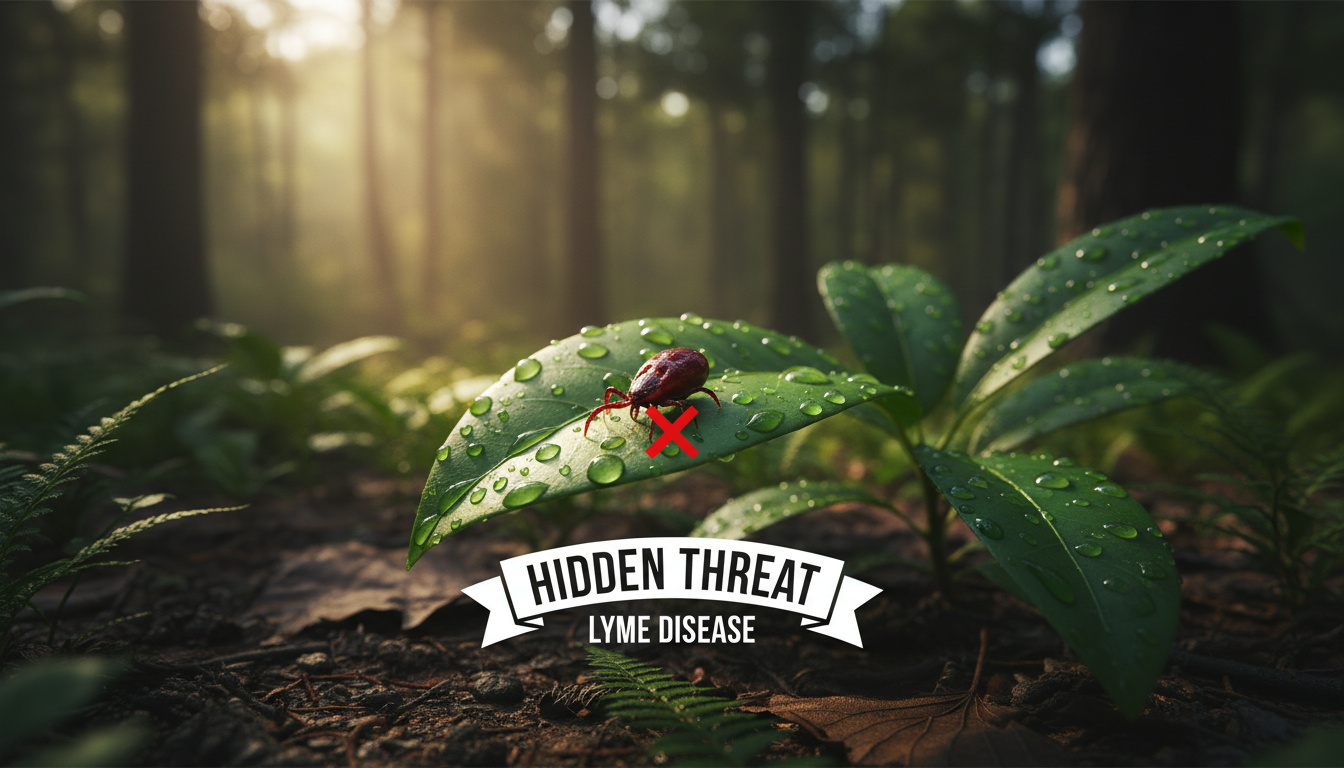
Lyme disease is a bacterial infection caused by Borrelia burgdorferi, transmitted exclusively through bites from infected blacklegged ticks. The pathogen triggers a multi-stage illness affecting skin, joints, the heart, and the nervous system, with symptom severity correlating directly with treatment timing.
Medical consensus identifies early antibiotic intervention as curative. Without prompt treatment, the bacterium disseminates from the initial bite site into systemic circulation, potentially causing chronic arthritis, neurological deficits, and cardiac complications.
Transmission requires specific environmental conditions. The bacteria spread only through tick bites, not through casual human contact, making vector control the cornerstone of public health strategy.
What Causes Lyme Disease?
Key Facts
- Early diagnosis enables complete recovery with standard oral antibiotics
- Only specific tick species harbor the pathogen
- Transmission typically requires prolonged tick attachment
- Geographic prevalence continues expanding beyond traditional endemic regions
- The disease cannot spread through coughing, touching, or sexual contact
- Seasonal infection peaks correspond with tick nymph activity periods
| Parameter | Details |
|---|---|
| Causative Agent | Borrelia burgdorferi spirochete bacteria |
| Primary Vector | Blacklegged ticks (Ixodes scapularis, Ixodes pacificus) |
| Transmission Mode | Infected tick bloodmeal |
| Typical Incubation | 3 to 30 days post-bite |
| Person-to-Person | Not contagious between humans |
| Standard Treatment | Doxycycline, amoxicillin, or cefuroxime axetil |
| Early Cure Rate | High with appropriate antibiotic therapy |
| Risk Environments | Wooded, brushy, or grassy areas |
What Are the Symptoms of Lyme Disease?
Clinical manifestations evolve through three distinct phases, beginning with localized skin changes and potentially progressing to multi-system involvement. Causes of Vertigo may overlap with late-stage neurological symptoms, requiring careful differential diagnosis.
Early Localized Stage
Within one to four weeks of infection, the bacterium remains concentrated near the bite site. Erythema migrans develops in approximately 80 percent of infected individuals, though only 20 percent display the classic “bull’s-eye” pattern with central clearing. The lesion expands gradually, often exceeding five centimeters in diameter.
Accompanying symptoms mimic viral influenza: fever, chills, fatigue, headache, muscle and joint aches, swollen lymph nodes, and neck stiffness. These systemic markers indicate immune activation against the spirochetal invasion.
While medical literature emphasizes the bull’s-eye rash, the Food and Drug Administration notes that any expanding red lesion warrants medical evaluation, as rash morphology varies significantly among patients.
Early Disseminated Disease
As the Harvard Health program explains, untreated bacteria migrate through the bloodstream to the heart, brain, and spinal cord within three to twelve weeks. Manifestations include facial paralysis (Bell’s palsy), vision changes, palpitations, chest pain from Lyme carditis, and radicular pain in the extremities.
Late Disseminated Complications
Months or years after initial infection, persistent untreated cases develop chronic Lyme arthritis, particularly affecting large joints such as the knees. Neurological sequelae include severe migraines, vertigo, cognitive processing difficulties, memory impairment, and peripheral neuropathy characterized by numbness in extremities.
How Is Lyme Disease Treated?
Cleveland Clinic guidelines establish antibiotics as the primary therapeutic intervention, with cure rates exceeding 90 percent when administered during early localized infection. Treatment selection depends on disease stage, patient age, and specific organ involvement.
Antibiotic Protocols
First-line agents include doxycycline for adult patients and children over eight years, amoxicillin for younger children and pregnant women, and cefuroxime axetil as an alternative for those with contraindications to standard therapies. These pharmaceuticals target the spirochete’s cellular machinery, eliminating active infection.
Treatment Duration
Early localized disease typically requires approximately ten days of oral antibiotics, though CDC protocols often extend courses to two to four weeks. Neurological or cardiac involvement necessitates longer intravenous regimens under specialist supervision.
Post-Treatment Symptoms
A subset of patients experiences post-treatment Lyme disease syndrome, characterized by persistent fatigue, musculoskeletal pain, and cognitive slowing lasting months or years. Research indicates these symptoms occur 5 to 10 percent more frequently in treated patients than in uninfected controls six months post-treatment, though underlying mechanisms remain under investigation. What Is a Panic Attack distinguishes acute anxiety episodes from the cognitive fog associated with this syndrome.
According to Brown University Health, most patients recover completely with standard antibiotic courses, while post-treatment symptoms typically improve gradually over time without additional antimicrobial therapy.
Is Lyme Disease Contagious?
Direct human-to-human transmission does not occur. The Global Lyme Alliance confirms that infection requires introduction of the bacterium through tick saliva during a bloodmeal. Casual contact, sexual activity, pregnancy, blood transfusions, and airborne particles do not constitute transmission vectors under current medical understanding.
The disease spreads exclusively through infected blacklegged tick bites. No evidence supports transmission through touching, kissing, or sharing utensils with infected individuals.
Wearing light-colored long sleeves, applying EPA-registered repellents, performing immediate post-outdoor tick checks, and removing attached ticks within 24 hours effectively prevent infection.
How Does Lyme Disease Progress Over Time?
- Early Localized Stage. Bacteria remain at bite site. Erythema migrans rash appears. Flu-like symptoms develop. Treatment most effective during this window.
- Early Disseminated Stage. Bacteria spread via bloodstream. Potential cardiac arrhythmias, facial palsy, and meningismus occur. Migrating joint pain begins.
- Late Disseminated Stage. Chronic arthritis establishes in major joints. Encephalopathy, peripheral neuropathy, and persistent fatigue manifest without prior treatment.
What Do Medical Experts Know for Certain?
Established Facts
- Borrelia burgdorferi causes the disease exclusively
- Blacklegged ticks serve as the sole vector
- Antibiotics cure early-stage infection
- Three distinct clinical stages exist
- Not contagious between humans
Ongoing Questions
- Specific mortality or fatality statistics
- Mechanisms behind post-treatment syndrome
- Long-term prognosis for untreated late-stage cases
- Regional variations between UK and US presentations
- Optimal treatment duration for persistent symptoms
Where Does Lyme Disease Occur Most Frequently?
Endemic regions include the northeastern, mid-Atlantic, and north-central United States, alongside forested areas of Europe and Asia. The UK Health Security Agency reports increasing domestic tick awareness campaigns as climate change expands viable habitats for vector populations.
Occupational and recreational exposures dominate risk profiles. Forestry workers, landscape professionals, and outdoor enthusiasts face elevated infection likelihood. Residential proximity to wooded edges, leaf litter, or tall grass increases encounter rates with infected nymphs, which are smaller than sesame seeds and easily overlooked.
What Do Health Authorities Say?
Lyme disease is spread by blacklegged ticks.
— Centers for Disease Control and Prevention
The bacterium spreads throughout the body, potentially affecting the heart, brain, and spinal cord.
— Harvard Health Publishing
Untreated Lyme disease can progress into a debilitating illness affecting neurological, cardiac, and immune systems. However, with appropriate early treatment, prognosis is excellent.
— Global Lyme Alliance
What Are the Essential Takeaways?
Lyme disease represents a treatable bacterial infection transmitted exclusively through blacklegged tick bites, progressing from localized skin lesions to potential systemic complications if antibiotics are delayed. Early recognition of erythema migrans and flu-like symptoms enables rapid cure, while prevention through protective clothing, repellents, and tick checks remains the most effective health strategy.
Frequently Asked Questions
Can Lyme disease be cured completely?
Yes. Early-stage Lyme disease responds completely to 10-14 days of oral antibiotics. Late-stage infections require longer treatment but remain curable in most cases.
Can Lyme disease kill you?
Fatalities are extremely rare. While untreated cases may develop serious cardiac or neurological complications, specific mortality statistics are not established in current medical literature.
Is Lyme disease contagious through kissing or touching?
No. The disease spreads only through infected tick bites. Person-to-person transmission does not occur through casual contact, sexual activity, or sharing bodily fluids.
How long does antibiotic treatment typically last?
Most patients require 2-4 weeks of oral antibiotics. Early localized cases may resolve with 10-day courses, while neurological or cardiac involvement necessitates extended or intravenous therapy.
Does everyone get the bull’s-eye rash?
No. While approximately 80% of infected individuals develop some form of erythema migrans, only 20% display the classic bull’s-eye pattern with central clearing.
What happens if Lyme disease goes untreated?
Untreated infection progresses through three stages, potentially causing chronic arthritis, heart rhythm disturbances, facial paralysis, memory problems, and severe fatigue months or years after the initial bite.
Can you get Lyme disease twice?
Yes. Previous infection does not confer permanent immunity. Individuals can contract the disease multiple times through subsequent tick bites in endemic areas.
Related stories





Marcus Bell covers UK politics, public policy and government for MorningTimes.uk.