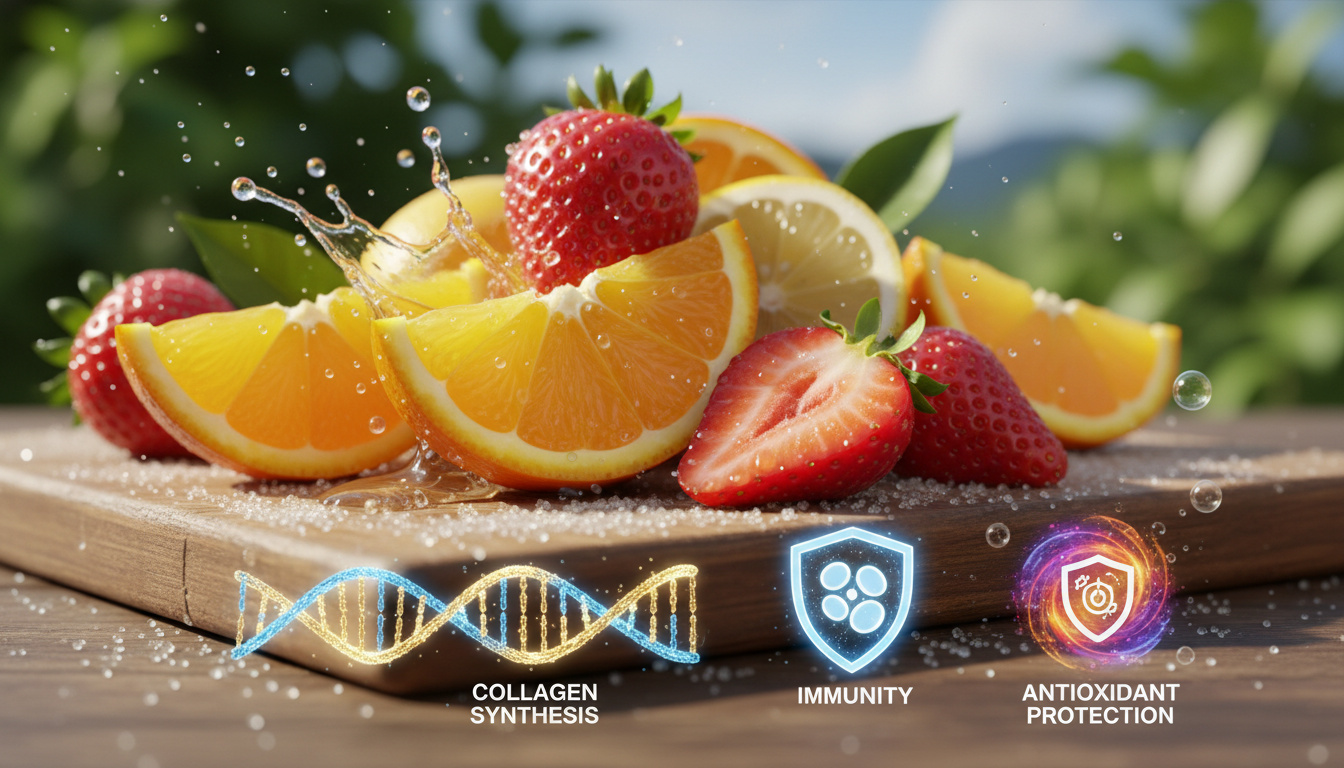

Vitamin C, chemically known as ascorbic acid, functions as an essential water-soluble nutrient that the human body cannot synthesize independently. This micronutrient serves critical roles in immune defense, collagen production, and cellular protection against oxidative stress, making daily intake through diet or supplementation necessary for physiological maintenance.
Unlike fat-soluble vitamins that accumulate in body tissues, vitamin C dissolves in water and exits through urine, requiring consistent replenishment. UCLA Health notes that deficiency leads to scurvy, a condition historically fatal to sailors but now rare in developed nations except among severely malnourished populations.
Medical authorities including the National Health Service and the National Institutes of Health emphasize that while vitamin C supports numerous biological processes, its benefits are specific and often misunderstood by the general public.
What Is Vitamin C?
| Function | Body Area | Key Benefit | Food Source |
|---|---|---|---|
| Collagen synthesis | Skin, bones, cartilage | Wound healing, tissue repair | Citrus fruits |
| Antioxidant activity | Cells, blood vessels | Protection from free radicals | Bell peppers |
| Immune support | White blood cells | Enhanced pathogen defense | Oranges |
| Iron absorption | Digestive system | Better non-heme iron uptake | Broccoli, strawberries |
- Essential for collagen production and tissue repair throughout the body
- Acts as a potent antioxidant protecting cellular integrity from oxidative damage
- Supports immune function but does not prevent common colds in the general population
- Must be obtained daily through diet as the body cannot store water-soluble vitamins
- Enhances absorption of non-heme iron from plant-based foods significantly
- Deficiency results in scurvy, characterized by bleeding gums and poor wound healing
- Upper safety limit established at 2,000 mg daily to avoid gastrointestinal distress
| Fact | Value | Source |
|---|---|---|
| Chemical name | Ascorbic acid | NIH Office of Dietary Supplements |
| Solubility | Water-soluble | Multiple medical authorities |
| Adult RDA (women) | 75 mg/day | UCLA Health |
| Adult RDA (men) | 90 mg/day | Healthline |
| UK RDA | 40 mg/day | NHS |
| Tolerable Upper Intake Level | 2,000 mg/day | WebMD |
| Primary deficiency disease | Scurvy | Mayo Clinic |
| Cold duration reduction (adults) | 8% | NIH ODS |
| Cold duration reduction (children) | 14% | NIH ODS |
| Vitamin C in one orange | ~70 mg | UCLA Health |
What Does Vitamin C Do in the Body?
Antioxidant Protection
Vitamin C operates as a potent antioxidant, neutralizing free radicals that damage cells and contribute to cancer, heart disease, and arthritis. MedlinePlus confirms that this protective mechanism extends to guarding against toxins and pollutants encountered in daily environments.
Collagen Formation and Tissue Repair
The nutrient serves as an essential cofactor for collagen biosynthesis, directly impacting skin elasticity, blood vessel integrity, and bone density. Without adequate vitamin C, the body cannot properly form or repair connective tissues, leading to weakened structural support throughout the musculoskeletal system.
Immune Cell Function
White blood cell production depends significantly on vitamin C availability. The vitamin accumulates in phagocytes and lymphocytes, enhancing their chemotactic and microbial killing capabilities while supporting epithelial barriers against pathogens.
Consuming vitamin C alongside plant-based iron sources increases non-heme iron absorption substantially. This interaction proves particularly valuable for vegetarians and individuals with iron-deficiency concerns.
What Does Vitamin C Do for Skin, Acne, and Hair?
Skin Health and Aging
Higher dietary intake correlates with reduced wrinkling, decreased skin dryness, and improved overall aging appearance. WebMD reports that topical vitamin C application may also reduce visible wrinkles and fine lines through localized collagen stimulation.
Acne and Hair Evidence
Current research presents no direct evidence supporting vitamin C as an effective treatment for acne or as a stimulant for hair growth. While the nutrient supports overall skin structure through collagen, specific dermatological conditions like acne vulgaris and androgenetic alopecia show no measurable improvement from vitamin C supplementation in available clinical literature.
Does Vitamin C Help with Colds, Sickness, or Immunity?
Cold Prevention vs Duration
Regular supplementation of 100-200 mg daily builds immune competency but does not prevent cold contraction in the general population. Healthline notes that vitamin C modestly shortens cold duration by 8% in adults and 14% in children while reducing symptom severity.
High-Dose Therapy Under Stress
Individuals under extreme physiological stress—marathon runners, skiers, and soldiers in subarctic conditions—experience 50% reduced cold incidence when taking 200 mg or more daily. This protective effect does not extend to the general population under normal conditions.
Initiating vitamin C supplementation after cold symptoms appear provides no measurable benefit in duration or severity. Prophylactic use represents the only evidence-based application for cold-related outcomes.
Intakes exceeding 2,000 mg daily consistently cause diarrhea and gastrointestinal distress. The body excretes excess water-soluble vitamin C through urine, making mega-dosing ineffective and potentially harmful.
Vitamin C Tablets, Dosage, and Food Sources
Cleveland Clinic guidance indicates that tablets and capsules effectively treat or prevent deficiency when dietary intake proves insufficient. Extended-release formulations allow for gradual absorption throughout the day.
GoodRx dosage guidelines recommend taking supplements with water or food to minimize stomach upset. For macular degeneration management, clinicians often prescribe 500 mg alongside other nutrients, though this requires medical supervision.
One medium orange provides approximately 70 mg of vitamin C, nearly meeting the daily requirement for adults under UK guidelines. Red bell peppers, broccoli, strawberries, and kiwifruit deliver comparable or higher concentrations per serving.
Key Milestones in Vitamin C Research
- : Scottish physician James Lind conducts controlled trials demonstrating that citrus fruits prevent and cure scurvy among sailors.
- : Biochemist Albert Szent-Györgyi isolates ascorbic acid from paprika, identifying the specific anti-scorbutic factor.
- : Nobel laureate Linus Pauling publishes research advocating mega-dose vitamin C for cold prevention, sparking decades of scientific debate.
- : Large-scale meta-analyses by the National Institutes of Health establish current RDA guidelines and debunk universal cold prevention claims.
Myths vs Facts: What Vitamin C Actually Does
| Established Facts | Unclear or Incorrect Claims |
|---|---|
| Required for collagen biosynthesis and wound healing (all major medical sources) | Prevents common colds in general population (false; only reduces duration) |
| Shortens cold duration by 8-14% when taken regularly | Cures colds or reduces symptoms once infection begins (no evidence) |
| Functions as an antioxidant protecting cellular DNA | Mega-doses (>2,000 mg) provide enhanced benefits (false; excess excreted) |
| Reduces cold incidence by 50% in extreme physical stress environments | Effective treatment for acne or hair loss (no direct evidence) |
| Upper safety limit of 2,000 mg/day prevents toxicity | Storage in body fat for later use (false; water-soluble, not stored) |
Why Vitamin C Matters for Overall Health
The physiological necessity of vitamin C extends beyond individual symptoms to fundamental cellular maintenance. As a redox-active agent, it regenerates other antioxidants including vitamin E, creating a synergistic protective network against oxidative stress. This function parallels immune support mechanisms described in What Is Type 1 Diabetes – Symptoms, Causes, Treatment Guide, where micronutrient balance proves critical for metabolic health.
Chronic suboptimal intake, distinct from acute scurvy, may compromise immune resilience and tissue repair capacity without producing obvious deficiency symptoms. The nutrient’s role in carnitine biosynthesis additionally impacts energy metabolism, linking vitamin C status to fatigue and physical performance.
What Medical Authorities Say About Vitamin C
“Helping to protect cells and keeping them healthy, maintaining healthy skin, blood vessels, bones and cartilage, and helping with wound healing.”
— National Health Service
“Vitamin C is required for the biosynthesis of collagen, L-carnitine, and certain neurotransmitters; vitamin C is also involved in protein metabolism.”
— NIH Office of Dietary Supplements
“Evidence shows that for most people, vitamin C supplements or vitamin C-rich foods do not reduce the risk of getting the common cold.”
— Mayo Clinic
Key Takeaways on Vitamin C Functions
Vitamin C operates as an essential cofactor for collagen synthesis, antioxidant defense, and immune cell function, requiring daily intake through citrus fruits, peppers, or supplements. While it cannot prevent colds in the general population, regular consumption reduces illness duration and supports skin integrity. Adults should aim for 75-90 mg daily, avoiding doses exceeding 2,000 mg to prevent gastrointestinal complications. Those seeking information on immune-related conditions may find What Is Lyme Disease – Symptoms, Causes, Treatment relevant for understanding infectious disease management.
Frequently Asked Questions
How much vitamin C is in an orange?
One medium orange contains approximately 70 mg of vitamin C, providing nearly the entire daily requirement for adults under UK guidelines and roughly 78% of the US RDA for men.
What are vitamin C tablets used for?
Tablets treat and prevent deficiency, support immune function during colds, and aid wound healing. Extended-release formulations provide gradual absorption throughout the day.
Is vitamin C specifically good for women?
Women require 75 mg daily compared to 90 mg for men. Prenatal benefits exist, though specific mechanisms beyond general physiological support remain under investigation.
Can vitamin C prevent colds?
No. Regular supplementation reduces duration by 8-14% but does not prevent infection in the general population. Only individuals under extreme physical stress show reduced incidence.
What happens if you take too much vitamin C?
Doses exceeding 2,000 mg daily cause diarrhea, nausea, and abdominal cramps. Excess vitamin C excretes through urine, providing no additional health benefits.
Does vitamin C help with acne?
No direct evidence supports vitamin C as an acne treatment. While it supports skin structure through collagen synthesis, it does not reduce acne lesions or sebum production.
How does vitamin C help the immune system?
It accumulates in white blood cells, enhancing their ability to detect and destroy pathogens while strengthening skin barriers against environmental threats.
Related stories





Catherine Lowe is Managing Editor at MorningTimes.uk, running the daily news list and the publishing schedule.