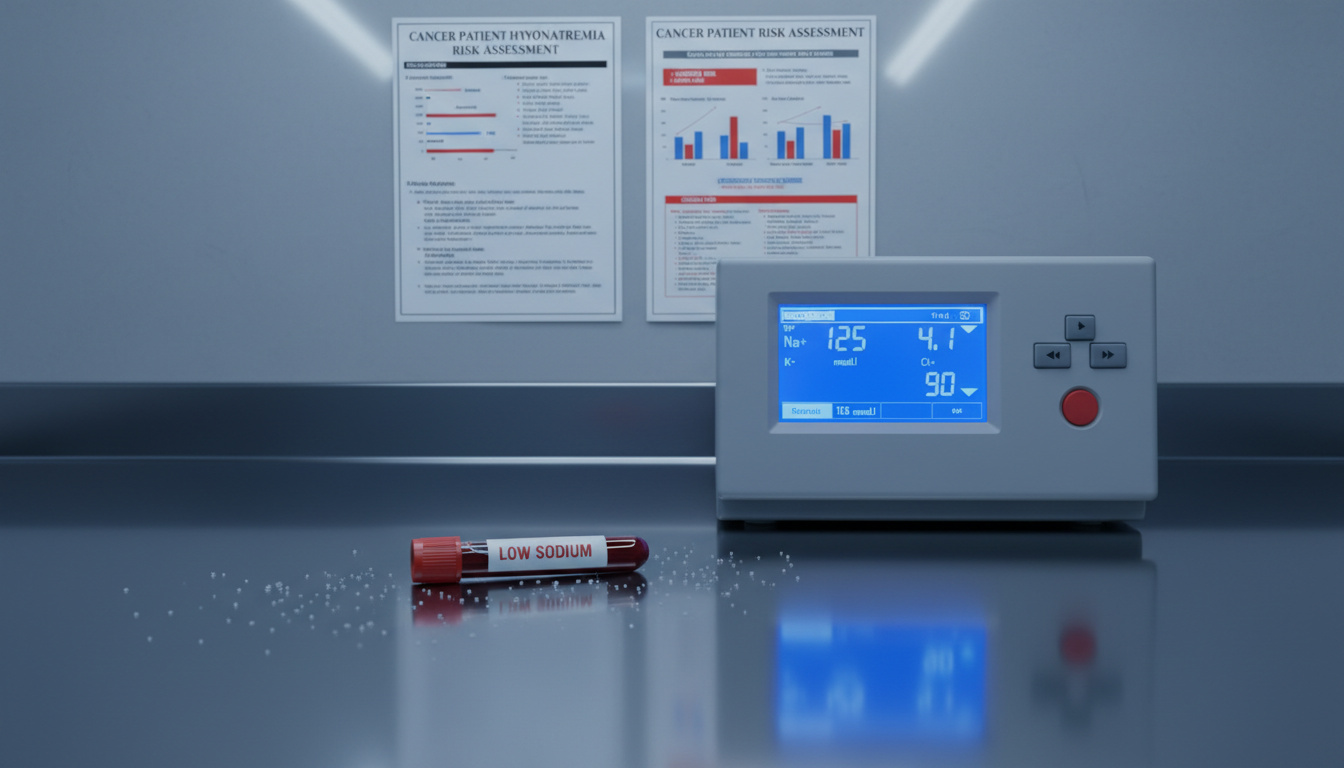

Hyponatremia, defined as serum sodium concentrations below 135 millimoles per litre, represents one of the most frequent electrolyte imbalances encountered in oncology practice. In cancer patients, particularly those diagnosed with small cell lung cancer, low sodium levels often emerge as an early indicator of disease presence rather than merely a treatment side effect. The condition frequently stems from the syndrome of inappropriate antidiuretic hormone, a paraneoplastic phenomenon where tumor cells secrete ectopic antidiuretic hormone according to recent clinical findings.
Beyond the primary cancer mechanism, multiple secondary factors contribute to sodium depletion in this population. Dehydration resulting from nausea and vomiting, common symptoms of both malignancy and chemotherapy, compounds the electrolyte loss. Specific chemotherapeutic agents, notably cisplatin and vinblastine, have established associations with hyponatremia development as documented in oncological studies. Pain itself may trigger physiological responses that further disrupt sodium homeostasis.
Understanding which malignancies most commonly trigger this imbalance, how the condition manifests clinically, and whether patients can expect recovery requires examining the specific cancer types involved and the underlying pathophysiological mechanisms driving sodium depletion.
What Type of Cancer Causes Low Sodium Levels?
Clinical Threshold
Hyponatremia occurs when serum sodium drops below 135 mmol/L, with severe cases falling under 120 mmol/L.
Primary Association
Small cell lung cancer (SCLC) demonstrates the strongest documented link to hyponatremia via SIADH.
Secondary Malignancies
Head and neck cancers, certain ovarian cancers, and occasional hematologic malignancies also associate with low sodium.
Diagnostic Timing
Patients frequently present with hyponatremia at diagnosis or during early disease stages rather than late progression.
Key Clinical Insights:
- Small cell lung cancer represents the most frequent malignancy associated with hyponatremia.
- The syndrome of inappropriate antidiuretic hormone (SIADH) serves as the primary pathophysiological mechanism.
- Ectopic antidiuretic hormone secretion by tumor cells drives sodium dilution and retention.
- Presentation often coincides with initial cancer diagnosis rather than late-stage progression.
- Head and neck cancers demonstrate secondary associations with electrolyte disturbances.
- Chemotherapeutic agents including cisplatin and vinblastine contribute to treatment-related sodium depletion.
- Dehydration from nausea and vomiting compounds cancer-related hyponatremia.
| Parameter | Clinical Details |
|---|---|
| Normal Sodium Range | 135-145 mmol/L |
| Hyponatremia Threshold | <135 mmol/L |
| Severe Hyponatremia | <120 mmol/L |
| Most Associated Cancer | Small Cell Lung Cancer (SCLC) |
| Primary Mechanism | Syndrome of Inappropriate Antidiuretic Hormone (SIADH) |
| Ectopic Source | Tumor cell ADH secretion |
| Other Associated Cancers | Head and neck, ovarian, hematologic |
| Contributing Drugs | Cisplatin, vinblastine |
| Secondary Factors | Dehydration, nausea, vomiting, pain |
Symptoms of Low Sodium Levels in Cancer Patients
Specific symptoms of hyponatremia in the cancer context remain poorly documented in current literature, though the condition manifests as a common electrolyte imbalance in this population. Consequently, clinicians typically rely on general hyponatremia symptomatology when evaluating cancer patients, though the specific presentation in oncology settings remains insufficiently documented.
Distinguishing From Other Conditions
Differentiating hyponatremia from other medical concerns remains essential for accurate diagnosis. Symptoms such as panic attack symptoms or lump on side of vagina symptoms require entirely different diagnostic approaches and treatment pathways. Clinicians must rule out these alternative conditions while investigating electrolyte imbalances in cancer patients.
Available research does not specify the unique symptom profile for hyponatremia in cancer patients. While general hyponatremia may cause neurological symptoms like confusion or seizures in severe cases, cancer-specific manifestations remain undocumented in current literature.
Is Low Sodium Dangerous in Cancer?
Hyponatremia represents more than a laboratory abnormality in cancer patients. In small cell lung cancer, the presence of low sodium levels specifically signals advanced disease states and serves as a presenting or complicating feature of the malignancy. This association transforms hyponatremia from a simple electrolyte disturbance into a potential prognostic indicator.
Prognostic Implications
The presence of hyponatremia at diagnosis or during early disease stages correlates with more advanced cancer progression in small cell lung cancer cases. While explicit risk stratification data remains limited, the electrolyte imbalance consistently emerges as a marker of significant disease burden rather than an isolated metabolic incident.
Current research indicates that while hyponatremia serves as a complicating feature in small cell lung cancer, explicit risk categories or mortality data specifically attributable to hyponatremia in cancer patients remain unspecified in available literature.
Can You Recover from Low Sodium Levels?
Available research indicates that while general management of hyponatremia in cancer patients receives attention in medical literature, specific recovery protocols and intervention details remain incompletely documented. Treatment discussions focus primarily on diagnosis and general management approaches rather than specific therapeutic interventions such as fluid restriction protocols, demeclocycline administration, or hypertonic saline utilization. Additionally, specific recovery rates or outcome data for cancer patients with hyponatremia remain unspecified in current studies.
General Management Approaches
While specific treatment protocols remain undocumented in the available research, general management of hyponatremia typically involves addressing the underlying cause—in this case, the malignancy and associated SIADH. Clinicians may consider fluid restriction or medication adjustments, though the specific efficacy of these interventions in cancer patients requires further documentation. The resolution of hyponatremia appears closely tied to successful cancer treatment, though exact correlations remain unspecified.
Given the lack of specific recovery protocols in current research, regular monitoring of serum sodium levels alongside cancer treatment progress represents the most documented approach for managing this electrolyte disturbance.
How Does Low Sodium Progress in Cancer Patients?
- Initial Presentation: Hyponatremia frequently manifests at the time of cancer diagnosis or during early disease stages, particularly in small cell lung cancer.
- Mechanism Activation: Tumor cells begin ectopic secretion of antidiuretic hormone, resulting in SIADH and subsequent sodium dilution.
- Contributing Factors: Secondary influences including dehydration from nausea, vomiting, pain, and chemotherapeutic agents such as cisplatin or vinblastine compound the electrolyte imbalance.
- Disease Correlation: The presence of hyponatremia signals advanced disease state in small cell lung cancer, serving as both a presenting feature and complicating factor throughout the disease course.
- Management Phase: Resolution depends on cancer treatment efficacy, though specific recovery timelines and intervention protocols remain undocumented in available research.
What Is Established vs. Uncertain About Low Sodium in Cancer?
Established Findings
- Small cell lung cancer demonstrates the strongest association with hyponatremia among malignancies.
- Syndrome of inappropriate antidiuretic hormone (SIADH) serves as the primary pathophysiological mechanism.
- Ectopic antidiuretic hormone secretion by tumor cells drives the electrolyte disturbance.
- Chemotherapeutic agents including cisplatin and vinblastine associate with hyponatremia development.
- Secondary factors including dehydration, nausea, vomiting, and pain contribute to sodium depletion.
- Hyponatremia often presents at diagnosis or during early disease stages.
- In small cell lung cancer, hyponatremia signals advanced disease states.
Uncertain or Undocumented Areas
- Specific symptom profiles for hyponatremia in cancer patients remain unspecified in available research.
- Detailed treatment protocols including fluid restriction specifics, demeclocycline use, or hypertonic saline administration lack documentation.
- Recovery rates and specific outcome data for cancer patients with hyponatremia remain unreported.
- UK-specific guidelines or management protocols for hyponatremia in cancer are not available in current literature.
- Targeted information regarding hyponatremia specifically in elderly cancer patients remains undocumented.
- The exact prevalence rates of hyponatremia across different cancer types beyond small cell lung cancer require further documentation.
Why Does Low Sodium Occur in Cancer Patients?
The pathophysiology of hyponatremia in cancer patients centers primarily on paraneoplastic syndromes, specifically the syndrome of inappropriate antidiuretic hormone (SIADH). In small cell lung cancer and other associated malignancies, tumor cells acquire the capability to secrete antidiuretic hormone ectopically, independent of normal physiological controls. This ectopic secretion results in inappropriate water retention by the kidneys, leading to dilutional hyponatremia where the total body sodium remains normal but becomes diluted by excess water.
Secondary mechanisms compound the primary SIADH-driven hyponatremia. Dehydration resulting from nausea and vomiting—common sequelae of both the malignancy itself and chemotherapeutic regimens—creates complex electrolyte disturbances. Pain, frequently undertreated in cancer populations, triggers physiological stress responses that may further disrupt sodium homeostasis. Additionally, specific chemotherapeutic agents including cisplatin and vinblastine demonstrate direct associations with hyponatremia development, potentially through nephrotoxic effects or SIADH induction.
Expert Perspectives on Hyponatremia in Cancer
Hyponatremia in cancer patients, particularly those with small cell lung cancer (SCLC), is commonly caused by the syndrome of inappropriate antidiuretic hormone (SIADH).
Clinical Research Consortium
Patients often present with hyponatremia at diagnosis or early in the disease course, establishing this electrolyte disturbance as a potential early indicator rather than solely a late-stage complication.
Oncology Electrolyte Studies
Key Takeaways on Low Sodium and Cancer
Hyponatremia in cancer patients, particularly those with small cell lung cancer, primarily results from the syndrome of inappropriate antidiuretic hormone, with presentation often occurring at diagnosis or during early disease stages. While specific symptom profiles and detailed treatment protocols remain undocumented in current research, the condition serves as a prognostic indicator for advanced disease in SCLC. Secondary factors including cisplatin, vinblastine, dehydration, and nausea contribute to the electrolyte disturbance. Distinguishing these concerns from unrelated health issues such as panic attack symptoms or lump on side of vagina symptoms remains essential for appropriate medical evaluation.
Frequently Asked Questions
What causes low sodium levels in the elderly?
Current research indicates that no targeted information regarding hyponatremia specifically in elderly cancer patients is available. While general causes include SIADH and dehydration in older populations, elderly-specific cancer-related mechanisms remain undocumented.
How to increase sodium levels?
Available research lacks specifics on interventions such as fluid restriction protocols, demeclocycline use, or hypertonic saline administration for cancer patients. Management approaches remain generalized rather than cancer-specific in current literature.
What happens when your body is low on sodium?
Search results do not detail specific symptoms of hyponatremia in the cancer context. While the condition manifests as a common electrolyte imbalance, its particular symptom profile in oncology patients remains unspecified in available research.
What sodium level is considered dangerous?
Severe hyponatremia is generally classified as serum sodium levels falling below 120 mmol/L, though specific danger thresholds for cancer patients require individual clinical assessment.
Are there UK-specific guidelines for low sodium in cancer?
No UK-specific guidelines or data regarding hyponatremia management in cancer patients are available in current research results. Management approaches appear consistent with international standards rather than UK-specific protocols.
Related stories





Marcus Bell covers UK politics, public policy and government for MorningTimes.uk.