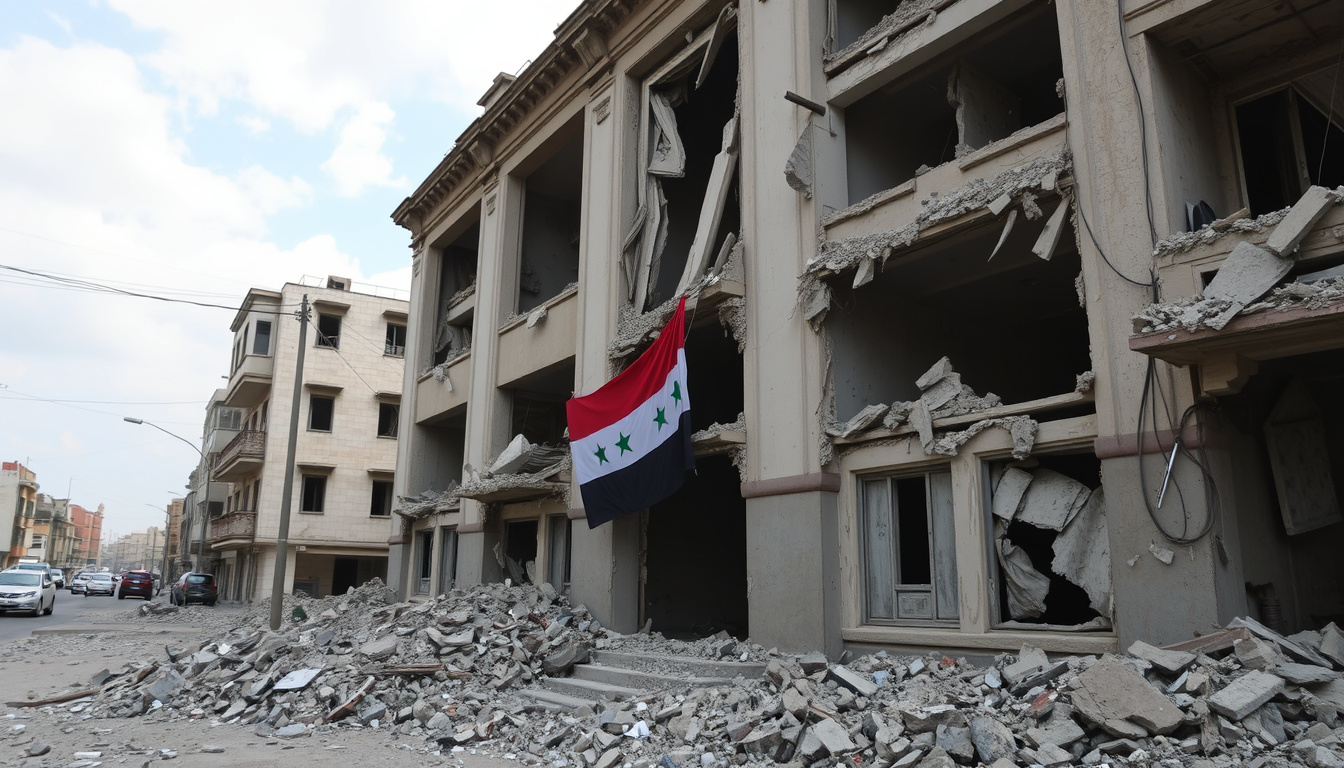
For 24 years, Bashar al-Assad was the iron fist of Syria — a leader who seemed untouchable despite a brutal civil war, international sanctions, and accusations of chemical weapons attacks. Then, in a matter of days in December 2024, his regime collapsed.
Born: 11 September 1965 ·
President from: 2000 to 2024 ·
Fall of regime: December 2024 ·
Current status: Fled to Russia (as of late 2024)
Quick snapshot
- Assad fled Syria on 8 December 2024 (Reuters)
- Russia granted asylum to Assad and his family (NPR)
- Opposition captured Damascus in 12 days (Al Jazeera)
- Assad is Alawite, a branch of Shia Islam (Britannica)
- Opposition offensive started late November 2024 (Al Jazeera)
- Damascus fell on 8 December 2024 (Washington Post)
- Assad issued first statement from exile on 16 December 2024 (Al Jazeera)
- Assad is under strict Russian supervision (Euronews)
- Syria’s political future is being shaped by opposition groups (Euronews)
- International criminal investigations into Assad continue (Euronews)
Seven key facts frame the rise, rule, and rapid fall of Bashar al-Assad.
The regime’s collapse was not a negotiated settlement — it was a military rout that exposed a hollowed-out state.
| Attribute | Value |
|---|---|
| Full Name | Bashar Hafez al-Assad |
| Born | 11 September 1965 |
| Religion | Alawite |
| Spouse | Asma al-Assad (m. 2000) |
| Children | 3 |
| Presidency | 17 July 2000 – 8 December 2024 |
| Fall of regime | 8 December 2024 |
What has happened to Bashar al-Assad?
Overview of the regime collapse
On 8 December 2024, Syrian opposition fighters declared Damascus liberated and said Bashar al-Assad had fled Syria (Al Jazeera). The Journal of Democracy described the moment as “the end of Syria’s Assad” — a regime that had held power for over five decades collapsing in less than two weeks.
The offensive reached Damascus in just 12 days, starting from opposition strongholds in the northwest (Al Jazeera). Government forces melted away with little resistance.
A regime that survived a 13-year civil war — with Russian air power, Iranian militias, and chemical weapons — fell in 12 days because its military and allies were no longer willing or able to fight.
Flight from Damascus
Russia’s foreign ministry confirmed on 8 December that Assad had resigned and left Syria (Reuters). At the time, his location was unknown. The Guardian noted that Assad’s future and location remained uncertain immediately after his departure.
Within hours, Russian state media reported that Assad and his family had arrived in Moscow (ABC News). NPR confirmed that Russia had granted asylum.
Current location reports
In his first statement from exile, issued on 16 December 2024 via Telegram, Assad claimed his exit was “not prearranged” and that he was evacuated to Russia on the evening of 8 December (Al Jazeera). A 2025 report from Euronews described Assad living in Moscow under strict Russian supervision with banned public appearances and limited movement. Russian Foreign Minister Sergey Lavrov confirmed in October 2025 that Assad and his family live in Moscow.
Why did Assad fall so quickly?
Internal factors: corruption and waning support
- Years of economic sanctions had crippled the Syrian economy and military readiness.
- Government salaries went unpaid; soldiers deserted in increasing numbers.
- Popular support among the Alawite base eroded as living conditions worsened.
As the Journal of Democracy noted, the regime’s internal decay made it “a hollowed-out shell” by late 2024. The security apparatus that once enforced fear was no longer functional.
External factors: loss of Russian and Iranian backing
Russia’s military focus had shifted to Ukraine, reducing the air support that had saved Assad in 2015 (The Guardian). Iranian-backed Hezbollah, decimated by Israeli strikes, could not deploy significant ground forces. The two pillars that had kept Assad standing for a decade were gone.
Russia and Iran were Assad’s lifeline — but both had more immediate crises. When the opposition offensive came, there was no one left to call for air cover.
Military collapse and opposition offensive
The opposition campaign began in late November 2024 from Idlib. Within days, key cities fell: Aleppo, Hama, Homs, and finally Damascus on 8 December (Washington Post). Government forces offered little resistance. The Telegraph reported that Moscow confirmed Assad’s resignation but did not comment on his whereabouts.
What this means: The regime’s collapse was not a negotiated settlement — it was a rout. Assad’s military evaporated, and his allies could not react in time.
Where is the Assad family now?
Location of Bashar and Asma al-Assad
Bashar and Asma al-Assad are in Moscow under Russian protection. Russian state media cited “humanitarian reasons” for granting asylum (CNN). The exact residence — reportedly in Moscow’s financial district according to German weekly Die Zeit — remains unconfirmed (Euronews).
The pattern: Assad’s whereabouts, once a mystery, are now confirmed — but the precise address is guarded, a reminder that his asylum is conditional on Russian discretion.
Fate of their children
The Assads have three children. Reports indicate they are also in Russia, though specific details about their whereabouts and daily lives are sparse and unconfirmed.
Extended family members
Some relatives remain in Syria or fled to other countries. The extended Assad family — which controlled large portions of Syria’s economy — has been scattered. The precise status of each member is unclear.
The Assad family’s assets — estimated in the billions — are now the target of international asset-freeze efforts. Russia’s willingness to repatriate or protect those assets will shape Assad’s long-term viability in exile.
Is Bashar al-Assad a Shia or Sunni?
Assad’s Alawite background
Bashar al-Assad is Alawite, a branch of Shia Islam. The Alawite sect emerged in the 9th century in what is now Syria and incorporates elements of Shia theology, Christian traditions, and Gnostic thought (Britannica).
Alawite beliefs and relation to Shia Islam
Alawites believe in a trinity of divine emanations and revere Ali, the cousin and son-in-law of the Prophet Muhammad, as a central figure. Most mainstream Shia and Sunni scholars do not consider Alawites fully adherent to orthodox Islamic teachings, though Alawites self-identify as Shia Muslims.
Religious demographics in Syria
Syria’s population before the civil war was roughly 74% Sunni Muslim, 12% Alawite, 10% Christian, and 4% other groups (Druze, Ismaili). The Alawite minority’s dominance in the military and security apparatus — a legacy of Hafez al-Assad’s strategy — became a source of deep resentment among the Sunni majority.
The trade-off: Assad’s Alawite identity gave him a fiercely loyal base within the security forces, but it also made the regime vulnerable to being framed as a sectarian dictatorship by the Sunni-led opposition.
What happened to Assad’s wife?
Asma al-Assad’s role during the civil war
Asma al-Assad, a British-born Syrian former investment banker, was a prominent public face of the regime. She oversaw charitable initiatives and was often presented by state media as a modernizing figure. Critics accused her of sanitizing the regime’s brutality.
Her health and current status
Asma has been treated for leukemia. Reports from 2024 indicated she received treatment under Russian medical care. She fled with her husband to Moscow and remains there under protection.
Reports about her whereabouts
Like her husband, Asma’s exact location in Russia is not publicly confirmed. The Euronews report from 2025 noted that the family lives under strict Russian supervision, with limited public appearances or communication.
The pattern: Asma’s trajectory mirrors her husband’s — from glamorous public figure in Damascus to isolated exile in Moscow, her health and freedom both now dependent on Russian goodwill.
Timeline of key events
- : Bashar al-Assad born in Damascus.
- : Assumes presidency after death of father Hafez al-Assad.
- : Syrian civil war begins following Arab Spring protests.
- : Russian military intervention supports Assad; regime stabilizes.
- : Regime weakened by sanctions, economic collapse, loss of allies.
- : Opposition offensive begins in northwest Syria.
- : Opposition captures Damascus; Assad flees to Russia.
- : Assad issues first statement from exile.
Related reading: Elizabeth Holmes: Prison Life, Net Worth, and the Fall of Theranos · Whitey Bulger: Latest News, Life, and 2024 Sentencing
Frequently asked questions
Who is Bashar al-Assad?
Bashar al-Assad is the former president of Syria who ruled from 2000 to 2024. He was trained as an ophthalmologist in London before being recalled to Syria after his older brother Bassel’s death. He assumed power after his father Hafez al-Assad died in 2000.
How did Bashar al-Assad maintain power for 24 years?
Through a combination of military force, a vast security apparatus, support from the Alawite minority, and strategic alliances with Russia and Iran. He also used chemical weapons and barrel bombs against civilians, as documented by multiple international bodies.
What is the Alawite sect?
Alawism is a branch of Shia Islam that emerged in 9th-century Syria. It incorporates elements of Shia theology and Christian traditions. Alawites make up about 12% of Syria’s population but dominated the regime’s military and security forces.
What role did Russia play in the Syrian civil war?
Russia intervened militarily in 2015, providing air support, special forces, and diplomatic cover at the UN Security Council. This intervention was decisive in preventing Assad’s defeat. However, by 2024, Russia’s focus on Ukraine reduced its capacity to support Assad.
What is the current situation in Syria after Assad’s fall?
Syria is in a transition period. Opposition groups, led by Hayat Tahrir al-Sham, control most major cities. The international community is debating reconstruction, accountability for war crimes, and the future of Syria’s political structure.
How many people died in the Syrian civil war?
The Syrian Observatory for Human Rights estimates over 500,000 people have been killed since 2011. The UN has stopped issuing official counts due to verification difficulties, but the figure is widely cited as around 500,000-600,000 dead.
What is Bashar al-Assad’s net worth?
Estimates vary widely, from hundreds of millions to several billion dollars. The family’s wealth was built through control of Syrian state industries, construction contracts, and alleged involvement in the Captagon drug trade. These assets are now subject to international freezing efforts.
Is Bashar al-Assad alive?
Yes. As of late 2025, Bashar al-Assad is alive and living in Moscow under Russian protection. Russian Foreign Minister Sergey Lavrov confirmed the family is in Moscow.
For the Syrian people, the calculation is stark: Assad’s fall ends a five-decade dynasty, but the path to accountability and reconstruction remains uncertain.
“Assad’s exit was not prearranged. He was evacuated to Russia on the evening of 8 December 2024.” — Bashar al-Assad, first statement from exile, 16 December 2024 (Al Jazeera)
“One year after Syria ouster, al-Assad lives under strict Russian supervision in Moscow exile.” — Euronews, December 2025 (Euronews)
What we know for sure
- Assad fled to Russia with his family (Reuters)
- Regime fell on 8 December 2024 (Al Jazeera)
- Opposition offensive reached Damascus in 12 days (Al Jazeera)
- Russia confirmed asylum (NPR)
- Assad is Alawite (Britannica)
What remains uncertain
- Exact location within Russia (Euronews)
- Long-term plans of the Assad family
- Future of Alawite community in Syria
- Status of Assad’s financial assets
- Whether Assad will face international prosecution
Related reading: Elizabeth Holmes: Prison Life, Net Worth, and the Fall of Theranos — a parallel story of a powerful figure’s dramatic collapse.

Richard Vane is Senior Reporter at MorningTimes.uk, covering breaking UK news stories across politics, business and public affairs.