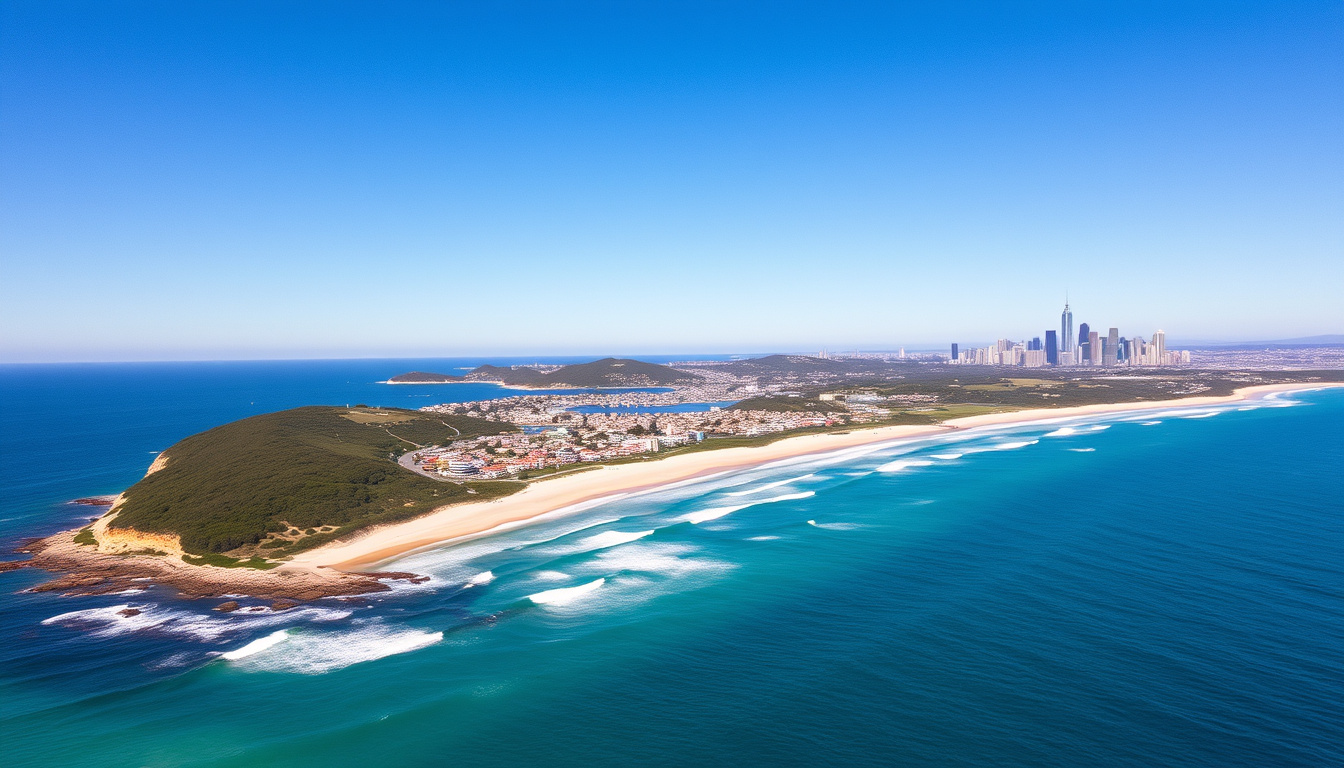
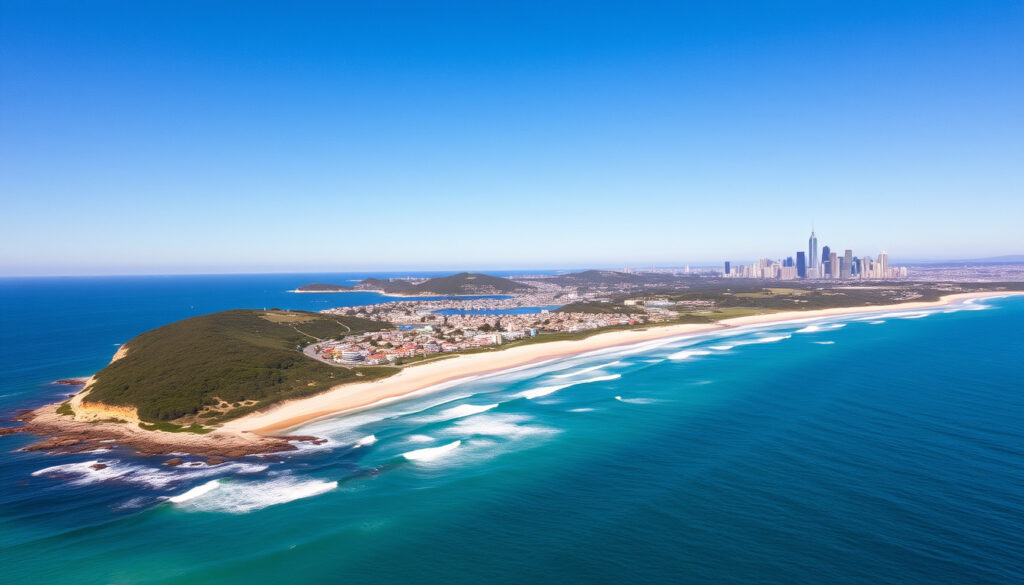
Bondi Beach shows up in travel photos more often than almost any other Australian destination — yet many visitors still discover gaps in their knowledge on arrival. Sitting at the edge of Sydney’s eastern urban sprawl rather than in some remote coastal corner, it’s woven into the city’s fabric in ways that surprise first-timers. This guide cuts through the confusion with exact coordinates, fastest routes from the airport, and what you actually need to know before you put your towel down.
Distance from Sydney CBD: 7 km east · Local government area: Waverley Council · Closest major city: Sydney · Iconic status: Sydney’s most famous beach · Transport from SYD Airport: Taxi or train options available
Quick snapshot
- Exact celebrity residents — claims surface regularly but verified names vary
- Current taxi fare ranges from Sydney Airport — flat-rate zones and surge pricing create variability
- 2008: Added to Australian National Heritage List (LatLong.net)
- 2021: Census recorded 11,513 residents (Whereis)
- Visitor numbers to Bondi continue climbing as the beach features in global social media content
- Waverley Council manages transport upgrades along the coastal corridor
| Attribute | Value | Source |
|---|---|---|
| Exact Location | 7 km east of Sydney CBD, Waverley Council | Wikipedia |
| Coordinates Reference | Latitude -33.890842, Longitude 151.274292 | LatLong.net |
| Distance to Airport | Approximately 20–25 km via roads | Rome2Rio transport planner |
| Fame Factor | Icon of Aussie beach culture | Whereis |
| Beach Length | Approximately 1 kilometre (0.6 miles) | Wikipedia |
| Postcode | 2026 | Whereis |
| Heritage Status | Australian National Heritage List since 2008 | LatLong.net |
| Closest Rail Station | Bondi Junction — 3 km from beach | Wikivoyage Sydney guide |
Where is Bondi Beach located in Sydney?
Bondi Beach occupies a distinct spot in Sydney’s geography — it’s the northernmost ocean beach to the south of Port Jackson (Sydney Harbour) and simultaneously the closest ocean beach to the Sydney CBD (Wikipedia). That dual distinction matters because it means you don’t need to carve out a full day trip to experience Sydney’s iconic beach culture. The beach stretches roughly 1 kilometre along a south-facing shore, which is atypical for Sydney’s coastline where most beaches face east or northeast (Wikipedia). The northern end is sheltered by Ben Buckler Point, a headland that creates a slightly calmer zone for swimmers at that extremity.
Distance from Sydney CBD
- The straight-line distance is 7 kilometres (4 miles) east of Sydney’s central business district
- By road the journey ranges from 10–12 kilometres depending on the route taken
The gap between “straight line” and “road distance” catches out visitors who assume a 7 km separation means a quick stroll. It doesn’t — but it’s still close enough that the suburb feels connected to the city rather than isolated.
Local government area
- Bondi Beach falls under Waverley Council jurisdiction
- Waverley is part of Sydney’s Eastern Suburbs region
- Council manages local transport infrastructure including bus shelters and road markings
Bondi Beach’s postcode is 2026, and the 2021 Australian Census recorded 11,513 residents living in the suburb year-round (Whereis mapping service). That resident population balloons during peak summer months when holidaymakers flood in from across Australia and abroad.
Bondi Beach on a map
If you’re pulling up coordinates to drop into a GPS app, look for latitude -33.890842 and longitude 151.274292 (LatLong.net location database). Those numbers place the beach squarely in the Eastern Suburbs pocket of Sydney’s metropolitan map, bordered by the residential suburbs of Tamarama to the south and North Bondi to the north. The beach sits at the southern end of the Bondi to Bronte coastal walk, a 6-kilometre clifftop track that draws walkers year-round.
The implication: Bondi isn’t a remote escape — it’s woven into Sydney’s eastern urban corridor. You can have a flat-white coffee at a Bondi café and be back at Circular Quay within 35 minutes.
Bondi Beach is the northernmost ocean beach to the south of Port Jackson and also the closest ocean beach to the Sydney CBD — a geographic distinction that puts it within easy reach of the city’s main tourist and business districts (Wikipedia).
Is Bondi Beach a part of Sydney?
This question sounds straightforward, but it reflects a real confusion point for international visitors who aren’t familiar with how Australian cities sprawl. Bondi Beach is unambiguously part of Sydney — it’s a suburb within the Sydney metropolitan area, governed by Waverley Council, sharing a contiguous urban boundary with surrounding eastern suburbs (Wikipedia). There’s no administrative separation, no ferry required, no regional border to cross. You simply ride a bus or train east and eventually you arrive.
Suburb status
- Bondi Beach is officially designated as a suburb (not just a beach) by the Australian Bureau of Statistics
- The suburb shares boundaries with Bondi Junction, Tamarama, and North Bondi
- Postcode 2026 covers the beach and immediate surrounding residential area
The distinction between “Bondi Beach” (the beach itself) and “Bondi” (the broader suburb) trips up some visitors. The beach sits at the southern edge of the suburb named Bondi. Address-wise, most coastal properties carry the 2026 postcode, while the commercial hub around Oxford Street Bondi often falls under the Bondi Junction postcode 2022.
Proximity to city centre
Bondi sits approximately 7 kilometres from the Sydney CBD — close enough that a weekday visit is entirely feasible even if you’re based downtown. By public transport, the fastest options take around 25–35 minutes from Circular Quay or Martin Place (Hello Bondi visitor guide). That’s meaningfully closer than beaches like Manly (which requires a ferry) or Palm Beach (which sits at Sydney’s northern tip, roughly 40 kilometres away by road).
What this means: Bondi Beach doesn’t require advance planning or a full day block. You can roll in for a morning swim and be back in the CBD for lunch if your schedule demands it.
Why is Bondi Beach so famous?
Bondi Beach didn’t accidentally become famous — it accumulated cultural weight over more than a century through a combination of accessibility, proximity to a major city, and deliberate promotion as Australia’s beach archetype (Whereis). By the 1970s and 80s, it had displaced earlier contenders (Coogee, Manly) as the beach that overseas visitors imagined when they pictured Australia. That image then reinforced itself through television — the reality series Bondi Rescue and the drama series Bondi Vet are filmed at the beach, broadcasting Bondi’s name into millions of living rooms globally.
Cultural icon status
Bondi Beach sits on the Australian National Heritage List, a designation it earned in 2008 recognizing its cultural and environmental significance (LatLong.net). The listing puts Bondi in the same category as historic buildings and natural sites deemed worth preserving for future generations — an unusual honour for a beach that also hosts a thriving commercial strip of cafés, surf shops, and backpacker hostels.
The paradox is real: Bondi is simultaneously a heritage-listed icon and a loud, busy commercial zone. For visitors seeking a quiet Australian beach experience, that contradiction is worth knowing. Bondi isn’t tranquil — it’s energetic.
Australian beach culture
Bondi is considered the birthplace or at minimum the most visible symbol of Australian beach culture as exported globally. The beach introduced concepts that became nationwide standards: patrolled swimming areas marked by flags, surf lifesaving clubs as community institutions, and the casual beach attire (board shorts, one-piece swimsuits, thongs/flip-flops for walking) that define summer across the country.
Tourism Australia, the national tourism authority, frequently features Bondi in international marketing campaigns precisely because the name carries instant recognition (Whereis). That marketing investment in turn feeds more visitors, more social media posts, more film shoots — a self-reinforcing cycle that has kept Bondi at the top of Australia’s beach hierarchy for decades.
Bondi Beach is the location of two television series, Bondi Rescue and Bondi Vet — programs that broadcast the beach’s name to international audiences and cement its status as Australia’s most recognized coastal destination (Whereis).
Can you swim in the sea at Bondi Beach?
Yes — with conditions. Bondi is a patrolled beach, which means qualified lifeguards are on duty during set hours, and swimming between the yellow-and-red flags is genuinely monitored for safety (Wikipedia). The flagged area creates a zone between the flags and the shoreline where lifeguards maintain direct observation. Swimming outside those flags is technically possible but carries elevated risk — the beach faces south, which creates different wave patterns than the east-facing beaches Sydney residents may be more accustomed to.
Safety conditions
- Bondi Beach is monitored by Waverley Council lifeguards and Bondi Surf Life Saving Club volunteers
- Flags mark the patrolled swimming area; hours vary by season
- The beach is graded and cleaned regularly, but conditions change with tides and weather
Seasonal operating hours for the lifeguard tower run roughly 8am–6pm in summer and 8am–4pm in winter, though these shift year to year based on staffing and demand. Outside patrolled hours, there’s no formal surveillance of swimmers — a point that gets tourists into difficulty when they assume the beach is always supervised.
Beachwatch monitoring
NSW Beachwatch monitors water quality at Bondi as part of the state’s beach monitoring program. Results are published online and feed into a letter-grade system (A through F) for each beach. Bondi consistently earns an A or B grade, but the grade can drop after heavy rain when stormwater runoff pushes pollution toward the coastline. If you’re visiting after a significant rain event, check the Beachwatch website before swimming.
For visitors who want to swim but feel uncertain about conditions: the ocean pool at the southern end of the beach offers a chlorine-free alternative where you can swim laps without wave action or rip current concerns. It’s free to enter and popular with locals.
Bondi is one of Australia’s most monitored beaches with dedicated lifeguard coverage — but that supervision applies only within flagged areas during operating hours. Outside those windows, swimmers face the same ocean risks (rips, waves, sudden drop-offs) with no backup on hand.
Why is Bondi Beach so dangerous?
Bondi’s reputation for danger is real but frequently overstated. The beach is considered high-risk because it combines strong surf conditions with enormous visitor volumes — more swimmers in the water means more incidents, even with a relatively low per-swimmer incident rate. Rip currents are the primary hazard. They form when water that has piled up against the beach returns to sea through narrow, fast-flowing channels. Bondi’s south-facing orientation and the shape of its seabed make these rips more common than at some nearby beaches (Wikipedia).
Rip currents
- Bondi averages several rescues per day during peak summer periods
- Lifeguards warn most frequently about rips at the northern and southern ends of the beach
- The Bondi Rescue television series is filmed at the beach specifically because rescues are frequent
The “don’t fight a rip” advice that lifeguards repeat constantly applies with particular force at Bondi. If caught in a rip, the recommendation is to float, signal for help, and let the current carry you sideways rather than swimming directly against it. Bondi lifeguards are well-practiced at identifying rip positions and will close flagged zones when conditions are particularly hazardous.
Safety ratings
Bondi has the infrastructure of a relatively safe beach — lifeguard towers, regular patrols, first aid stations, and an ocean pool option. But the Australian Surf Life Saving Association grades beaches on risk factors including wave height, beach slope, and rescue frequency. Bondi consistently scores in the medium-to-high risk category for an Australian beach, which reflects its rescue statistics rather than any structural inadequacy. Many Sydney residents swim only between the flags for exactly this reason.
The catch: Bondi attracts swimmers who don’t understand Australian beach conditions. International tourists in particular arrive with expectations shaped by their home country’s beach safety norms — different flag systems, no flag system, or calmer coastlines. That experience gap creates risk. The beach’s popularity means a higher proportion of visitors are swimming there for the first time, and first-time swimmers at a high-risk beach is a known safety challenge.
Getting to Bondi Beach from Sydney Airport
Arriving at Sydney Airport and wondering how to reach Bondi Beach is a common friction point. Sydney Airport sits west of the city centre; Bondi sits east. The airport-to-Bondi journey is roughly 20–25 kilometres by road, and there is no direct rail line running east from the terminal to the beach. The practical options fall into three categories: train plus bus, direct bus, or taxi/rideshare.
The fastest overall route is typically the train-to-bus combination via Bondi Junction: take the Airport Train from the terminal to Central Station (about 15 minutes), transfer to the T4 Eastern Suburbs line, ride to Bondi Junction (roughly 10 minutes from Central), then catch bus 333, 380, or 381 to the beach (about 15 more minutes) (Sydney Expert transit guide). Total door-to-sand journey: approximately 50–60 minutes. The train-to-bus route can save up to 30 minutes compared to the direct 333 bus from Circular Quay because Bondi Junction to Bondi Beach is the bottleneck leg where the express 333 clears traffic faster than a local transfer would.
Direct bus from Sydney CBD
The 333 is NSW’s most popular bus route, running express from Circular Quay to Bondi Beach via Town Hall and Central Station (Waverley Council transport page). The route from Circular Quay takes around 30 minutes to Bondi Beach, with buses running every 5 minutes during daytime hours (Rome2Rio). Fares on the 333 cost $1–4 using an Opal card (Sydney’s public transport contactless payment system) (Rome2Rio transport planner). The express 333 departs from bus stand A3 at Bondi Junction interchange.
Train to Bondi Junction then bus
- T4 Eastern Suburbs line trains depart from platform 24 at Central Station and stop at Bondi Junction
- Journey time from Central/Town Hall/Martin Place to Bondi Junction: approximately 10 minutes
- Bus 333 from Bondi Junction to Bondi Beach: approximately 15 minutes
- Combined train-bus journey from CBD: roughly 25 minutes — faster than the direct bus on weekdays
Don’t confuse Bondi Junction and Bondi Beach. Bondi Junction station is the closest rail station but sits 3 kilometres from the beach (Wikivoyage Sydney guide). That gap is why the bus leg is non-negotiable — the walk from Bondi Junction to the beach takes 35–40 minutes and isn’t pleasant in summer heat.
Taxi and rideshare from Sydney Airport
Taxis and rideshares (Uber, DiDi) are readily available at Sydney Airport. The trip from the airport to Bondi Beach runs approximately 20–25 kilometres and takes 30–45 minutes depending on traffic. A metered taxi typically costs $50–70; rideshare pricing varies with demand. At peak arrival times (mid-morning, early evening), expect surge pricing on rideshare platforms. Budget-conscious travellers should note that the train-to-bus route (roughly $3–5 in Opal fares) covers the same ground for a fraction of the cost, though it requires two transfers.
A taxi from Bondi Beach to Sydney CBD costs $24–29 and takes approximately 10 minutes by car — a useful benchmark for understanding the direct route cost, though fares from Sydney Airport run higher due to the longer distance.
— Rome2Rio transport data
Waverley is well serviced by public transport, and indeed has NSW’s most popular bus route (the 333 Circular Quay to Bondi Beach express).
— Waverley Council
Bondi Beach vs Other Sydney Beaches
The comparison below shows how Bondi stacks up against other Sydney beaches — useful context for visitors deciding which destination fits their priorities.
| Beach | Distance from CBD | Transport Time | Character |
|---|---|---|---|
| Bondi Beach | 7 km east | 30–35 minutes | Iconic, crowded, tourist infrastructure |
| Coogee Beach | 8 km south-east | 40–45 minutes | Local feel, slightly quieter, rocky |
| Manly Beach | 13 km north-east | 50–60 minutes ( ferry required) | Family-friendly, ferry adds novelty |
| Palm Beach | 40 km north | 60–75 minutes by car | Remote, surfing-focused, scenic |
| Bronte Beach | 5 km south of Bondi | 35–40 minutes | Local favourite, calmer, less touristy |
The pattern is straightforward: Bondi is the closest iconic beach to the CBD, which explains why it absorbs the bulk of Sydney’s beach-seeking visitors. If you want Bondi’s energy, you go to Bondi. If you want a quieter experience with less crowding, the adjacent suburbs of Coogee or Bronte offer meaningful differences in atmosphere while remaining accessible from the same transport corridors.
Bondi Beach Safety and Visitor Tips
Beyond the geography and transport logistics, a few practical points govern whether visitors actually enjoy their time at Bondi.
Know before you go
- Arrive before 10am on summer weekends if you want parking within walking distance — street parking fills fast and neighbouring streets enforce strict time limits
- The Bondi Beach promenade has cafés and toilets; the beach itself has limited facilities beyond the lifeguard tower and change rooms
- Summer brings crowds to the point where the sand feels genuinely full; shoulder seasons (March–May, September–November) offer a more relaxed experience with comparable weather
The most actionable tip for first-time visitors: swim between the flags, check the Beachwatch water quality grade before entering after rain, and understand that Bondi’s fame cuts both ways — it delivers the iconic experience most visitors want, but that experience comes with crowds and noise. If you want the beach without the spectacle, arrive early or head south to Bronte or Coogee.
Bondi Beach is easily accessible by public transport, rideshare services, and more — making it one of the most logistically convenient iconic beaches in Australia for city-based visitors.
— Hello Bondi (Official Bondi Beach tourism source)
Related reading: Where Is Bondi Beach? Sydney Location, Map & Facts
Bondi Beach stretches just 7km east of Sydney CBD, where precise location maps clarify transport from the airport and rip current zones.
Frequently asked questions
Which city is closest to Bondi Beach?
Sydney is the closest city. Bondi Beach sits 7 kilometres east of Sydney’s CBD and is a suburb within the Sydney metropolitan area. There is no separate city, town, or regional centre closer than Sydney.
How much is a taxi from Sydney Airport to Bondi Beach?
A taxi or rideshare from Sydney Airport to Bondi Beach typically costs $50–70, depending on traffic conditions, time of day, and surge pricing for rideshare platforms. The distance is roughly 20–25 kilometres by road.
Is Bondi Beach near Perth?
No. Perth is on Australia’s west coast, approximately 4,100 kilometres from Bondi Beach by road. Flying between Sydney and Perth takes around 5 hours. There is no practical sense in which Bondi Beach can be described as near Perth.
Is Bondi Beach near Melbourne?
No. Melbourne sits roughly 900 kilometres south-west of Bondi Beach along the coast. Driving between the two cities takes approximately 10–11 hours. A flight takes about 1 hour 30 minutes. Bondi is not close to Melbourne.
What is the prettiest beach in Sydney?
Beauty is subjective, but Bondi, Manly, and Coogee consistently rank highest in visitor preference surveys. If you define “prettiest” by photographic merit, the Bondi to Bronte coastal walk offers some of Sydney’s most dramatic clifftop scenery. For water clarity and calmer conditions, the ocean pool at the southern end of Bondi Beach or the beach at nearby Gordon’s Bay are frequently cited.
What cities are 2 hours away from Sydney, Australia?
Newcastle (north) and Wollongong (south) are the major cities closest to Sydney, both roughly 2 hours by road. Newcastle sits about 160 kilometres north; Wollongong about 90 kilometres south. Both are coastal cities with their own beaches and are feasible day trips if you’re based in Sydney.
Which celebrities live in Bondi Beach?
Celebrity residency claims at Bondi surface regularly in gossip media but verified, confirmed residents are harder to pin down. Australian television personalities, athletes, and media figures have been associated with the area, but specific names shift as leases change and properties trade hands. Treat individual residency claims as unverified unless confirmed through a named, credible source.
Related stories





James Holloway covers culture, lifestyle and society for MorningTimes.uk.