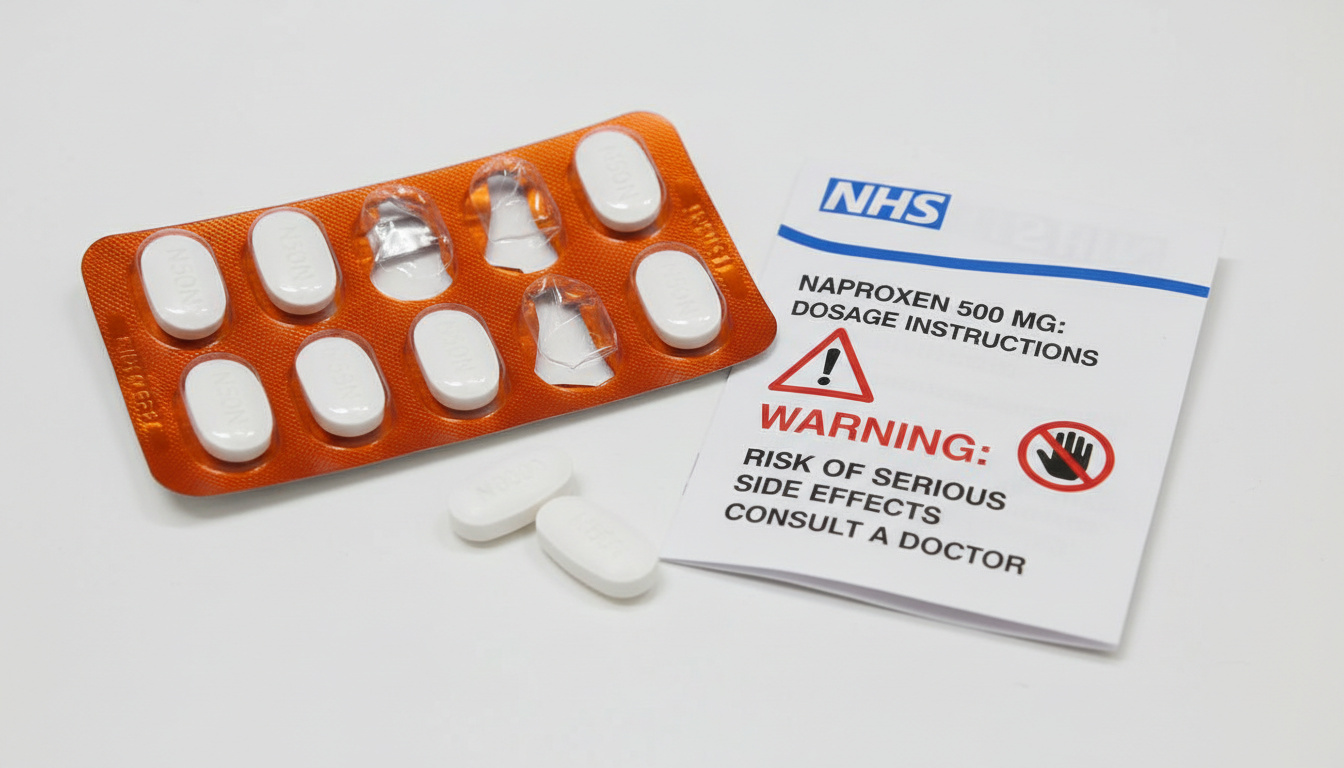

Naproxen 500 mg represents a potent non-steroidal anti-inflammatory drug (NSAID) frequently prescribed for moderate to severe pain and inflammatory conditions. Operating through the inhibition of cyclooxygenase (COX) enzymes, it reduces prostaglandin production to address both pain signals and underlying inflammation simultaneously.
Unlike analgesics that merely mask discomfort, this medication targets the biochemical pathways responsible for swelling and fever. Its 500 mg formulation sits at the upper end of standard therapeutic dosing, distinguishing it from lower-strength over-the-counter alternatives available in some markets. Medical authorities classify it as a strong option within the anti-inflammatory category, particularly for musculoskeletal and joint-related disorders.
Determining whether this specific dosage suits individual needs requires understanding its pharmacological profile, regulatory status, and comparative effectiveness against alternatives such as ibuprofen. The following sections examine its strength credentials, dosing protocols, and safety considerations based on current clinical guidance.
Is Naproxen 500 mg a Strong Painkiller?
Drug Classification
Non-steroidal anti-inflammatory drug (NSAID)
Standard Dosage
500 mg once or twice daily
Primary Application
Moderate to severe pain and inflammation
Legal Status
Prescription-only at 500 mg strength (UK)
Key Characteristics of Naproxen 500 mg
- Provides dual action against pain and inflammation via COX enzyme inhibition.
- Considered a strong therapeutic option within the NSAID class for moderate to severe symptoms.
- Requires only twice-daily administration due to 8–12 hour duration of action.
- Targets prostaglandin reduction at the source rather than merely masking pain signals.
- Verified by NHS and Prescription Doctor as effective for arthritis, gout, and dental conditions.
- Contraindicated for certain populations, particularly those with specific cardiovascular or renal conditions.
Essential Facts About Naproxen 500 mg
| Attribute | Specification |
|---|---|
| Mechanism of Action | COX-1 and COX-2 enzyme inhibition |
| Analgesic Strength | Strong for moderate pain; comparable to prescription NSAIDs |
| Maximum Daily Dose | 1,000–1,500 mg (condition-dependent) |
| Onset of Relief | Approximately 1 hour |
| Peak Plasma Concentration | 1–4 hours post-administration |
| Duration of Effect | 8–12 hours |
| UK Availability | Prescription-only (500 mg) |
| US Availability | Prescription (500 mg); 220 mg OTC |
What Is the Recommended Naproxen 500 mg Dosage?
Administration protocols vary significantly depending on the specific condition being treated, patient age, and individual organ function. Medical professionals emphasise that exceeding recommended limits substantially increases the risk of adverse effects without proportionally enhancing pain relief.
Standard Dosing Framework
For most adults managing arthritis or musculoskeletal pain, the typical regimen begins with 500 mg administered once or twice daily. The NHS specifies that maintenance therapy generally ranges between 500 mg and 1,000 mg daily, with strict maximums varying by indication.
Condition-Specific Variations
| Condition | Initial Dose | Maintenance | Maximum Daily |
|---|---|---|---|
| Joint conditions (arthritis) | 500 mg (1–2 doses) | 500–1,000 mg/day | 1,000–1,500 mg |
| Muscle/bone disorders | 500 mg | 250 mg every 6–8 hours | 1,250 mg |
| Gout attacks | 750 mg | 250 mg every 8 hours | As directed |
| Controlled-release | 750–1,000 mg once | Adjusted as needed | 1,500 mg |
Acute gout attacks demand higher initial exposure, typically starting with 750 mg followed by 250 mg every eight hours until the episode resolves. Conversely, dysmenorrhoea protocols permit up to 1,250 mg daily initially, subsequently reducing to 250 mg every six to eight hours as symptoms permit.
Consuming naproxen alongside food or milk substantially mitigates gastric irritation risks. The Mayo Clinic notes this practice does not significantly alter absorption rates but improves tolerability for long-term users.
What Are the Side Effects of Naproxen 500 mg?
While generally well-tolerated in short courses, naproxen carries distinct risk profiles affecting gastrointestinal, cardiovascular, and renal systems. Understanding these potential reactions enables informed decision-making regarding its suitability.
Common Adverse Reactions
Frequently reported issues include epigastric discomfort, heartburn, nausea, and somnolence. The Cleveland Clinic documentation indicates these effects often diminish with food consumption or dose adjustment.
Serious Health Risks
Prolonged or high-dose administration elevates the probability of gastrointestinal bleeding, ulceration, and perforation. Additionally, MedlinePlus warns of increased myocardial infarction and cerebrovascular accident risks, particularly in patients with pre-existing cardiovascular disease.
Patients with histories of heart disease, stroke, or anticoagulant therapy should exercise extreme caution. Naproxen possesses mild antiplatelet properties that, while weaker than aspirin, still potentiate bleeding risks when combined with blood thinners.
Does Naproxen Thin Blood?
Naproxen demonstrates mild anticoagulant effects through platelet function inhibition. This mechanism, shared across NSAIDs, increases bleeding tendency during surgical procedures or trauma, necessitating discontinuation prior to elective operations as directed by healthcare providers.
Is Naproxen 500 mg Effective for Toothache and Available Over the Counter?
Dental practitioners occasionally recommend this medication for odontogenic pain due to its anti-inflammatory properties, though regulatory frameworks restrict acquisition without professional consultation in many jurisdictions.
Efficacy for Dental Pain
Inflammation drives significant discomfort in dental pathologies such as pulpitis or periapical abscesses. By suppressing prostaglandin synthesis, naproxen effectively reduces swelling associated with toothache, though its slower onset compared to alternatives renders it less ideal for immediate breakthrough pain.
While useful for symptomatic relief, naproxen does not address underlying bacterial infections requiring antibiotic therapy or definitive dental intervention such as root canal treatment or extraction.
Prescription Requirements and Regional Variations
Within the United Kingdom, 500 mg formulations remain strictly prescription-only, with pharmacists unable to dispense them without medical authorisation. Conversely, the United States permits lower-dose preparations (220 mg) under the brand Aleve for over-the-counter purchase, reserving 500 mg tablets for prescription distribution. GoodRx confirms this regulatory dichotomy.
Patients seeking alternatives for What Is Lyme Disease – Symptoms, Causes, Treatment related pain or other inflammatory conditions should consult specialists regarding appropriate NSAID selection.
What Is the Typical Timeline for Naproxen Effectiveness?
Understanding the pharmacokinetic profile helps set realistic expectations for pain relief onset and duration, particularly when transitioning from faster-acting alternatives.
- Initial Administration: Patient ingests the prescribed dose, typically 500 mg for adult pain management.
- Onset of Action: Measurable symptom relief generally commences within approximately one hour post-ingestion.
- Peak Concentration: Maximum plasma levels and optimal therapeutic effect occur between one and four hours after dosing.
- Sustained Relief: The medication maintains efficacy for eight to twelve hours, permitting convenient twice-daily scheduling.
- Full Anti-Inflammatory Benefit: For chronic conditions like arthritis, cumulative effects may require up to three days of consistent administration to reach maximal impact.
What Is Established About Naproxen 500 mg and What Remains Uncertain?
| Established Information | Uncertain or Variable Factors |
|---|---|
| Verified efficacy for moderate pain (NHS, Healthline) | Individual toothache severity responses |
| 500 mg standard initial dose for arthritis | Long-term cardiovascular risk at low doses |
| 8–12 hour duration versus ibuprofen | Genetic metabolic variations |
| Definite GI and CV risk with prolonged use | Superiority over other NSAIDs for all pain types |
How Does Naproxen Fit Into Broader Pain Management?
Positioning within the analgesic hierarchy clarifies when clinicians prefer this agent over alternatives. As an NSAID, it occupies the middle ground between mild analgesics like paracetamol and potent opioids, offering particular advantages for inflammatory pathologies.
Its distinction from ibuprofen lies primarily in pharmacokinetics rather than absolute potency. Both drugs share similar mechanisms, yet naproxen’s extended half-life favours chronic conditions requiring steady anti-inflammatory coverage, whereas ibuprofen’s rapid onset suits acute, breakthrough discomfort. Unlike opioids, which alter central pain perception, this medication addresses peripheral inflammation directly, avoiding dependency risks but providing less dramatic immediate relief.
For patients managing persistent inflammatory conditions or recovering from Symptoms of Liver Cancer – Early Signs, Stages and Detection related complications, understanding these distinctions proves crucial for appropriate therapeutic selection.
What Do Medical Authorities Say About Naproxen 500 mg?
For joint conditions such as arthritis, the usual dose is 500 mg to 1,000 mg a day in two doses at 12-hour intervals.
NHS Medicines Guide
For arthritis, the usual dose is 250 milligrams to 500 milligrams twice a day, up to a maximum of 1,500 mg per day.
Mayo Clinic
Naproxen is considered a strong painkiller due to its dual action on pain and inflammation, lasting longer than ibuprofen.
UK Meds
Is Naproxen 500 mg the Right Choice for Your Pain?
Naproxen 500 mg constitutes a robust prescription-strength anti-inflammatory suitable for moderate to severe pain, particularly where inflammation drives symptomatology. Its twice-daily regimen and established efficacy for arthritis, gout, and dental pain render it a first-line option for many chronic conditions, though cardiovascular and gastrointestinal risks necessitate medical supervision. Individuals should consult healthcare providers to determine compatibility with existing conditions and to explore alternatives such as Symptoms of Liver Cancer – Early Signs, Stages and Detection when addressing complex pain presentations.
Frequently Asked Questions About Naproxen 500 mg
What is the difference between naproxen 250 mg and 500 mg?
The 250 mg strength suits maintenance therapy or milder symptoms, while the 500 mg dose provides stronger initial relief for moderate to severe pain as prescribed by clinicians.
Can I purchase naproxen 500 mg without a prescription in the UK?
No. In the United Kingdom, 500 mg tablets require a medical prescription. Lower strengths may be available over the counter in other jurisdictions, but 500 mg remains restricted.
How does naproxen compare to ibuprofen for pain relief?
Both share similar anti-inflammatory potency, but naproxen lasts 8–12 hours versus ibuprofen’s 4–6 hours, making it preferable for chronic conditions despite a slower onset.
What are gastro-resistant naproxen tablets?
These enteric-coated formulations protect the stomach lining by delaying drug release until the small intestine, reducing gastric irritation risks associated with standard tablets.
Can naproxen be used long-term for chronic arthritis?
Yes, though prolonged use requires medical monitoring due to cumulative cardiovascular and gastrointestinal risks. Regular assessment ensures benefits continue outweighing potential harms.
Does naproxen affect blood pressure?
NSAIDs including naproxen may elevate blood pressure and reduce the effectiveness of antihypertensive medications. Patients with hypertension require careful monitoring during therapy.
Is naproxen safe during pregnancy?
Medical authorities generally advise against NSAID use during pregnancy, particularly after 20 weeks gestation, due to foetal renal and cardiovascular complications. Consult obstetricians before use.
Related stories





Catherine Lowe is Managing Editor at MorningTimes.uk, running the daily news list and the publishing schedule.