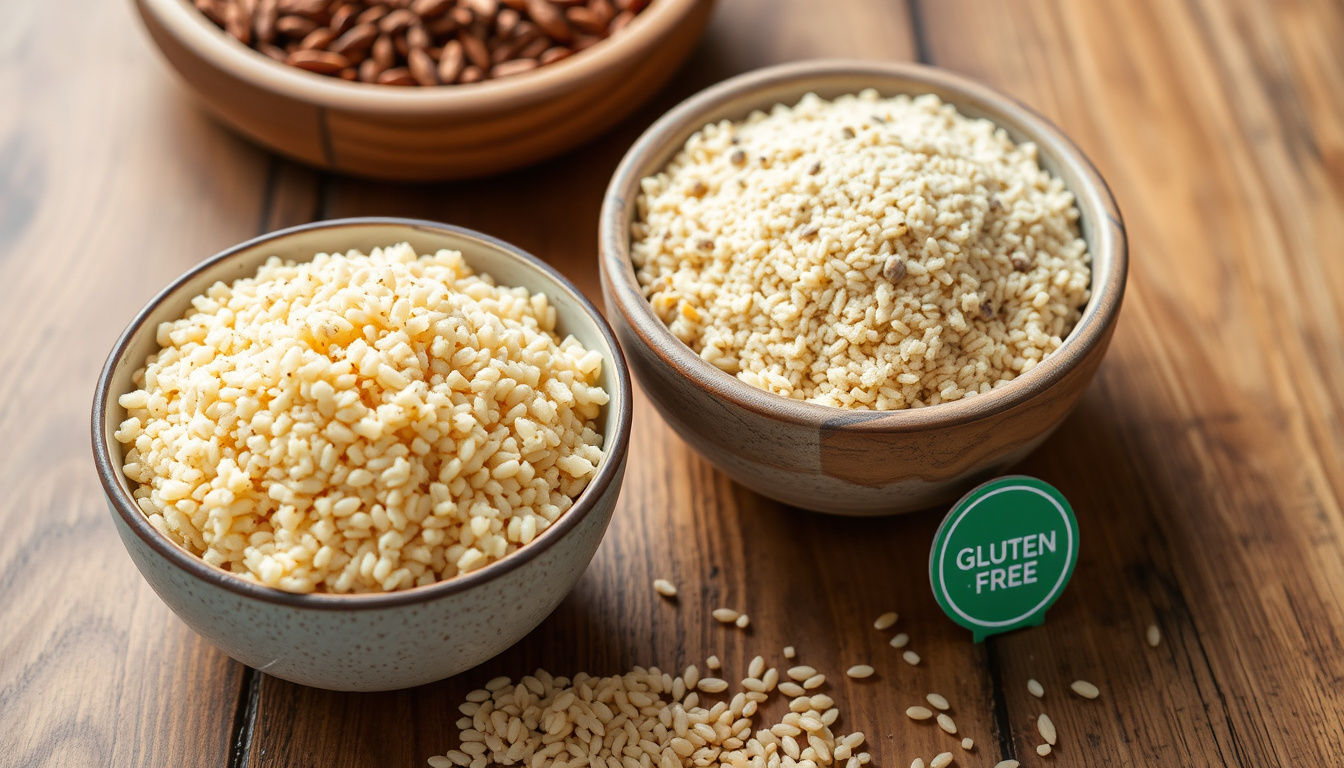
If you’ve ever stood in the grocery aisle wondering whether that box of couscous is safe for a gluten-free diet, you’re not alone. The short answer is direct: traditional couscous is made from durum wheat semolina and contains gluten, so it is not gluten-free. But several certified gluten-free alternatives exist that match its texture and versatility. Here’s what you need to know to choose wisely and eat safely.
Standard couscous is made from: durum wheat semolina ·
Gluten content of durum wheat: contains gluten ·
Estimated prevalence of celiac disease: 1 in 100 people worldwide ·
Common gluten-free alternative grain: quinoa
Quick snapshot
- Traditional couscous contains gluten (National Celiac Association (patient advocacy organization))
- Celiac patients must avoid traditional couscous (National Celiac Association)
- Gluten-free labeled couscous alternatives exist and are safe for celiacs (MyGoodFoodWorld (food blog))
- Exact gluten content of giant couscous variants varies by brand; some may be labeled gluten-free, others not (MyGoodFoodWorld)
- Long-term health impacts of occasional accidental gluten ingestion for people with celiac disease are not fully documented (MyGoodFoodWorld)
- Some Middle Eastern versions may use millet instead of wheat, but this is not widely documented (Celiac.com forums (patient community))
- Fonio, a gluten-free ancient grain, has been cultivated in West Africa for over 5,000 years (Glutarama (gluten-free recipe site))
- Always check for certified gluten-free labeling when purchasing couscous alternatives
- More brands are introducing gluten-free couscous made from rice, corn, or quinoa
Four key facts distinguish traditional couscous from safe alternatives:
| Attribute | Detail |
|---|---|
| Couscous base ingredient | Durum wheat semolina |
| Gluten content | Yes, contains gluten |
| Celiac safety | Not safe unless labeled gluten-free |
| Common gluten-free substitute | Quinoa |
Why this matters: The table makes one thing plain — unless a product carries a gluten-free certification, standard couscous is off-limits for anyone with celiac disease.
Is couscous gluten free?
What is couscous made from?
Couscous is a type of pasta made from semolina flour derived from durum wheat. The National Celiac Association (patient advocacy organization) explains that because durum wheat contains gluten proteins, traditional couscous is not gluten-free. This includes both fine Moroccan couscous and larger varieties such as Israeli (pearl) couscous, which are also wheat-based (MyGoodFoodWorld).
Does traditional couscous contain gluten?
Yes. According to Gluten Free Society (nutrition education organization), couscous is “a type of pasta made from wheat” and is unsafe for people with celiac disease, wheat allergy, or gluten sensitivity. The National Celiac Association confirms: “This means that people with celiac disease should avoid traditional couscous.”
Because couscous looks like a grain (similar to quinoa or rice), many people assume it is naturally gluten-free — but its wheat base makes it a hidden gluten source.
The implication: Traditional couscous is not gluten-free, and celiacs must avoid it.
Can celiac people eat couscous?
Why celiacs must avoid traditional couscous
For individuals with celiac disease, consuming any gluten triggers an immune response that damages the small intestine. The National Celiac Association explicitly warns that traditional couscous “is not gluten-free” and should be avoided. Even small amounts can cause symptoms and long-term health risks.
Can celiacs eat gluten-free labeled couscous?
Yes — but only if the product carries a certified gluten-free label. Some brands produce couscous from corn, rice, or quinoa (MyGoodFoodWorld). The Glutarama (gluten-free recipe site) even offers a DIY method: blitz gluten-free pasta into couscous-size beads, boil, and season.
Restaurant menus may list “cous cous” that is actually a gluten-free substitute made from brown rice or quinoa, but this is not guaranteed. Always ask (Celiac.com forums (patient community)).
The implication: For celiacs, “couscous” on a menu or package means wheat until proven otherwise.
What is a gluten-free alternative to couscous?
Quinoa as a substitute
Quinoa is recommended as a 1:1 gluten-free swap for couscous. It offers a similar fluffy texture and mild nutty flavor. According to Gluten Free Society, cauliflower rice can also replace couscous in side dishes.
Other gluten-free grains and options
- Millet – a naturally gluten-free grain that closely resembles couscous (MyGoodFoodWorld)
- Buckwheat – despite its name, it is gluten-free and works as a couscous alternative (same source)
- Rice – white or brown rice can be seasoned similarly
- Amaranth and sabudana (tapioca pearls) – less common but effective (MyGoodFoodWorld)
- Fonio – an ancient West African grain that cooks in 3 minutes and has a light, nutty flavor (Glutarama)
- Cassava-based orzo – mimics the shape and texture of couscous (Gluten Free Society)
The pattern: The gluten-free aisle now offers multiple grains that can substitute couscous in salads, stews, and pilafs. Look for certified gluten-free labeling on any packaged alternative.
What are 6 foods celiacs should avoid?
Foods that often contain hidden gluten
- Wheat, barley, rye – and their derivatives (e.g., semolina, spelt, triticale)
- Traditional couscous – often mistaken as gluten-free but made from wheat semolina
- Soy sauce – typically fermented from wheat
- Some salad dressings and marinades – may use wheat-based thickeners
- Beer (unless labeled gluten-free) – brewed from barley
- Processed snacks and soups – can contain hidden gluten in flavorings or stabilizers
How to identify gluten in packaged foods
The National Celiac Association advises reading labels for wheat, barley, rye, and oats (unless certified gluten-free). Look for “gluten-free” certification symbols. If a package says “couscous” without a gluten-free claim, assume it contains wheat.
The trade-off: Relying on menu descriptions or packaging alone is risky; certification is the only guarantee.
What is surprisingly not gluten-free?
Common unexpected sources of gluten
Many foods that appear grain-like are actually wheat-based. Couscous tops this list. Others include seitan, some imitation meats, and even some soy sauces. A forum user on Celiac.com forums (patient community) noted that restaurant menus sometimes list “cous cous” without specifying it is a gluten-free substitute.
Label reading tips
- Always check for “gluten-free” certification on any grain-like product.
- Be wary of terms like “semolina,” “durum flour,” or “wheat pasta.”
- When dining out, ask specifically if the couscous is gluten-free — if they can’t confirm, skip it.
The catch: Even experienced gluten-free shoppers can be fooled by the innocent look of couscous. Always double-check the label.
Confirmed facts vs. what remains unclear
Confirmed facts
- Traditional couscous is made from durum wheat semolina and contains gluten — confirmed by the National Celiac Association.
- Celiac patients must avoid traditional couscous (same source).
- Gluten-free labeled couscous alternatives exist and are safe (MyGoodFoodWorld).
What’s unclear
- Whether all giant couscous variants are gluten-free — some may be made from wheat, some from corn or rice; labeling varies (MyGoodFoodWorld).
- The long-term health effects of occasional accidental gluten ingestion for celiacs are not fully studied.
- Forum reports suggest some Middle Eastern versions use millet instead of wheat, but this is not widely documented (Celiac.com forums).
Expert perspectives on couscous and gluten
“Couscous is not gluten-free.”
— National Celiac Association (patient advocacy organization) (source)
“Traditional couscous is not gluten-free, and anyone with celiac disease, wheat allergy, or gluten sensitivity must avoid it.”
— MyGoodFoodWorld (food resource) (source)
“Couscous is a type of pasta made from wheat.”
— Gluten Free Society (nutrition education) (source)
Editor’s note: The weight of expert opinion is unanimous: traditional couscous is not gluten-free. The only safe couscous is one that is explicitly certified gluten-free, usually made from rice, corn, quinoa, or fonio.
For those seeking a safe substitute, gluten-free quinoa alternatives provide a nutritious and naturally gluten-free option.
Frequently asked questions
Is quinoa gluten free?
Yes, quinoa is naturally gluten-free and is a popular substitute for couscous. The MyGoodFoodWorld recommends it as a 1:1 swap.
How long after stopping gluten will I feel better?
Many people with celiac disease report symptom improvement within a few days of eliminating gluten, but full intestinal healing can take months. Consult your healthcare provider.
What is celiac poo like?
Celiac-related stools are often pale, foul-smelling, and float due to fat malabsorption. If you experience these symptoms, seek medical advice.
Does Weetabix have gluten in it?
Yes, traditional Weetabix is made from wheat and contains gluten. It is not safe for a gluten-free diet.
Is giant couscous gluten free?
Not always. Giant (Israeli) couscous is typically made from wheat semolina and contains gluten. Some brands offer gluten-free versions made from corn or rice — check the label.
Where can I buy gluten free couscous?
Health food stores, larger supermarkets, and online retailers carry gluten-free couscous — look for brands using corn, rice, or quinoa. Always verify the gluten-free certification.
What is the best fruit for celiac disease?
All fresh fruits are naturally gluten-free. Berries, bananas, and apples are excellent choices. There is no single “best” fruit — variety is key.
For anyone managing celiac disease, understanding that standard couscous is not gluten-free is the first step; always rely on certified labels and trusted substitutes.
Related reading: Is Cinnamon Good for You? · Can Dogs Eat Spinach?
Related stories




James Holloway covers culture, lifestyle and society for MorningTimes.uk.