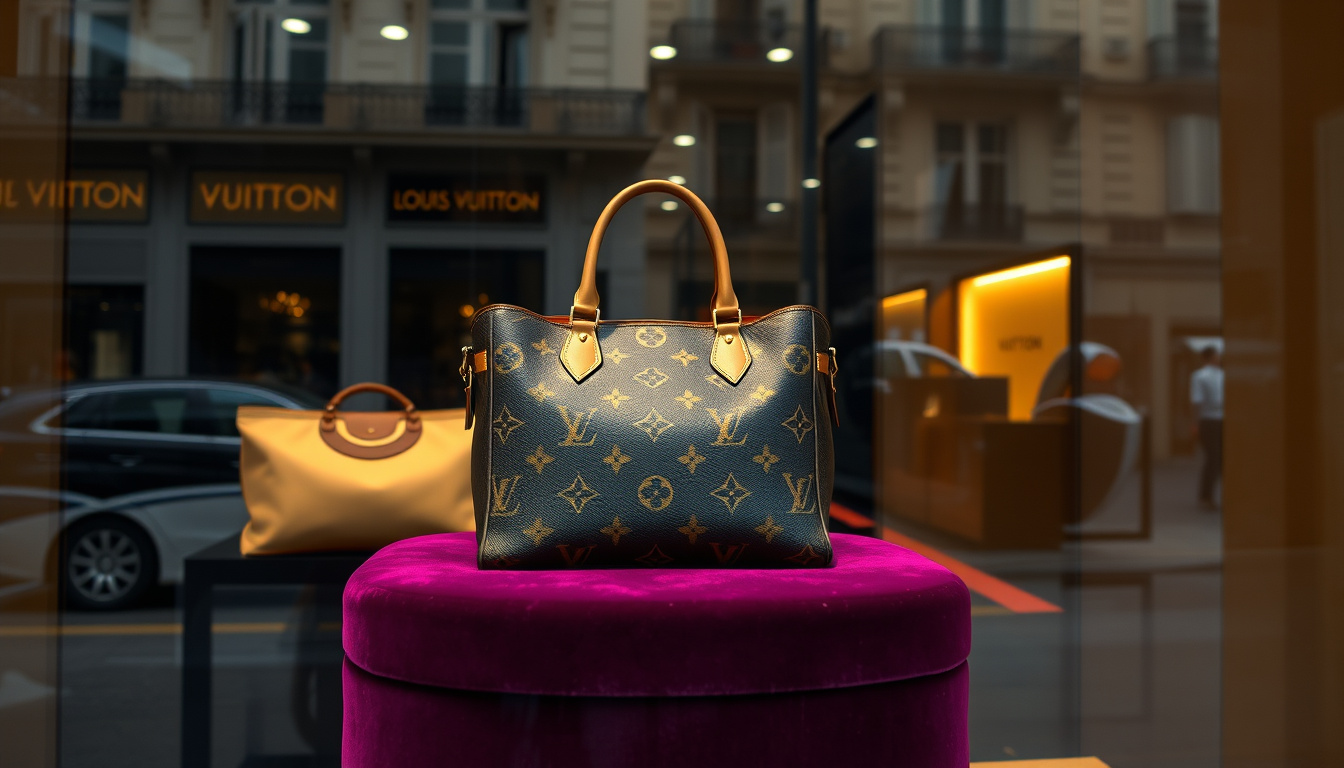
You know the feeling: walking past a Louis Vuitton store, catching a glimpse of that iconic monogram, and wondering what makes those bags worth thousands. It’s a question that touches on craftsmanship, status, and a surprisingly complex business story. This guide cuts through the marketing to explain why Louis Vuitton costs what it does, where it actually comes from, who it’s really for, and which bag might be worth your money.
Founded: 1854 ·
Founder: Louis Vuitton ·
Headquarters: Paris, France ·
Parent Company: LVMH Moët Hennessy Louis Vuitton ·
Brand Value (2024): $12.9 billion (Forbes)
Quick snapshot
- Louis Vuitton is a French brand founded in 1854 (CompaniesHistory (brand history resource))
- Owned by LVMH, a French conglomerate (LVMH official site)
- Bernard Arnault is the richest person as of 2024 (Forbes (real-time wealth tracker))
- Exact cheapest-item prices shift frequently with seasonal adjustments
- Which bag will be “best” in 2026 remains speculative
- 1854: Louis Vuitton opens first workshop in Paris
- 1987: Merger with Moët Hennessy creates LVMH
- 2023: Worldwide price increase of 8–20% implemented
- Continued price escalation driven by brand exclusivity strategy
- Growing tension between legacy wealthy buyers and younger aspirational consumers
Seven key facts that define the brand’s structure, from its founding date to its current market valuation.
| Founded | 1854 |
| Founder | Louis Vuitton |
| Headquarters | Paris, France |
| Parent Company | LVMH Moët Hennessy Louis Vuitton |
| Current CEO | Pietro Beccari |
| Number of Stores | Over 460 worldwide |
| Brand Value (2024) | $12.9 billion (Forbes) |
Why Is Louis Vuitton Expensive?
The price of a Louis Vuitton bag isn’t arbitrary — it’s the product of a deliberate economic equation built on heritage, craftsmanship, and scarcity. Unlike many fashion houses that outsource production to cut costs, Louis Vuitton controls most of its manufacturing in France, Spain, Italy, and the United States, keeping quality consistent and supply tight (Marketing91 (marketing strategy analysis)).
Louis Vuitton’s pricing is not about materials cost; it’s about maintaining a price floor that keeps the brand exclusive. Every price increase is a message to the market that the brand is becoming less accessible, not more.
What is the cheapest Louis Vuitton?
While handbags typically range from $1,200 to $10,000-plus, the entry point to the brand is lower. Small leather goods like key holders, card holders, and bandeaux start around $200 (Louis Vuitton official site (pricing)).
- Key holder: approximately $200
- Card holder: $245
- Bandeau (scarf accessory): $175
Do wealthy people buy Louis Vuitton?
Yes — and the brand relies on it. Marketing analyses consistently describe Louis Vuitton’s core customer as upper-class and elite, with one academic article identifying affluent women aged 18 to 54 with incomes above $75,000 as the primary demographic (DRPress EHSS article (academic marketing study)). But the picture is more nuanced: the brand also pulls in younger aspirational buyers aged 18 to 34 who are fashion-conscious and willing to save for months for a single purchase (FashionCoached (audience analysis)).
The pattern: Louis Vuitton runs a two-track strategy — extracting high margins from legacy wealthy clients while grooming the next generation of buyers through accessible entry items and social media presence (Latterly (marketing strategy overview)).
Is Louis Vuitton Italian or French?
Louis Vuitton is unequivocally French. The brand was founded in 1854 in Paris by Louis Vuitton himself, who originally worked as a box-maker and packer for wealthy Parisians before opening his own workshop (CompaniesHistory (brand history resource)). The company’s headquarters remain in Paris, and its ownership — through LVMH — is also French.
Which country is the owner of Louis Vuitton?
LVMH Moët Hennessy Louis Vuitton, the conglomerate that owns Louis Vuitton, is a French multinational corporation headquartered in Paris. LVMH was formed in 1987 through the merger of Louis Vuitton with Moët Hennessy (LVMH official site). Bernard Arnault, the chairman and CEO of LVMH, has frequently held the title of richest person on Earth, with Forbes reporting his net worth exceeding $200 billion at various points in 2024 (Forbes (real-time wealth tracker)).
What country is best to buy Louis Vuitton?
Prices for Louis Vuitton items vary by country due to local taxes, import duties, and currency fluctuations. Travelers often find that buying in France or other European countries — where the brand is made and value-added tax (VAT) can be refunded to non-EU residents — can result in savings of 15–20% compared to U.S. or Asian markets (Unanswered.io (travel buying guide)). Duty-free shops at international airports also offer tax-free pricing, though selection is limited.
The catch: The savings are real, but they come with a catch — warranty and repair service can be more complicated when the product is purchased outside your home market. Louis Vuitton’s warranty is global, but repair turnaround times vary by region.
Who Is the No. 1 Richest Man on Earth?
Bernard Arnault not only controls Louis Vuitton through LVMH — he is also, as of late 2024, the richest person in the world. According to Forbes’ real-time billionaires list, Arnault’s net worth was approximately $210 billion in November 2024, putting him ahead of Elon Musk and Jeff Bezos (Forbes (real-time wealth tracker)).
Arnault’s wealth is built on luxury goods — not tech. His position at the top of the global wealth rankings signals that the luxury sector, and particularly LVMH’s portfolio including Louis Vuitton, generates enormous value. When you buy a Louis Vuitton bag, a significant portion flows to the world’s richest family.
Who is Louis Vuitton’s wife?
Louis Vuitton the man, not the company, married Clémence-Émilie Parriaux in 1854 — the same year he opened his first workshop (CompaniesHistory (brand history resource)). However, the current ownership structure has no direct family connection: the last Vuitton family member to run the brand’s fashion division stepped down in the 1990s. Today, LVMH controls the brand, and the Arnault family controls LVMH.
What Is Louis Vuitton’s Target Age?
Louis Vuitton’s target audience is broader than most luxury brands. Marketing analyses identify two primary age segments: wealthy middle-aged consumers aged 35 to 54, and younger aspirational buyers aged 18 to 34 (Marketing91 (marketing strategy analysis)).
- Core segment: Affluent women aged 35–54 with household incomes of $75,000+
- Aspirational segment: Fashion-conscious women aged 18–34 who view the brand as a status symbol
- Men’s segment: Growing, driven by collaborations and streetwear influence
One analysis from Wondershare’s EdrawMind even suggests the brand’s audience spans ages 16 to 80, unified not by age but by disposable income and a desire for status signaling (Wondershare EdrawMind (marketing segmentation template)). The implication: Louis Vuitton doesn’t target an age — it targets a mindset. It sells membership in an exclusive club, and the entry price determines who gets in.
What Is the Best Louis Vuitton Bag in 2026?
Predicting the “best” bag two years out is inherently speculative, but the trajectory of Louis Vuitton’s product strategy points to a few clear candidates. Iconic models — the Neverfull, Speedy, and Noé — have held their value and popularity for decades and are unlikely to fade (Louis Vuitton official site (product pages)).
- Neverfull: The most recognizable tote; increased price by roughly 60% over the past five years, making it a strong investment piece
- Speedy B 25: Compact, versatile, and frequently restocked; strong resale value
- Noé: The original bucket bag; highly collectible in limited-edition releases
The trade-off: The best bag for 2026 depends on whether you’re buying to use or buying to invest. If you’re a buyer looking for long-term value, focus on classic models in Monogram Canvas — they have the deepest resale market and the highest probability of price appreciation. If you’re buying as a collector, limited-edition collaborations (like the LV × Yayoi Kusama or LV × Basquiat collections) may offer more upside but carry higher risk (Jean-Michel Basquiat: Life, Art, Net Worth, and Legacy).
“Louis Vuitton is positioned as a premium luxury brand with high-end designs and craftsmanship.”
“The Louis Vuitton brand targets affluent individuals, especially women aged 18 to 54 with incomes above $75,000.”
“Bernard Arnault, chairman of LVMH, has frequently held the title of richest person.”
— Forbes (real-time wealth tracker)
“Louis Vuitton implemented a worldwide price increase ranging from 8% to 20% on 18 February 2023.”
For a buyer in the U.S. or UK considering a first purchase, the decision is clear: buy a Monogram Canvas piece from a European boutique or duty-free to save 15–20%, and choose a classic model like the Neverfull or Speedy that has decades of resale data behind it. Buy for craftsmanship, not hype — and let the brand’s French origin and quality control justify the price.
Related reading: Jean-Michel Basquiat: Life, Art, Net Worth, and Legacy · Cara Delevingne: Biography, Mental Health, Partner & Career
For a thorough exploration of the brand’s origins and current market prices, the Louis Vuitton history and price guide offers an excellent reference.
Frequently asked questions
How can I authenticate a Louis Vuitton bag?
Check the date code (a heat-stamped or leather-tab serial number), examine the stitching (Louis Vuitton uses even, slightly angled stitches), and verify the heat stamp on the leather tab inside the bag. Third-party authentication services are recommended for pre-owned purchases.
Where is Louis Vuitton made?
Most Louis Vuitton products are made in France, Spain, Italy, or the United States. The brand stamps the country of origin inside each item. French production is concentrated in the Drôme region, while Spanish and Italian ateliers handle leather goods and shoes.
Does Louis Vuitton have sales?
Louis Vuitton does not hold traditional sales or discounts. The brand intentionally avoids markdowns to protect its luxury positioning. Items that are discontinued are quietly removed from the website rather than discounted.
What is the return policy of Louis Vuitton?
Louis Vuitton offers returns within 30 days of purchase for items in original condition, with tags and packaging. Personalized or customized items are generally non-returnable. Some countries have different policies; check local store terms.
How do I clean my Louis Vuitton canvas?
Use a soft, dry cloth to wipe the canvas — never use water, soap, or cleaning solutions on the coated canvas. For leather trim, a specialized leather cleaner is recommended. Avoid getting the canvas wet for extended periods.
Is Louis Vuitton a good investment?
Classic canvas pieces have historically appreciated in value over time, with resale prices often exceeding the original retail price for limited editions. Leather pieces generally depreciate. For investment, focus on Monogram Canvas and limited-edition collaborations.
What is the difference between Louis Vuitton and Gucci?
Louis Vuitton focuses on heritage, craftsmanship, and quiet luxury, while Gucci emphasizes bold patterns and younger, trend-driven designs. Both are French-owned (Gucci is owned by Kering). Louis Vuitton is approximately twice the size of Gucci by revenue.
Related stories





Richard Vane is Senior Reporter at MorningTimes.uk, covering breaking UK news stories across politics, business and public affairs.