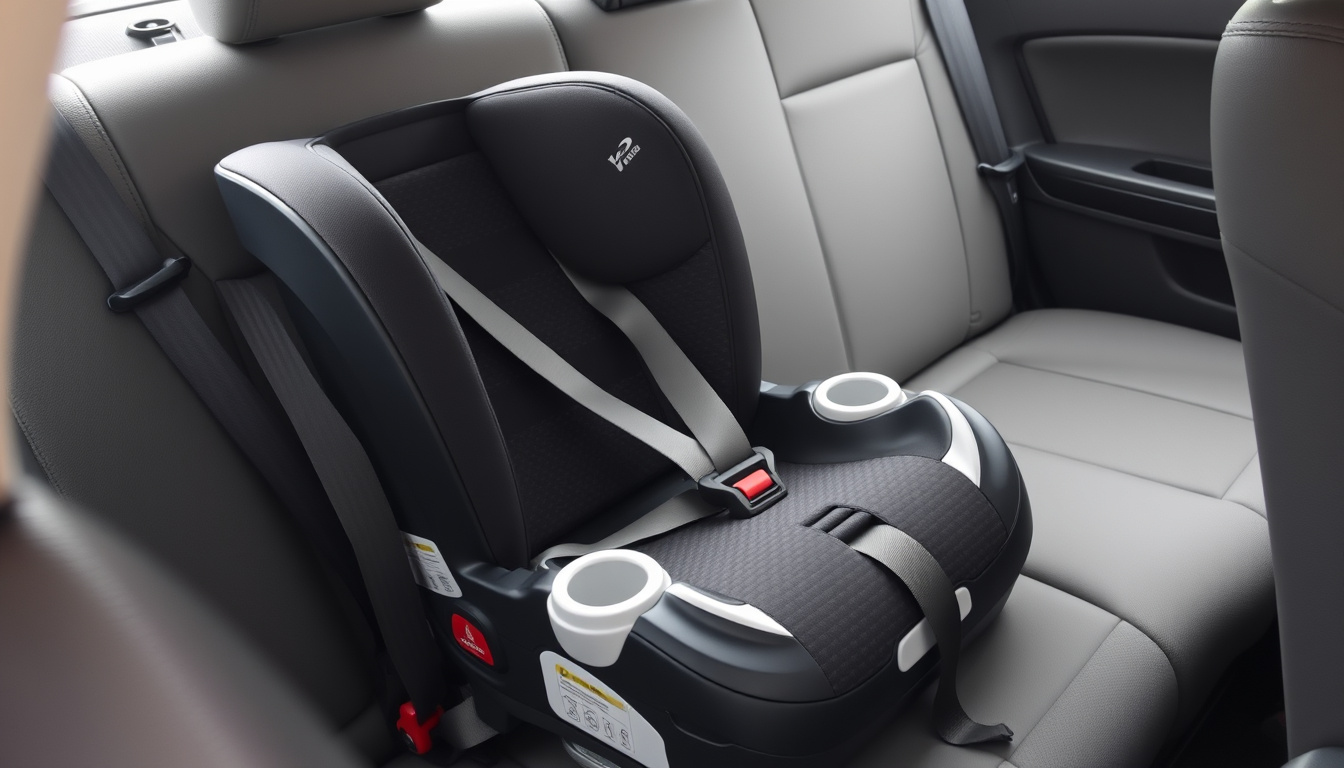
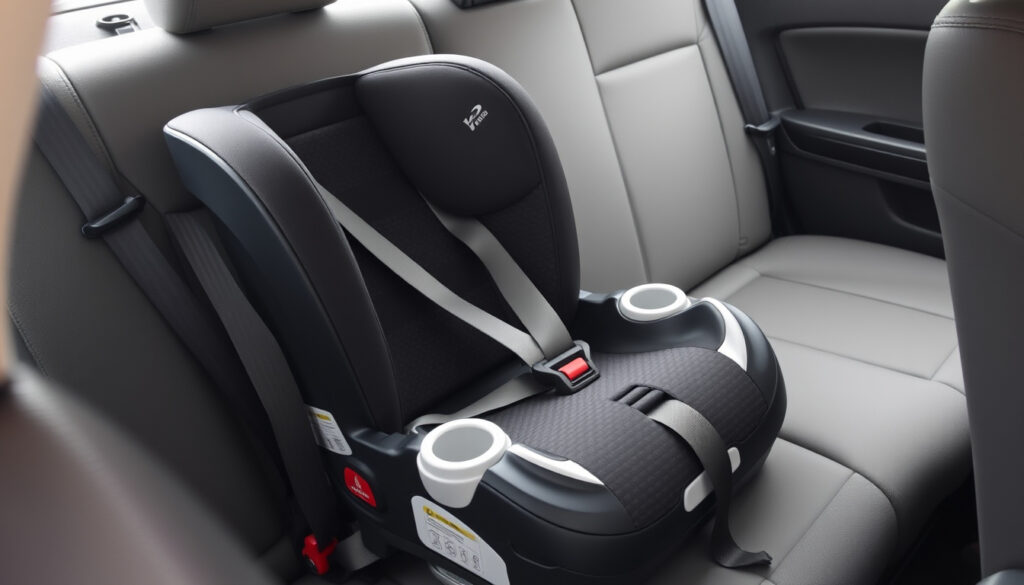
If you’ve ever watched a child slouch in a seatbelt designed for an adult, you know the feeling that something isn’t right. Booster seats fix that by raising the child so the belt sits correctly across the strong bony parts of the body.
Minimum age for booster seat (Ireland): 4 years ·
Minimum weight for booster seat (Ireland): 15 kg (33 lbs) ·
Booster seat requirement ends at: 135 cm height or 12 years old ·
Injury risk reduction with booster seat: 45% (NHTSA) ·
Backless booster minimum age recommendation: 4 years (AAP)
Quick snapshot
- Booster seats reduce injury risk by 45% compared to seatbelt alone (NHTSA (U.S. highway safety regulator))
- Irish law requires a child restraint until 12 years or 135 cm (HSE (Ireland’s health authority))
- Backless boosters are legal from 4 years and 15 kg (Halfords Ireland (retailer with legal guidance))
- Optimal age for switching to backless booster varies by child (nidirect (Northern Ireland government))
- Effectiveness of backless boosters in side impacts compared to high-back boosters (RSA (Irish Road Safety Authority video))
- Booster seats are typically used from 4 to 12 years old (HSE (Ireland’s health authority))
- New backless booster rules in the UK restrict models for children under 125 cm or 22 kg (nidirect (Northern Ireland government))
A booster seat is not optional in Ireland: the law requires one until your child hits 135 cm or turns 12. The type you choose matters less than the fit — the belt must cross the shoulder and lap correctly every time.
| Label | Value |
|---|---|
| Minimum age | 4 years |
| Minimum weight | 15 kg (33 lbs) |
| Maximum height requirement | 135 cm (4’5″) |
| Maximum age | 12 years |
| Backless booster age | 4+ years |
| Injury reduction | 45% (NHTSA) |
At what age should a child go into a booster seat?
Age and weight milestones for booster seats
- Minimum age: 4 years — but age alone isn’t enough; the child must also weigh at least 15 kg (33 lbs) (Halfords Ireland (retailer with legal guidance))
- Many forward-facing harness seats accommodate children up to 18–22 kg; check the seat’s label before switching (Tusla (Irish child safety agency))
- The HSE recommends keeping a child in a booster seat until the seatbelt fits correctly — usually around 135 cm (HSE (Ireland’s health authority))
Height requirements for booster seats
- Most booster seats require a minimum height of 38 inches (97 cm) on the product label (nidirect (Northern Ireland government))
- The Irish legal threshold is 135 cm – below that, a booster is mandatory (HSE (Ireland’s health authority))
Bottom line: Booster seats are not one-size-fits-all. Irish parents: your child must stay in a booster until 135 cm or 12 years. The best age to start is 4, but only if weight and height minimums are met.
The pattern: Most children outgrow a forward-facing harness by 4–5, but the jump to a booster is safe only when the child can sit still and the lap belt stays low on the hips. That maturity often comes later than the minimum age suggests.
What are the rules for booster seats in Ireland?
Irish law on child car seats
- Children under 150 cm or less than 36 kg must use an appropriate child restraint (HSE (Ireland’s health authority))
- That translates to a car seat, booster seat or booster cushion until roughly 12 years old (HSE (Ireland’s health authority))
- Taxis are exempt: you are not legally required to provide a child seat in a taxi (HSE (Ireland’s health authority))
Penalties for non-compliance
- Drivers face a fixed‑charge fine of €120, rising to €2,000 if the case goes to court (Road Safety Authority (Ireland’s road safety agency))
- Three penalty points are also applied if convicted (RSA (Ireland’s road safety agency))
The law says “appropriate” — but it’s your responsibility to read the product label. A backless booster that fits a 4-year-old by weight may not meet the new UK‑wide technical standards (Regulation 129) if the child is shorter than 125 cm.
Why this matters: The fine is real, but the bigger penalty is a belt that doesn’t protect. In Ireland you must use a booster until 135 cm; in the UK the same rule applies but backless models face tighter restrictions from 2023.
When to switch to a backless booster?
Signs your child is ready for a backless booster
- The child can sit properly for the entire trip — no slouching or leaning out of position (nidirect (Northern Ireland government))
- The seatbelt crosses the shoulder (not the neck) and the lap belt stays low on the hips (RSA (Irish Road Safety Authority video))
- The child is at least 4 years old and weighs 15 kg (33 lbs) (Halfords Ireland (retailer with legal guidance))
Age and weight guidelines for backless boosters
- Backless boosters are suitable from 4 years, 15 kg, but the RSA advises that high-back models offer better head and body protection for younger children (RSA (Irish Road Safety Authority video))
- New backless boosters (Regulation 129) cannot be used by children under 125 cm or 22 kg (nidirect (Northern Ireland government))
- Existing models are still legal if the label says they are suitable for the child (nidirect (Northern Ireland government))
The trade-off: Backless boosters are more portable and cheaper, but they lack side-impact protection. Most safety experts — including the HSE — suggest keeping a high-back until the child outgrows its height limit.
What age do booster seats go up to?
Maximum age and height for booster seats
- In Ireland, a child must use a booster seat until 12 years or 135 cm (4’5″) — whichever comes first (HSE (Ireland’s health authority))
- The RSA says children should use a booster seat until they are 150 cm tall or over 11 years of age (RSA (Irish Road Safety Authority video))
- Practical guidance from Tusla: booster seats are suitable for children weighing 22 to 36 kg, about 6 to 11/12 years (Tusla (Irish child safety agency))
Transition to adult seatbelt
- A child can leave the booster when the seatbelt fits properly: the lap belt lies across the upper thighs, not the stomach, and the shoulder belt crosses the collarbone (NHTSA (U.S. highway safety regulator))
- That “5‑step test” is more reliable than age alone — many children need the seatbelt positioner until 12 or beyond (American Academy of Pediatrics (child health organisation))
Irish parents often assume the booster ends at 12 years old. But if your child is short for their age, the law forces you to keep them in a booster until they hit 135 cm — even if they are 13. That’s legal and safest.
The implication: There is no magic birthday when the booster disappears. It’s a height and fit milestone. The HSE and RSA agree: keep boosting until the adult belt fits — no exceptions.
What kind of car seat should a 4 year old be using?
Harness car seat vs booster seat for a 4-year-old
- A 4-year-old may still fit in a forward-facing harness seat if they are under the weight/height limit (typically 18–22 kg) (Tusla (Irish child safety agency))
- Once the harness is outgrown, the next step is a high-back booster seat (RSA (Irish Road Safety Authority video))
High-back vs backless booster for a 4-year-old
- High-back boosters are recommended for 4-year-olds because they provide side impact protection and help position the seatbelt (RSA (Ireland’s road safety agency))
- Backless boosters are not recommended for 4-year-olds due to lack of head and side protection (Halfords Ireland (retailer with legal guidance))
The pattern across booster types is clear: high-back wins on safety for younger children; backless wins on portability for older ones.
| Feature | High-back booster | Backless booster |
|---|---|---|
| Minimum weight | 15 kg (Halfords IE) | 15 kg (legal) / 22 kg (new EU regs) (nidirect) |
| Side impact protection | Yes (head and torso) (RSA) | None (RSA) |
| Portability | Bulky (Halfords IE) | Lightweight, easy to move (Halfords IE) |
Upsides
- Booster seats reduce injury risk by 45% vs. seatbelt alone (NHTSA)
- High-back boosters provide good head and body protection (RSA)
- Backless boosters are portable and affordable (Halfords IE)
Downsides
- Backless boosters offer no side impact protection (RSA)
- New backless models cannot be used for children under 125 cm or 22 kg (nidirect)
- Some children struggle to sit correctly in a backless booster (nidirect)
How to transition your child to a booster seat (step by step)
- Check age, weight and height. Minimum 4 years and 15 kg. If the child still fits a forward-facing harness, keep them there until the limit — it’s safer (Tusla).
- Choose the right booster type. For a first booster, pick a high-back model. It provides head and side protection and guides the seatbelt (RSA).
- Install the booster correctly. Follow the manual. The booster must sit flat on the seat and be secured by the adult belt when not in use (Halfords IE).
- Adjust the seatbelt every ride. The lap belt should lie low across the hips, not the stomach. The shoulder belt should cross the chest and shoulder – never the neck or face (NHTSA).
- Practice the 5‑step test. Is the child tall enough for the belt to fit without the booster? If not, they stay in the booster (AAP).
What this means: Transitioning too early is the biggest mistake. Keep your child in the safest seat they still fit — that’s the harness, then the high-back, then the backless, then the adult belt.
What’s clear and what’s not
Confirmed facts
- Booster seats reduce injury risk compared to seatbelt alone (NHTSA)
- Irish law requires a child restraint until 12 years or 135 cm (HSE)
- Backless boosters are legal from 4 years and 15 kg (Halfords IE)
What’s unclear
- Optimal age for switching to backless booster varies by child (nidirect)
- Effectiveness of backless boosters in side impacts compared to high-back boosters (RSA)
“A booster seat raises your child up high enough so that the seatbelt is positioned correctly on their body.”
Health Service Executive (HSE) (Ireland’s health authority)
“Booster seats reduce the risk of injury by 45% compared to seatbelt use alone.”
National Highway Traffic Safety Administration (NHTSA) (U.S. highway safety regulator)
For Irish parents, the choice is clear: keep your child in a booster seat until they pass the 5‑step test — typically 12 years and 135 cm. Switching to a backless model before that means trading side‑impact protection for convenience. Use a high‑back booster as long as your child fits it. The law requires a booster; the right type saves lives.
Related reading: **Chest Drawers: Buying Guide & Best Options in Ireland**
aig.ie, chiccousa.com, maxi-cosi.ie, facebook.com, tripadvisor.com, nhtsa.gov, thule.com, sanjosebrief.com
For a detailed breakdown of the latest 2025 regulations, parents can refer to this complete booster seat guide for Ireland which covers height and weight thresholds in depth.
Frequently asked questions
Is a backless booster seat safe for a 4 year old?
Backless boosters are legal from 4 years and 15 kg in Ireland, but they offer no side impact protection. The RSA and HSE recommend a high-back booster for children under 5 or those who still need head and torso support.
What is the height requirement for a booster seat in Ireland?
Irish law requires a child restraint until the child reaches 135 cm (4’5″) or 12 years old. Below that, a booster seat or car seat is mandatory.
Can a 6 year old use a booster seat without a back?
Yes, if the child meets the minimum weight (15 kg) and can sit properly with the seatbelt across the shoulder and lap. However, safety experts prefer a high-back booster until the child outgrows it.
Do I need a booster seat for a 10 year old?
In Ireland, yes — unless the child is already 135 cm tall. Many 10-year-olds are still below that height and must use a booster seat by law.
Are booster seats required in rental cars?
Yes. Irish law applies to all private cars, including rental vehicles. You must provide an appropriate child restraint for any child under 135 cm or 12 years. Many rental companies offer booster seats for a fee.
How long should a child use a high-back booster?
Until the child outgrows the height limit of the high-back booster — usually when the tops of their ears reach the top of the booster’s headrest. After that, switch to a backless booster.
Can my 7 year old sit in the front seat in Ireland?
It is not recommended. Children under 12 should sit in the back seat whenever possible. If they must sit in the front, the seat must be pushed as far back as possible and the child must use the correct booster seat.
Related stories




Richard Vane is Senior Reporter at MorningTimes.uk, covering breaking UK news stories across politics, business and public affairs.