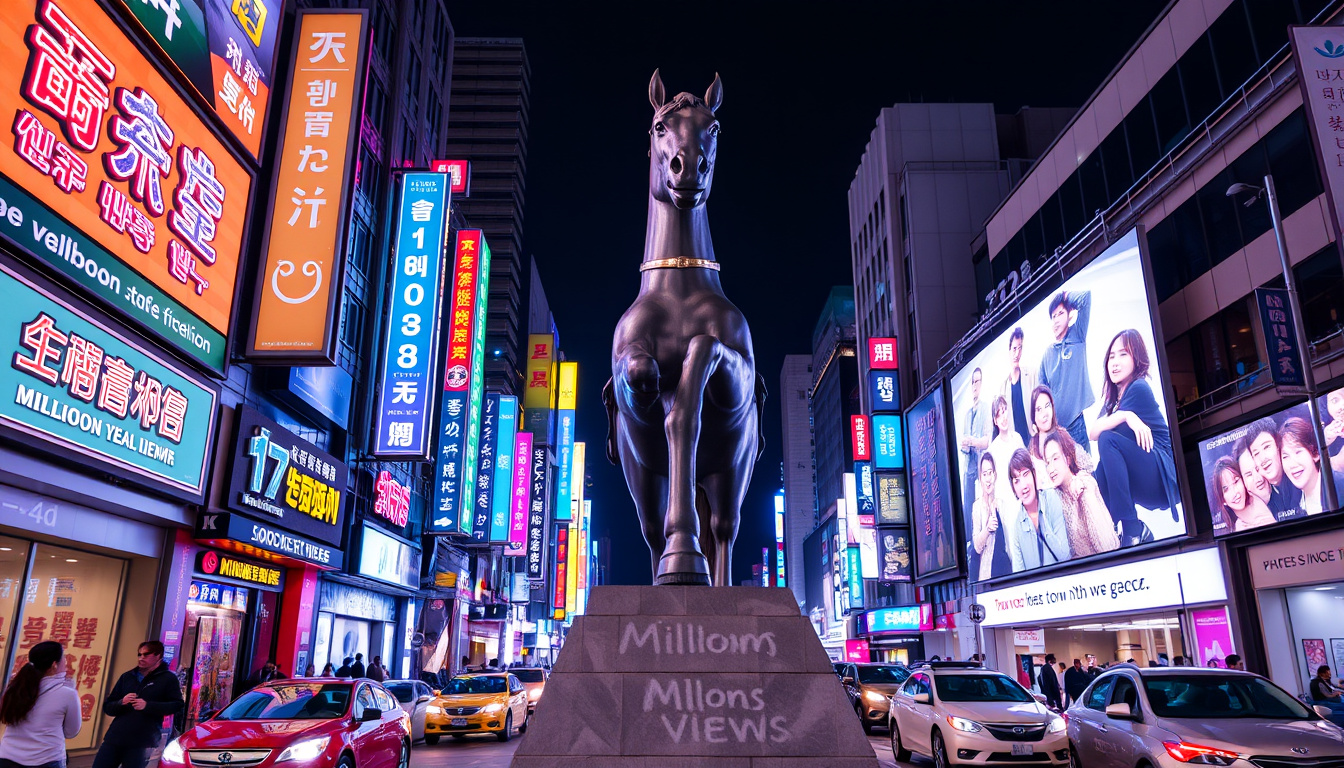

In the summer of 2012, PSY’s “Gangnam Style” didn’t just go viral — it smashed YouTube records and became the first video to hit one billion views, proving a non‑English pop song could conquer the global mainstream. A silly horse-riding dance and a catchy Korean chorus became the unlikely formula for a cultural phenomenon that flooded social feeds worldwide.
Song: Gangnam Style ·
Artist: PSY (Park Jae‑sang) ·
Release date: July 15, 2012 ·
First video to reach 1 billion views: December 21, 2012 ·
Peak position on Billboard Hot 100: #2 ·
YouTube views (as of early 2025): Over 5.4 billion
Quick snapshot
- Released July 15, 2012)
- First YouTube video to reach 1 billion views
- Satirizes conspicuous consumption in Seoul’s Gangnam district
- Exact YouTube view count fluctuates daily; estimates vary
- Whether the song was officially banned in China remains disputed — some sources say yes, others no
- July 15, 2012: single & video released
- August–September 2012: global viral breakout
- December 21, 2012: first video to hit 1 billion views
- Continues to accumulate billions of views; remains a cultural reference point for K‑pop’s global breakthrough
Six key facts at a glance paint a clear picture of the song’s scale and timing.
| Attribute | Value |
|---|---|
| Release date | July 15, 2012 |
| First 1 billion views | December 21, 2012 |
| Peak Billboard Hot 100 | #2 |
| YouTube views (approx.) | 5.4 billion |
| Duration | 4:12 |
| Language | Korean (with some English) |
What South Korean song broke the Internet in 2012?
The song that went viral
The track that exploded across the web was “Gangnam Style” by South Korean rapper PSY (born Park Jae‑sang). According to Britannica (encyclopedia), its catchy electro‑pop beat and absurdist music video — featuring PSY in a tuxedo miming a horse ride — turned it into a global meme within weeks of its July 15, 2012 release.
PSY’s rise to fame
Before going worldwide, PSY had been a controversial hip‑hop artist in South Korea. Britannica notes that his earlier work was known for provocative content, but “Gangnam Style” made him an international household name. “The song’s viral success through social media brought widespread attention to K‑pop,” the encyclopedia states.
“The song’s viral success through social media brought widespread attention to K‑pop and South Korean popular culture.”
Why this matters The song proved that a non‑English track could dominate global charts and streaming platforms, resetting the rules for international pop music, similar to how other K-pop acts have redefined genre boundaries.
What this means is that the song’s impact transcended music, embedding itself into the global digital culture as a shared experience.
What year was Gangnam Style released?
Release date and label
The single was released on July 15, 2012 as part of PSY’s album “PSY 6 Part 1.” The music video landed on YouTube the same day. That exact date is confirmed by Britannica (encyclopedia).
Chart performance
Despite its massive streaming numbers, “Gangnam Style” peaked at #2 on the Billboard Hot 100 in October 2012. It was kept from the top spot by Maroon 5’s “One More Night.” The song also reached #1 in dozens of other countries. According to Britannica, it became the first K‑pop song to crack the top 10 in the United States.
The implication: chart position didn’t matter — the song’s real impact was on YouTube and cultural conversation, not radio play.
What does Gangnam Style mean in English?
Literal translation
“Gangnam” refers to the wealthy Gangnam District in Seoul, South Korea’s equivalent of Beverly Hills. “Style” denotes a lifestyle or attitude. So literally, “Gangnam Style” means “the lifestyle of the Gangnam district.” Britannica explains that the song “satirizes the lifestyle associated with the affluent Gangnam district.”
Satirical meaning
Rather than celebrating wealth, the song is a playful spoof of conspicuous consumption and social climbing. Overthinking It (pop culture analysis blog) describes it as “a critique of South Korea’s culture of conspicuous consumption and growing economic inequality.” The phrase “Gangnam Style” even entered American idiomatic usage, according to World Literature Today (literary journal), to mean a brash, flamboyant style of self‑presentation.
“One interpretation describes the song as a critique of South Korea’s culture of conspicuous consumption and growing economic inequality.”
What this means: listeners who only saw a funny dance missed the sharp social commentary woven into the lyrics and visuals.
Which song hit 1 billion views first?
Milestone on YouTube
On December 21, 2012, “Gangnam Style” became the first YouTube video to surpass one billion views. The milestone is documented by Britannica (encyclopedia). It held the record until “See You Again” by Wiz Khalifa (featuring Charlie Puth) overtook it in 2017, followed by “Despacito.”
Impact on the platform
The viewing numbers forced YouTube to upgrade its counter from a 32‑bit integer to a 64‑bit integer, because the original system couldn’t display numbers above 2,147,483,647. World Literature Today notes that the video’s success is “often discussed as a meme‑like pop‑cultural event rather than only a song release.”
The pattern: the video didn’t just break a number — it forced YouTube to re‑engineer its infrastructure.
Why was Gangnam Style banned?
Reasons for the ban
“Gangnam Style” was reportedly banned in some countries due to perceived obscenity or sexual content in the lyrics and video. According to Overthinking It (pop culture analysis blog), some interpretations saw the song’s satirical depiction of luxury as offensive. However, the exact reasons remain debated.
Countries where it was banned
China briefly blocked the video on some platforms, according to unverified reports. Similarly, a few Muslim‑majority countries restricted access due to perceived sexual content. The bans were short‑lived and never fully confirmed. As World Literature Today notes, the song’s global reach meant it encountered varying cultural restrictions.
The catch is that despite regional restrictions, the song’s overall global accessibility was barely affected, solidifying its status as a universal hit.
Timeline
The timeline below traces the song’s rapid ascent from release to record-breaking milestone.
| Date / Period | Event |
|---|---|
| July 15, 2012 | Gangnam Style single released |
| July 15, 2012 | Music video uploaded to YouTube |
| August–September 2012 | Video goes viral globally |
| October 2012 | Reaches #2 on Billboard Hot 100 |
| December 21, 2012 | First YouTube video to hit 1 billion views |
| 2013–2025 | Continues to accumulate billions of views; surpassed by other videos but remains iconic |
The pattern reveals a remarkably fast trajectory, with the billion-view milestone being reached just five months after release.
What’s confirmed and what’s unclear
Confirmed facts
- Gangnam Style was released in 2012
- It was the first YouTube video to reach 1 billion views
- PSY is a South Korean singer
- The song satirizes the lifestyle of Seoul’s Gangnam district
What’s unclear
- Exact number of current YouTube views (varies by day)
- Whether it was officially banned in China (some sources say yes, others no)
- Whether PSY would achieve lasting international success beyond this single (he remains a one-hit wonder in the US)
- The extent to which the song’s success was engineered by its label versus organic spread
What this means: readers should approach the ban story with caution, as the evidence remains inconclusive.
Editor’s verdict
For anyone tracking how a single pop song can reshape digital culture, “Gangnam Style” is the textbook case. It wasn’t just a hit — it was a stress test for YouTube’s infrastructure, a lesson in cross‑language virality, and a satire that many mistook for celebration. For music industry analysts, the takeaway is straightforward: a catchy hook and a shareable visual can override language barriers faster than any marketing campaign. For fans, it remains a joyful reminder that sometimes the Internet just wants to laugh together, much like the psychedelic chaos of Fear and Loathing in Las Vegas.
Frequently asked questions
How long did it take Gangnam Style to reach 1 billion views?
It reached 1 billion views on December 21, 2012 — about 5 months after its July 15 release. According to Britannica, it was the first video ever to achieve that milestone.
Who choreographed the Gangnam Style dance?
The horse-riding dance was choreographed by PSY and his team. It became the song’s signature visual and sparked a global dance craze, with imitations from celebrities and fans alike.
What is the horse dance in Gangnam Style?
The horse dance mimics riding a horse, with alternating hand-over-hand movements and bouncy steps. It’s often described as playful and intentionally absurd, matching the song’s satirical tone.
Did Gangnam Style win any awards?
Yes, it won several, including Best Video at the 2012 MTV Europe Music Awards and a Guinness World Record for most “likes” on YouTube at the time. It also topped year‑end charts in multiple countries.
What record did Gangnam Style break?
It became the first YouTube video to reach 1 billion views. It also held the record for most viewed video on YouTube for several years until surpassed by “See You Again” and “Despacito.”
Is Gangnam Style still popular today?
Yes, it continues to accumulate billions of views and is frequently referenced in pop culture. It remains one of YouTube’s most‑viewed videos and a symbol of the 2010s.
How many languages does the song appear in?
While the original is in Korean with a few English phrases, fans have created covers and parodies in dozens of languages. Official remixes include versions with English rappers.
Related stories




James Holloway covers culture, lifestyle and society for MorningTimes.uk.