Grayson Perry challenges conventions not just through his ceramics and tapestries, but by the way he presents himself in public. If you’ve ever seen a man in a frilly dress at a royal ceremony, you’ve probably wondered who he is and why he dresses that way—this article unpacks the story behind his style, art, and knighthood.
Born: 24 March 1960, Chelmsford, England ·
Known for: Ceramics, tapestries, drag persona Claire ·
Knighthood year: 2024 ·
Notable artwork: “The Vanity of Small Differences” (tapestry series) ·
Spouse: Philippa Perry (married 1992)
Quick snapshot
- Won the Turner Prize in 2003 (Encyclopaedia Britannica, reference work)
- Knighted in 2024 (Royal Academy of Arts, official membership body)
- Identifies as a transvestite, not transgender (London College of Fashion, higher education institution)
- Exact future plans for large-scale projects beyond 2025
- Specific dates for next public exhibitions
- Whether Perry will continue to use the Claire persona in future
- 1960: Born in Chelmsford (Royal Academy of Arts, official membership body)
- 2003: Turner Prize win (Encyclopaedia Britannica, reference work)
- 2024: Knighthood (BBC News, UK broadcaster)
- Possible new tapestry series or exhibition
- Continued public commentary on class and identity
Seven key facts, one pattern: Perry’s life and career blend personal identity, public spectacle, and institutional recognition in a way that defies easy categorization.
| Label | Value |
|---|---|
| Full name | Sir Grayson Perry |
| Born | 24 March 1960 (age 65) |
| Occupation | Artist, writer, broadcaster, transvestite |
| Spouse | Philippa Perry (psychotherapist and author) |
| Residence | London (Holborn) |
| Awards | Turner Prize (2003), Knighthood (2024) |
| Notable work | “The Vanity of Small Differences” (2012) |
Why does Grayson Perry dress like he does?
The meaning behind the Claire persona
- Perry’s female alter ego is named Claire, a character he has used in public appearances since at least the 1990s (BBC News, UK broadcaster).
- He has stated that dressing as Claire is both a creative and political choice — a way to question rigid gender norms (London College of Fashion, higher education institution).
- Perry said he likes dressing up as a woman because he is a man and it is “boundary breaking and taboo, which he finds a turn-on” (London College of Fashion, higher education institution).
How drag relates to his artistic practice
- Perry’s public cross-dressing is inseparable from his art — both are tools to critique class and identity (AnOther Magazine, fashion and culture publication).
- He has said the trick of “passing” as a woman eventually became boring; he now wants to be a “man in a dress” (BORN RISKY (YouTube), independent interview channel).
The implication: Perry’s dress is both a personal expression and a professional strategy.
Perry’s drag is simultaneously a sincere expression of self and a calculated art-world strategy. The same dress that gets him photographed at royal ceremonies also sells high-end tapestries.
What is Grayson Perry’s gender identity?
Why he identifies as a transvestite
- Perry has repeatedly said he is “a man in a dress” and does not identify as a woman (London College of Fashion, higher education institution).
- He calls himself a transvestite, not transgender, and has stated he never wanted to change his gender (London College of Fashion, higher education institution).
Distinction between gender identity and performance
- Perry’s feminine presentation is a performance, not a declaration of identity. He has said that his dress does not mean he identifies as female (BORN RISKY (YouTube), independent interview channel).
- This distinction is crucial in understanding his public persona: he is a man who enjoys cross-dressing for creative and personal reasons, not a transgender woman.
What this means: his identity as a transvestite is distinct from being transgender, a nuance often misunderstood.
Why did Grayson Perry get knighted?
The announcement process and public reaction
- Perry was appointed Knight Bachelor in the 2024 New Year Honours for services to the arts (Royal Academy of Arts, official membership body).
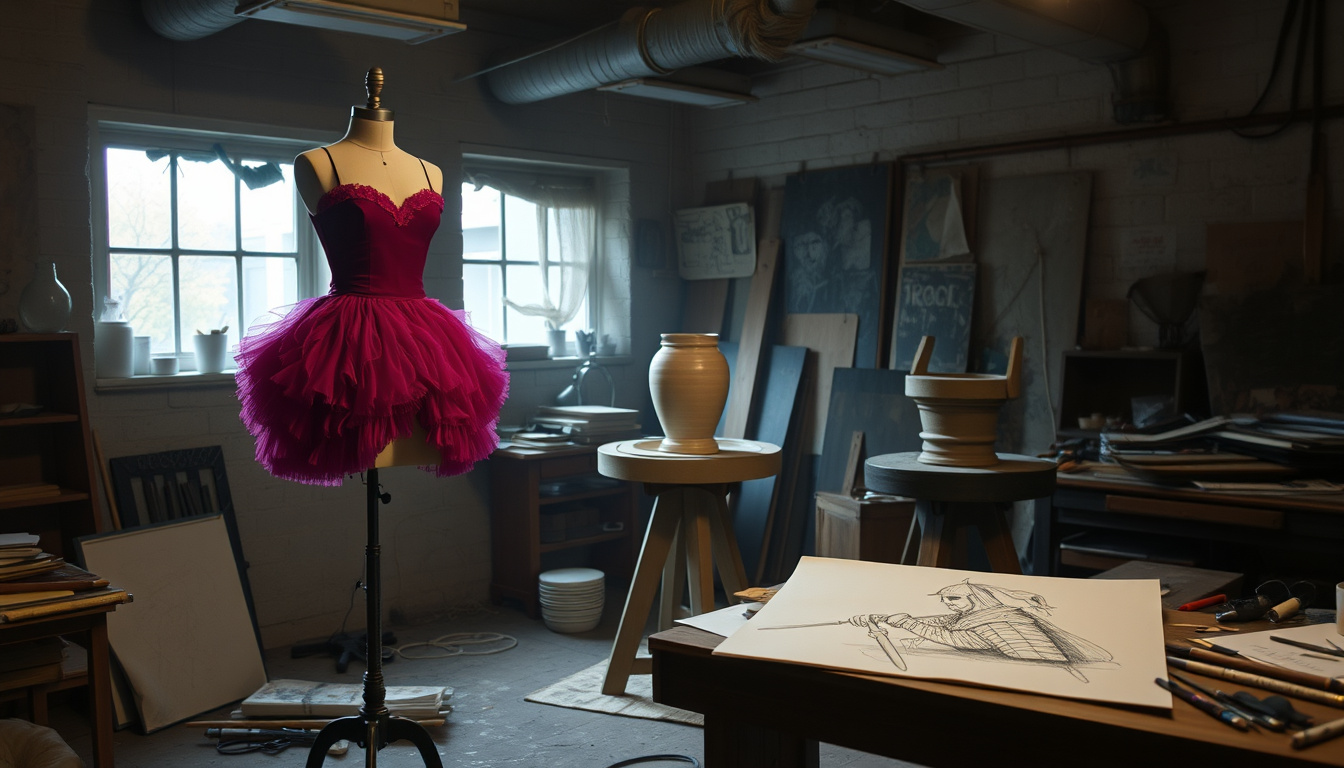
- He received the knighthood from Prince William at Windsor Castle on 28 June 2023, wearing a burgundy taffeta dress inspired by the coronation of King Charles III (BBC News, UK broadcaster).
- The Telegraph noted that Perry was believed to be the first person to receive a knighthood while dressed as the opposite sex (The Telegraph, UK newspaper).
His own remarks on the honour
- Perry called the knighthood “quite bonkers” for an artist like him (BBC News, UK broadcaster).
- He had previously received a CBE in 2014, also dressed as Claire, wearing what he described as an “Italian mother-of-the-bride” outfit (BBC News, UK broadcaster).
The pattern: the establishment can embrace iconoclasts who produce work that resonates nationally.
Perry’s knighthood may shift how the British establishment treats artists who use identity as raw material. If he continues to receive major commissions, it could signal a broader acceptance of cross-dressing in public life.
What is Grayson Perry’s most famous piece of art?
The Vanity of Small Differences: inspiration and meaning
- Perry’s tapestry series “The Vanity of Small Differences” (2012) is widely cited as his most famous work (Encyclopaedia Britannica, reference work).
- The series depicts class and taste in modern Britain, inspired by William Hogarth’s “A Rake’s Progress” (BBC News, UK broadcaster).
- It consists of six large tapestries that trace the social ascent and fall of a fictional character named Tim Rakewell.
Other notable works
- “The Rosetta Vase” (2011) is a ceramic piece that explores cultural identity.
- Perry’s ceramic vases in general brought him the Turner Prize in 2003 — the first potter to win the award (Encyclopaedia Britannica, reference work).
The pattern: “The Vanity of Small Differences” functions as both art and sociology.
Where do Grayson and Philippa Perry live?
Their home in London
- The couple lives in a converted Victorian school in Holborn, London (Browns Fashion, luxury retailer).
- Philippa Perry is a psychotherapist and author; they married in 1992.
Lifestyle and professional collaboration
- They share a collaborative personal and professional life, often appearing together in media and at events.
- Philippa has said that Grayson’s public persona is a natural extension of his private self.
The implication: their home life reflects a collaborative partnership that extends into their public personas.
Timeline
- 1960 – Born in Chelmsford, Essex (Royal Academy of Arts, official membership body)
- 1992 – Marries Philippa (then a psychotherapist) (BBC News, UK broadcaster)
- 2003 – Wins the Turner Prize for his ceramic vases (Encyclopaedia Britannica, reference work)
- 2012 – Debuts “The Vanity of Small Differences” tapestry series (Encyclopaedia Britannica, reference work)
- 2024 – Knighted in New Year Honours for services to the arts (Royal Academy of Arts, official membership body)
Clarity section
Confirmed facts
- Grayson Perry is a transvestite, not transgender (London College of Fashion, higher education institution)
- He was knighted in 2024 for services to the arts (Royal Academy of Arts, official membership body)
- His most famous artwork is the tapestry series “The Vanity of Small Differences” (Encyclopaedia Britannica, reference work)
What’s unclear
- Exact future plans for new large-scale projects beyond 2025
- Specific details about his next public exhibition dates
Quotes
“I dress like this to make a point about gender and identity.”
Grayson Perry, in various interviews (London College of Fashion, higher education institution)
“It’s quite bonkers that an artist like me gets a knighthood.”
Grayson Perry, BBC interview (BBC News, UK broadcaster)
“He is believed to be the first person to receive a knighthood while dressed as the opposite sex.”
The Telegraph, UK newspaper (The Telegraph, UK newspaper)
Grayson Perry’s career demonstrates the power of using personal identity as raw material for art. The implication for the art world: authenticity and provocation are no longer separate categories. For the British public, his knighthood signals that the establishment can embrace even the most unconventional figures — as long as they produce work that speaks to the national conversation. For collectors, the choice is clear: invest in an artist who is already a historical figure, or risk missing the next chapter.
en.wikipedia.org, isismagazine.org.uk, brownsfashion.com, independent.co.uk, bbc.com
Frequently asked questions
What is Grayson Perry’s most famous ceramic piece?
While he made many celebrated vases, “The Rosetta Vase” (2011) is among the most recognized, but the Turner Prize-winning ceramics from the 2000s collectively define his reputation.
How many tapestries make up The Vanity of Small Differences?
The series consists of six tapestries, each depicting a different stage in the life of Tim Rakewell.
Did Grayson Perry study art at university?
He studied at Braintree College of Further Education and later at Portsmouth Polytechnic, where he earned a degree in art history.
What television shows has Grayson Perry appeared on?
He has appeared on “Grayson Perry: Who Are You?” (Channel 4), “The Great British Bake Off” (as a guest), and many other British TV programs.
Is Grayson Perry married to a psychotherapist?
Yes, he married Philippa Perry in 1992. She is a well-known psychotherapist and author of “The Book You Wish Your Parents Had Read”.
What is the Claire persona?
Claire is Grayson Perry’s female alter ego, a character he uses for public appearances and performances. She is a conceptual tool for exploring gender norms.
Has Grayson Perry written any books about art?
Yes, he authored “Playing to the Gallery” (2014) and “The Descent of Man” (2016), both of which critique contemporary art and masculinity.
Related reading
- What Is a Drag Queen? (Morning Times) – Explores the differences between drag performance and cross-dressing identity.
- Laverne Cox: Biography, Twin, Children, and Gloves Reason (Morning Times) – A profile of another public figure who challenges gender norms.
Related stories





Richard Vane is Senior Reporter at MorningTimes.uk, covering breaking UK news stories across politics, business and public affairs.