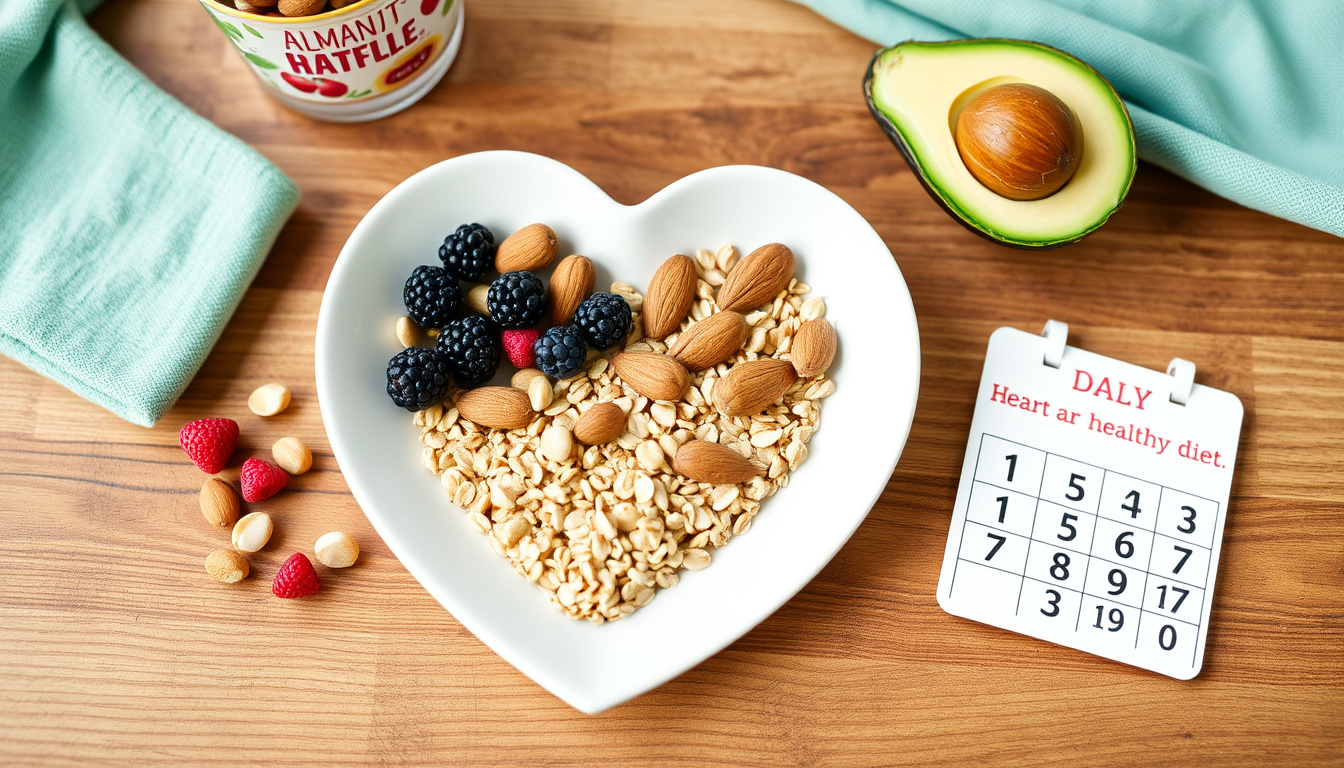

If you’ve just seen your cholesterol numbers and want to do something about them right now, you’re not alone. Clinical guidelines recommend cutting saturated fat to less than 7% of total calories, and a targeted week of dietary swaps and lifestyle changes can start moving the needle — this guide lays out a 7‑day sprint backed by evidence from leading health authorities.
Daily recommended fiber intake: 25–30 g ·
Weekly moderate exercise target: 150 minutes ·
Saturated fat reduction goal: less than 7% of total calories ·
Plant sterol intake for LDL lowering: 2 g per day may reduce LDL by up to 10%
Quick snapshot
- Saturated fat intake raises LDL cholesterol (MedlinePlus (U.S. National Library of Medicine))
- Soluble fiber binds cholesterol and reduces LDL (MedlinePlus) (MedlinePlus (U.S. National Library of Medicine))
- Regular moderate exercise improves HDL and lowers LDL (NHS (UK National Health Service))
- The exact time frame for LDL reduction from diet alone varies by individual (Mayo Clinic)
- Effectiveness of “flush” drinks (lemon water, apple cider vinegar) is not supported by strong evidence (American Heart Association)
- Days 1–2: Eliminate trans fats, cut saturated fat; add psyllium husk (5 g twice/day) (Advantage Medical NY)
- Days 3–5: Increase soluble fiber — oatmeal, lentils, beans; drink 2 cups green tea daily (Advantage Medical NY) (Advantage Medical NY)
- Days 6–7: 30 minutes brisk walking; water, unsweetened tea, or sterol‑fortified drinks only (Advantage Medical NY) (Advantage Medical NY)
- After 7 days, continue core habits: soluble fiber, plant sterols, and exercise (Mayo Clinic)
- Schedule a repeat lipid panel in 4–6 weeks to measure progress (NHS)
- Consult a healthcare provider for a personalised long‑term plan (NHS)
Five key numbers capture the baseline targets you need to know before you start.
| Metric | Target |
|---|---|
| Recommended daily fiber intake | 25–30 g |
| Optimal LDL level | below 100 mg/dL (2.6 mmol/L) |
| Typical time frame for significant LDL reduction | 2–4 weeks with major diet changes |
| Exercise prescription for cholesterol improvement | 150 minutes/week moderate aerobic activity |
| Plant sterol daily dose for LDL lowering | 2 g/day can reduce LDL up to 10% |
What brings your cholesterol down quickly?
Dietary changes that lower cholesterol fast
- Cut saturated fat to less than 7% of daily calories (MedlinePlus)
- Get 10–25 g of soluble fiber per day from oats, barley, beans, lentils, and psyllium (MedlinePlus)
- Add 2 g of plant sterols/stanols daily (from fortified foods or supplements) (MedlinePlus)
Lifestyle tweaks for immediate impact
- Aim for at least 30 minutes of brisk walking five days per week (Mayo Clinic)
- If overweight, losing 5–10% of body weight can lower LDL and triglycerides (NHS)
- Limit alcohol to one drink per day (women) or two (men); heavy use raises triglycerides (American Heart Association)
For anyone with elevated LDL, the quickest lever is swapping saturated fat for unsaturated alternatives and adding soluble fiber at every meal. These two changes alone can produce measurable drops in LDL within two to three weeks.
The implication: these two changes provide the fastest route to measurable improvement. Their impact accumulates quickly when sustained.
What are the six worst foods for cholesterol?
Foods high in saturated fat
- Fatty cuts of red meat and full‑fat dairy (NHS)
- Butter and stick margarine (NHS)
- Coconut and palm oils (common in processed foods) (NHS)
Trans fats and processed foods
- Fried foods and commercial baked goods (cookies, cakes, pastries) (American Heart Association)
- Processed meats — bacon, sausages, salami, ham, hot dogs (American Heart Association)
- Egg yolks: moderate consumption (up to one per day) isn’t a primary culprit for most people, but those with diabetes or existing high cholesterol should limit them (Heart Foundation New Zealand)
The pattern: each of these foods drives LDL up through saturated fat or trans fat; eliminating them creates room for cholesterol‑lowering alternatives.
What drink reduces cholesterol?
Green tea
- Green tea catechins may modestly lower LDL — 2–3 cups per day appears beneficial (NHS)
Oat milk and soy milk
- Oat milk provides beta‑glucan, the same soluble fiber found in oats, which binds cholesterol (MedlinePlus)
- Soy protein has a modest cholesterol‑lowering effect; replacing full‑fat dairy with unsweetened soy milk can help (Heart Foundation New Zealand)
Drinks fortified with plant sterols
- Sterol‑enriched milks and yoghurts can reduce LDL absorption; aim for 2 g of plant sterols daily (MedlinePlus)
Three drink categories, one pattern: replace sugary or full‑fat dairy options with unsweetened, fiber‑rich, or sterol‑fortified alternatives. Green tea adds antioxidants as a bonus.
What flushes cholesterol out of the body?
Soluble fiber in the gut
- Soluble fiber (oats, psyllium, barley) binds bile acids in the intestine, forcing the liver to use more cholesterol to make new bile acids (MedlinePlus)
Bile acid sequestrants
- These prescription medications work on the same principle as fiber — they bind bile acids so more cholesterol is used up; fiber is the gentler, over‑the‑counter version (Mayo Clinic)
Plant sterols
- Plant sterols and stanols compete with cholesterol for absorption in the digestive tract, reducing the amount that enters the bloodstream (MedlinePlus)
The body doesn’t “flush” cholesterol in a dramatic way; instead, fiber and sterols help the liver excrete more of it through bile. That’s why a high‑fiber diet is the most reliable natural mechanism.
The catch: without soluble fiber and sterols, the body reabsorbs cholesterol; these substances redirect it out.
What should you not drink if you have high cholesterol?
Sugary beverages
- Sugary sodas, fruit drinks, and sweetened coffees raise triglycerides and can lower HDL (“good”) cholesterol (American Heart Association)
Alcohol in excess
- More than one drink per day (women) or two (men) increases LDL and triglycerides (NHS)
- Heavy drinking is also linked to higher blood pressure and weight gain, both risk factors for heart disease (Mayo Clinic)
The trade‑off: swapping a daily sugary drink for water or unsweetened tea can cut over 200 empty calories and reduce triglyceride spikes after meals.
Your 7‑Day Cholesterol‑Lowering Action Plan
- Day 1–2: Remove all trans fats and heavily reduce saturated fat. Replace butter with olive oil or avocado. Swap white bread for wholegrain. Start psyllium husk (5 g twice daily with water). (Advantage Medical NY)
- Day 3–5: Build meals around oats, lentils, beans, and vegetables. Add two cups of green tea. Use oat milk or soy milk in place of dairy. Snack on a handful of nuts. (Numan)
- Day 6–7: Include 30 minutes of brisk walking every day. Drink only water, unsweetened tea, or sterol‑fortified drinks. Try a plant‑based dinner (tofu + quinoa + broccoli). (NHS)
Confirmed facts
- Saturated fat intake raises LDL cholesterol (MedlinePlus)
- Soluble fiber binds cholesterol and reduces LDL (MedlinePlus)
- Plant sterols inhibit cholesterol absorption (MedlinePlus)
- Regular moderate exercise improves HDL and lowers LDL (NHS)
- Weight loss of 5–10% can lower LDL and triglycerides (NHS)
What’s unclear
- Precise impact of individual foods (e.g., eggs) varies by person (Heart Foundation New Zealand)
- Exact time frame before noticeable LDL reduction from diet alone differs among individuals (Mayo Clinic)
- Effectiveness of “flush” drinks (lemon water, apple cider vinegar) is not supported by strong evidence (American Heart Association)
The next step: apply these proven strategies for at least one month to see measurable changes in your lipid panel.
“We recommend cutting down on foods high in saturated fat and replacing them with unsaturated fats, along with increasing soluble fibre from oats, barley, and beans. These changes can start lowering cholesterol within weeks.”
“Five lifestyle changes — a heart‑healthy diet, regular exercise, weight management, not smoking, and moderate alcohol — are the foundation of cholesterol control. For most people, exercise alone can raise HDL and lower LDL.”
“Include six cholesterol‑busting foods: unsaturated fats, oats, nuts, soy, plant sterols, and fibre. A 7‑day meal plan built on these foods can significantly reduce LDL when combined with exercise.”
For anyone who has just received a high cholesterol reading, the 7‑day sprint matters less as a quick fix and more as a catalyst. The habits you establish in this week — swapping butter for olive oil, adding psyllium, walking daily — are the same ones that, sustained for a month, produce real LDL reductions. A repeat lipid test at six to eight weeks will show whether you’ve moved from “borderline” to “ideal”. For the reader in the UK or US whose doctor has flagged their numbers, the choice is clear: start these changes this week, or wait for a statin prescription — and the evidence says starting earlier is almost always better.
For a structured approach, consider following a detailed 7-day meal plan that incorporates these dietary swaps and lifestyle changes.
Frequently asked questions
Can stress affect cholesterol levels?
Chronic stress may indirectly raise LDL by promoting unhealthy eating habits and reducing physical activity. Some studies suggest stress hormones can also increase cholesterol production. (Mayo Clinic)
Is it safe to fast to lower cholesterol quickly?
Fasting can temporarily reduce triglycerides, but it’s not a recommended long‑term strategy. Balanced diet changes are safer and more effective for sustained LDL reduction. (NHS)
What is the difference between LDL and HDL?
LDL (“bad”) carries cholesterol to arteries; HDL (“good”) carries it away from arteries to the liver for removal. High LDL and low HDL increase heart disease risk. (MedlinePlus)
Do supplements like red yeast rice work for lowering cholesterol?
Red yeast rice contains monacolin K, the same active ingredient as the statin lovastatin, but potency varies widely. Use only under medical supervision because of potential side effects. (Mayo Clinic)
How does smoking affect cholesterol?
Smoking lowers HDL (“good”) cholesterol and damages blood vessels, making it easier for LDL to form plaques. Quitting can improve HDL levels quickly. (American Heart Association)
Can I lower cholesterol without medication in 7 days?
Some dietary changes (particularly cutting saturated fat and adding soluble fiber) can begin to lower LDL within two weeks, but measurable results typically require 4–6 weeks. Seven days is enough to start the trend but not enough for a full clinical effect. (MedlinePlus)
The path forward: these questions address common doubts, but the core takeaway is consistency over time.
Combine these readings to build a comprehensive heart‑health strategy.
Related stories





James Holloway covers culture, lifestyle and society for MorningTimes.uk.