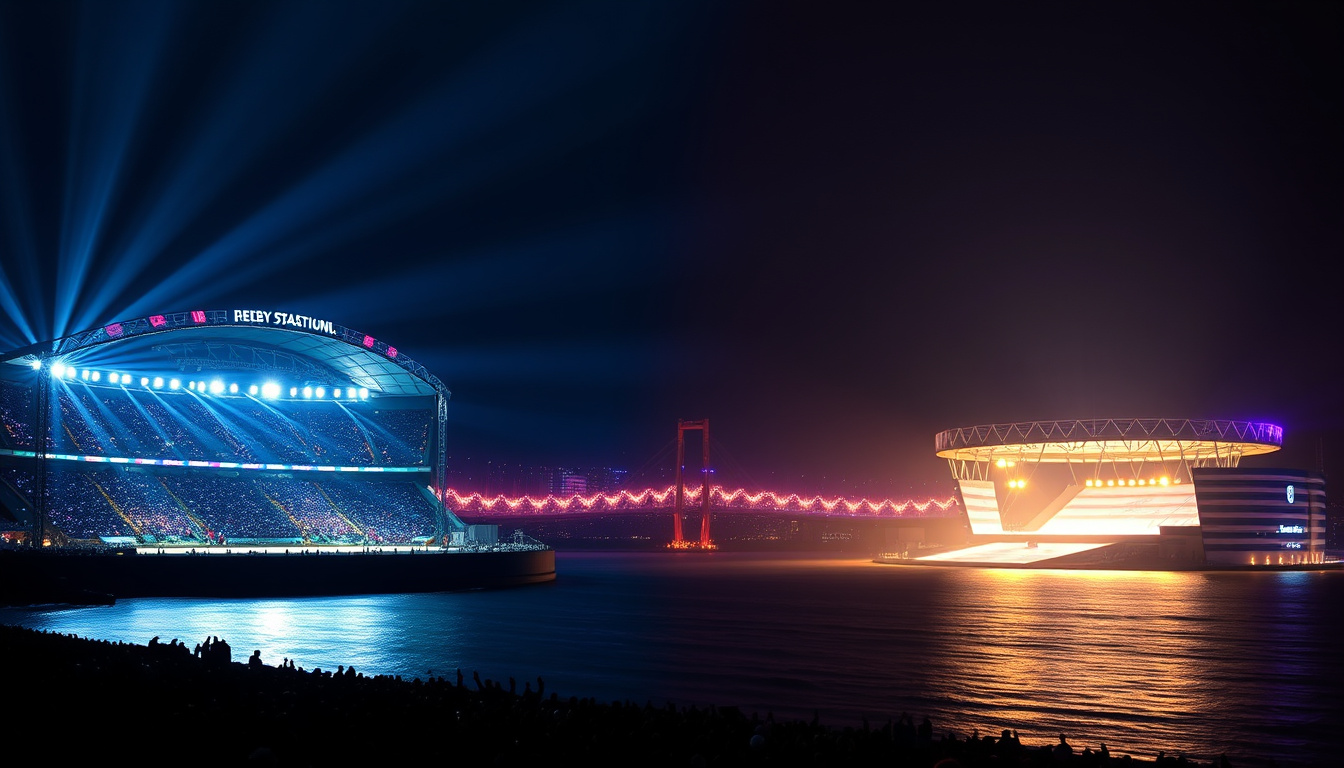
On July 13, 1985, the world witnessed what was then the largest simultaneous rock concert ever staged. Live Aid brought together more than sixty performers across two continents, raising awareness and funds for the Ethiopian famine crisis. The event remains a landmark in music history, and understanding the order in which artists took the stage offers insight into how organizers balanced talent, time zones, and global impact.
The concert ran at Wembley Stadium in London and John F. Kennedy Stadium in Philadelphia, with performances spanning roughly twelve hours at each venue. Audiences totaled over 160,000 in person, while an estimated 1.9 billion viewers watched worldwide. This article provides a complete breakdown of performers in chronological order at both locations, drawing from historical setlists and verified timing data.
Live Aid 1985 Performers Order at Wembley Stadium
The London portion of Live Aid began at midday and continued into the late evening, BST. Opening with a royal introduction, the Wembley stage showcased a cross-section of British and international acts throughout the afternoon and into the night.
Some Wembley set times remain approximate due to gaps in source documentation. Cross-referencing multiple archives helps establish the most accurate chronology possible.
Essential Event Overview
July 13, 1985
Wembley Stadium (London), JFK Stadium (Philadelphia)
Bob Geldof and Midge Ure
Ethiopian famine relief
Key Insights from the Wembley Lineup
- Queen delivered what many consider the defining performance of the entire event, despite their set not appearing in official timetables
- Status Quo opened proceedings at approximately 12:05 PM, performing three songs including “Rockin’ All Over the World”
- U2 performed at approximately 5:19 PM, delivering an intense rendition of “Sunday Bloody Sunday” that resonated with global viewers
- Sting appeared multiple times, including a collaboration with Phil Collins during the afternoon segment
- The Who experienced a broadcast interruption due to a BBC fuse issue during their set
- Freddie Mercury and Brian May closed the Wembley show around 9:48 PM with a duet
- The concert reached its finale with a combined performance featuring George Michael and others
Wembley Setlist Data
| Approximate Time | Performer | Selected Songs |
|---|---|---|
| 12:00 PM | Prince & Princess of Wales | Royal Salute introduction |
| 12:05 PM | Status Quo | Rockin’ All Over the World, Caroline, Don’t Waste My Time |
| 12:25 PM | Style Council | You’re the Best Thing, Big Boss Groove |
| 12:45 PM | Boomtown Rats | I Don’t Like Mondays, Drag Me Down |
| ~4:08 PM | Bryan Ferry (w/ David Gilmour) | Sensation, Boys and Girls, Slave to Love |
| ~4:40 PM | Paul Young | Come Back and Stay, Everytime You Go Away |
| ~5:19 PM | U2 | Sunday Bloody Sunday, Bad |
| ~7:59 PM | The Who | My Generation, Pinball Wizard, Won’t Get Fooled Again |
| ~8:50 PM | Elton John | I’m Still Standing, Bennie and the Jets, Rocket Man |
| ~9:48 PM | Freddie Mercury & Brian May | Is This the World We Created…? |
Live Aid Philadelphia Performers in Order
Across the Atlantic, the Philadelphia show began at 8:50 AM Eastern Time and ran until 10:40 PM, matching the London schedule despite the five-hour time difference. The American leg featured a diverse mix of rock, pop, R&B, and soul acts that drew large crowds to JFK Stadium. According to historical records, the Philadelphia venue accommodated nearly 90,000 spectators.
Morning to Afternoon Segment
Attendee counts noted for each Philadelphia act range from approximately 106 to 144, based on available setlist.fm reports. These figures represent individual attendees who recorded their presence through the platform, which provides extensive concert documentation.
| Time (ET) | Performer | Attendance |
|---|---|---|
| 8:50 AM | Bernard Watson | 6 |
| 9:00 AM | Joan Baez | 113 |
| 9:10 AM | The Hooters | 121 |
| 9:30 AM | Four Tops | 115 |
| 9:45 AM | Billy Ocean | 111 |
| 9:55 AM | Black Sabbath (w/ Ozzy Osbourne) | 128 |
| 10:10 AM | Run-D.M.C. | 119 |
| 10:25 AM | Rick Springfield | 110 |
| 10:45 AM | REO Speedwagon | 116 |
| 11:10 AM | Crosby, Stills & Nash | 121 |
| 11:30 AM | Judas Priest | 126 |
| 12:00 PM | Bryan Adams | 121 |
| 12:40 PM | The Beach Boys | 120 |
| 1:25 PM | George Thorogood & the Destroyers | 123 |
| 2:05 PM | Simple Minds | 117 |
| 2:40 PM | The Pretenders | 123 |
| 3:20 PM | Santana | 119 |
| 3:55 PM | Ashford & Simpson | 112 |
Evening to Closing Segment
| Time (ET) | Performer | Attendance |
|---|---|---|
| 4:25 PM | Madonna | 125 |
| 5:00 PM | Tom Petty and the Heartbreakers | 128 |
| 5:30 PM | Kenny Loggins | 115 |
| 5:40 PM | The Cars | 128 |
| 6:05 PM | Neil Young & The International Harvesters | 125 |
| 6:40 PM | The Power Station | 118 |
| 7:20 PM | Thompson Twins (w/ Madonna, Steve Stevens, Nile Rodgers) | 117 |
| 7:40 PM | Eric Clapton (w/ Phil Collins) | 127 |
| 8:00 PM | Phil Collins | 131 |
| 8:10 PM | Led Zeppelin (w/ Phil Collins) | 144 |
| 8:40 PM | Crosby, Stills, Nash & Young | 119 |
| 8:45 PM | Duran Duran | 122 |
| 9:20 PM | Patti LaBelle | 106 |
| 9:50 PM | Daryl Hall & John Oates | 117 |
| 10:15 PM | Mick Jagger | 122 |
Full Live Aid 1985 Lineup and Concert Details
Combining both venues, Live Aid featured over sixty individual performers and groups. The organizers, Bob Geldof and Midge Ure, structured the event to create a seamless global broadcast experience, alternating between London and Philadelphia stages throughout the day. The BBC archives preserve original broadcast footage that captures this coordination effort.
Notable Collaborations
Several performances featured guest appearances that added to the event’s significance. Phil Collins performed at Wembley before flying to Philadelphia via Concorde to appear at both venues on the same day. The Thompson Twins were joined by Madonna, Steve Stevens, and Nile Rodgers for their set. Black Sabbath brought Ozzy Osbourne back for a special appearance, while Crosby, Stills & Nash expanded to include Neil Young for their Philadelphia performance.
Performance Highlights and Set Choices
Run-D.M.C. delivered a high-energy set featuring “Jam Master Jay” and “King of Rock,” helping bridge the gap between rock and hip-hop audiences. The Cars performed four songs including “You Might Think,” “Drive,” “Just What I Needed,” and “Heartbeat City.” Neil Young & The International Harvesters offered a five-song acoustic set that included “Sugar Mountain,” “The Needle and the Damage Done,” and “Powderfinger.”
Complete setlists for every Wembley performance remain fragmented across multiple archival sources. The most reliable data comes from setlist.fm cross-referenced with liveaid.free.fr timing records.
Queen and the Defining Performance
While Queen did not appear in official published timetables, their mid-afternoon twenty-minute set at Wembley is widely regarded as the event’s standout performance. Their energetic renditions of classic hits captured the spirit of the benefit concert and contributed significantly to the event’s lasting cultural legacy.
Live Aid 1985 Attendance and Key Event Facts
The scale of Live Aid distinguished it from previous benefit concerts. Attendance figures and viewership estimates underscore the event’s global reach and the public’s response to the Ethiopian famine crisis. Music historians frequently cite Live Aid as a turning point in popular culture and humanitarian activism.
Attendance by Venue
- Wembley Stadium, London: Approximately 72,000 attendees
- JFK Stadium, Philadelphia: Approximately 89,484 attendees
- Total in-person attendance: Over 161,000
- Global television viewership: Estimated at 1.9 billion people across multiple time zones
- Number of performing acts: Over 60 across both venues
- Concert duration: Approximately 12 hours at each venue
Event Structure
The dual-venue format required meticulous coordination. London operated on British Summer Time, one hour ahead of Eastern Time in Philadelphia. This allowed producers to alternate between venues during the broadcast, creating a continuous viewing experience that kept audiences engaged throughout the day.
For those interested in concert timing comparisons, Bodø/Glimt vs Man City Lineups – Predicted XIs and Match Preview provides context on how scheduling complexity applies to sporting events.
How the Day Unfolded: A Chronology of Live Aid 1985
The following timeline illustrates the progression of both Live Aid concerts from opening to finale, accounting for the time zone difference between London and Philadelphia.
- 8:50 AM ET (1:50 PM BST): Bernard Watson opens the Philadelphia show
- 12:00 PM BST (7:00 AM ET): Prince & Princess of Wales deliver the royal introduction at Wembley
- 12:05 PM BST: Status Quo becomes the first musical act at Wembley
- Early afternoon BST: Sting and Phil Collins collaborate on multiple songs
- Mid-afternoon: Queen delivers their acclaimed twenty-minute Wembley set
- ~5:19 PM BST: U2 performs at Wembley
- Afternoon ET: Madonna takes the Philadelphia stage
- ~7:59 PM BST: The Who begins their Wembley set
- 8:10 PM ET (9:10 PM BST): Led Zeppelin performs with Phil Collins at JFK Stadium
- ~9:48 PM BST: Freddie Mercury and Brian May close the Wembley show
- 10:40 PM ET: The Philadelphia concert concludes after over thirteen hours
What We Know for Certain About the Live Aid Lineup
Verification of the Live Aid performer order relies on multiple historical sources, some more reliable than others. The following comparison clarifies what is well-documented versus what remains subject to interpretation.
| Established Information | Unclear or Subject to Variation |
|---|---|
| Philadelphia start time of 8:50 AM ET | Exact arrival times for specific performers |
| Status Quo opened Wembley at 12:05 PM | Precise durations for individual Wembley sets |
| Phil Collins performed at both venues | Which specific songs opened Sting’s Wembley collaboration |
| U2 performed around 5:19 PM at Wembley | Exact timing of Queen’s set within the afternoon schedule |
| Led Zeppelin’s set included Rock and Roll, Whole Lotta Love, and Stairway to Heaven | Whether setlists were adjusted on the day due to technical issues |
| The Who experienced a BBC broadcast interruption | Complete list of songs performed during The Who’s set |
Why the Live Aid Lineup Still Resonates
The 1985 Live Aid concert represented a watershed moment for the relationship between popular music and humanitarian causes. By assembling performers across genres and generations, organizers demonstrated how the music industry could mobilize collective action on a global scale. The Rock and Roll Hall of Fame recognizes Live Aid among the most influential cultural events of the twentieth century.
The performer lineup reflected deliberate choices that balanced commercial appeal with artistic credibility. Established acts like The Who and Santana brought generations of fans, while emerging artists like Madonna and U2 gained exposure that would shape their careers throughout the decade. The inclusion of soul and R&B performers like Patti LaBelle and the Four Tops ensured the event reached diverse audiences.
What Historians and Organizers Have Said
Bob Geldof, who organized the event with Midge Ure, has repeatedly emphasized that Live Aid was designed not merely as a spectacle but as a direct appeal to conscience. The concert generated significant donations for famine relief efforts in Ethiopia, though debates continue about the long-term effectiveness of celebrity-driven humanitarian campaigns.
— Historical accounts of Live Aid organization and purpose
Queen drummer Roger Taylor later recalled that the band prepared intensively for their performance, treating it as a vital concert rather than a charity appearance. This approach contributed to their widely celebrated set, which featured tight musicianship and energetic crowd engagement.
— Retrospective accounts from participating artists
The historical record continues to benefit from fan archives and music databases that preserve timing data and setlist information. Researchers studying Man City vs A.F.C. Bournemouth Timeline – Full Match History Since 1987 may find similar patterns of how detailed records help reconstruct events for future reference.
The Lasting Significance of the Live Aid Performer Lineup
Live Aid established a template for large-scale benefit concerts that continues to influence events today. The careful orchestration of performers across two continents demonstrated that music could transcend borders to address shared human challenges. While the performer lineup reflected the commercial realities of 1980s rock promotion, the collective impact proved greater than any individual appearance.
The 1985 concert remains a reference point for measuring the cultural and humanitarian potential of popular music. Understanding who performed and in what order helps contextualize how organizers balanced artistic excellence with logistical necessity, ultimately creating an event that reached an estimated quarter of the world’s population.
Frequently Asked Questions
What time did Live Aid Philadelphia start and end?
The Philadelphia concert began at 8:50 AM Eastern Time on July 13, 1985, and concluded at approximately 10:40 PM ET, spanning nearly fourteen hours.
Which performers appeared at both Wembley and Philadelphia?
Phil Collins performed at both venues, flying from London to Philadelphia via Concorde between sets. No other individual artist is documented as performing at both locations on the same day.
How many total performers took the stage at Live Aid 1985?
The event featured over sixty distinct acts across both Wembley Stadium in London and JFK Stadium in Philadelphia, including solo artists, bands, and collaborative performances.
What was Queen’s role in the Live Aid lineup?
Queen delivered a twenty-minute mid-afternoon set at Wembley that is widely regarded as the event’s highlight. Although their performance did not appear in official published timetables, it became one of the most memorable moments in rock history.
Which venue had higher attendance?
JFK Stadium in Philadelphia drew approximately 89,484 attendees, exceeding Wembley Stadium’s attendance of around 72,000.
What caused the broadcast interruption during The Who’s set?
A BBC fuse issue interrupted the broadcast during The Who’s performance at Wembley, though the band continued playing for those in attendance at the stadium.
How did the time zone difference affect the concert schedule?
London operated on British Summer Time, one hour ahead of Eastern Time in Philadelphia. This allowed producers to alternate between venues during the global broadcast, creating a continuous viewing experience.
Were there any surprise guest appearances?
Several performances featured notable guests, including Madonna joining Thompson Twins, Ozzy Osbourne appearing with Black Sabbath, and Phil Collins playing with both Sting at Wembley and Led Zeppelin in Philadelphia.
Related stories



Marcus Bell covers UK politics, public policy and government for MorningTimes.uk.