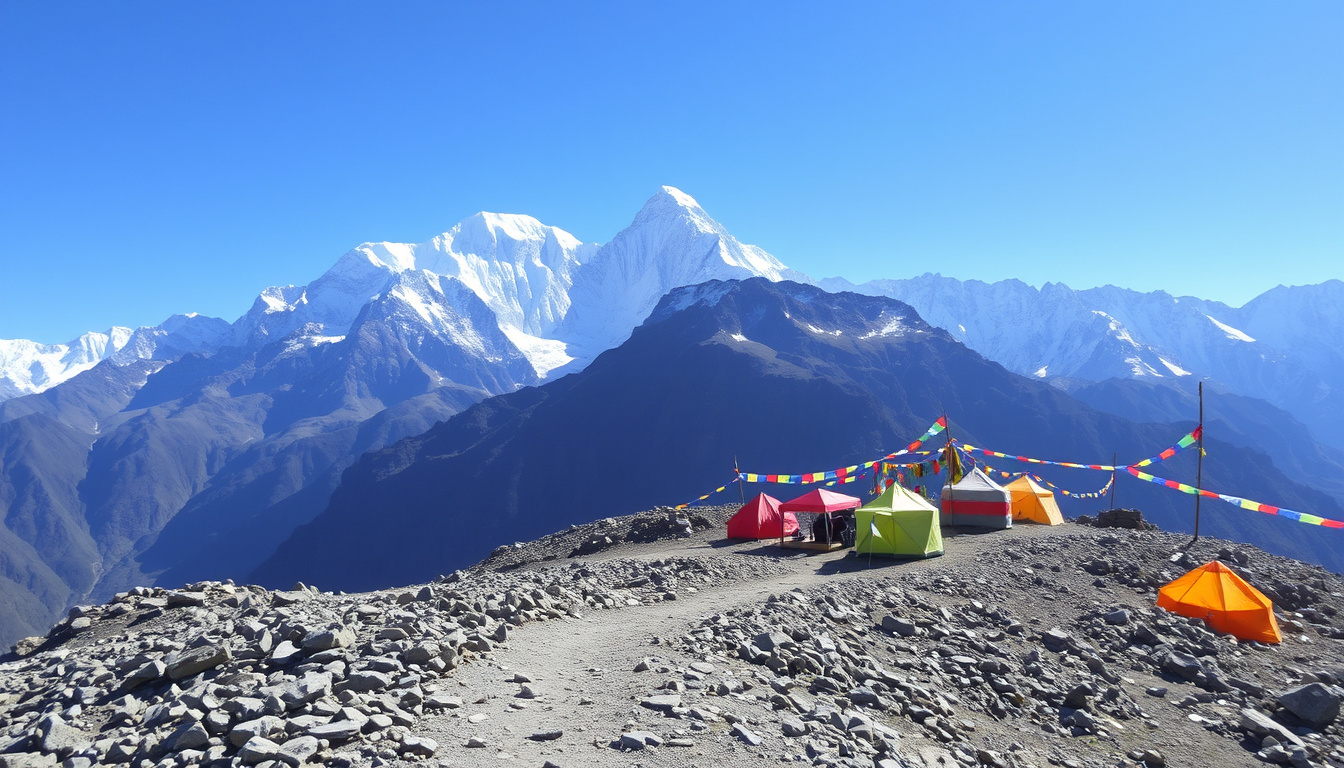
Everest Base Camp is a trek, not a climb, and that distinction makes all the difference for beginners wondering if they can actually do it. You don’t need ropes, crampons, or technical ice experience to walk to the foot of the world’s tallest mountain.
Elevation of Base Camp: 5,364 m (17,598 ft) | Average trek duration: 12–16 days | Starting altitude (Lukla): 2,860 m (9,383 ft) | Highest point (Kala Patthar): 5,645 m (18,520 ft) | Estimated success rate for beginners: ~90% with proper preparation
| Location | Khumbu Region, Nepal (South Base Camp) |
| Highest Point Reached | 5,645 m (18,520 ft) at Kala Patthar viewpoint |
| Typical Start Date Season | March–May and October–November |
| Primary Permit Cost | NPR 11,000 (approx. USD 80) for Sagarmatha National Park entry |
| Common Accommodation | Tea houses (basic lodges) along the entire route |
Difficulty
- Strenuous hiking, not technical climbing. Discovery World Trekking
- Primary challenge: high altitude. Third Rock Adventures
- Requires good cardiovascular fitness. Discovery World Trekking
Duration
- 12–16 days standard itinerary. Nepal Guide Trekking
- Approx. 130 km round trip. Nepal Guide Trekking
- Includes rest/acclimatization days. Nepal Guide Trekking
Cost
- $1,000–$5,000 USD for guided treks. Nepal Guide Trekking
- $500–$1,500 USD for independent budget. Nepal Guide Trekking
- Flights, permits, and gear are major expenses. Nepal Guide Trekking
Risks
- Altitude Sickness (AMS) is the main risk. Discovery World Trekking
- Falls, knee injuries, weather changes. Discovery World Trekking
- Proper preparation and insurance mitigate risks. Discovery World Trekking
How hard is it to climb to Everest Base Camp?
What you do need is solid preparation for 12–16 days of hiking at altitudes that can leave even fit hikers gasping for breath. The trek is not technically climbing but strenuous hiking on well-defined trails. Altitude (5,364 m) is the primary challenge, not steep technical sections. Most trekkers walk 5–7 hours per day.
What does the daily walking involve?
Daily stages range from 4 to 8 hours of walking on rocky paths, stone steps, and suspension bridges. The terrain is non-technical but requires good balance and endurance.
How does altitude affect difficulty?
Acclimatization days are mandatory, not optional, and ignoring them is why trekkers get evacuated. Plan for a pace that feels frustratingly slow: that is the only safe rhythm above 3,500 meters.
“The standard Everest Base Camp trek in Nepal requires two main permits: the Sagarmatha National Park Entry Permit and the Khumbu Pasang Lhamu Rural Municipality Permit.” — Third Rock Adventures
Can a beginner do Everest Base Camp?
If you are a recreational walker with decent endurance, you can absolutely get to Base Camp (5,364 m). But the real challenge—and the one that stops most people cold—is the altitude itself. Yes, a beginner with good fitness and proper preparation can complete the trek. Pre-trek training should include cardiovascular endurance, leg strength, and long hikes. Hiring a guide or joining a group is recommended for first-timers.
What level of fitness is required?
You need to be able to walk for 5–7 hours on consecutive days with a daypack. Cardiovascular fitness is more important than strength.
What training should a beginner do?
Begin training 8–12 weeks before the trek: hike on hilly terrain, climb stairs, use a stairmaster, and do long walks with a loaded pack. Include rest days.
TL;DR for the beginner trekker: Yes, you can complete Everest Base Camp without climbing experience, but you cannot skip altitude acclimatization or skimp on cold-weather gear. Your choice: join a guided group for USD 1,200–1,800 and let someone else handle logistics and safety, or save money by going independent and accept the real risk that a mistake at 5,000 meters could end your trip—or worse. For your first high-altitude trek, buy the guide. That USD 400–600 premium is what your safety actually costs.
How much does it cost to climb Everest Base Camp?
For a beginner, the cost is the most surprising hurdle. A guided group trek runs USD 1,200–1,800 (JPY 180,000–270,000) including permits, lodging, and meals, but your international flight to Kathmandu and gear purchases (good boots, a warm sleeping bag rated to -15°C) can easily add another USD 1,000–1,500. That brings the total closer to USD 2,200–3,300. Independent trekking is cheaper but unwise for a first-timer without a guide—you need someone who knows altitude sickness warnings and the local tea-house system.
Cost breakdown: guided vs. independent
| Item | Guided Group | Independent |
|---|---|---|
| Guide + porter fees | Included in package | USD 25–50/day |
| Permits (Sagarmatha + Khumbu) | Included | NPR 6,000 (~USD 45–57) |
| Lodging & meals | Included | USD 20–30/day |
| Lukla flight (round trip) | Often included | USD 350–500 |
| Gear rental | Extra | USD 100–300 |
| Total (approx.) | USD 1,200–3,300 | USD 500–1,500 |
The catch: going independent saves money but adds significant risk, especially for a first-timer.
What is included in common package prices?
Most guided packages include airport transfers, Lukla flights, permits, tea house accommodation, meals, an English-speaking guide, and porter service. They do not include international flights, travel insurance, personal gear, or tips.
How many days does it take to walk to Everest Base Camp?
The standard trek lasts 12–16 days round trip from Kathmandu. Acclimatization days are built into the schedule to prevent altitude sickness. The walking distance is approximately 130 km round trip.
Standard itinerary overview
- Day 1: Arrive Kathmandu
- Day 2: Fly to Lukla (2,860 m), trek to Phakding
- Day 3: Trek to Namche Bazaar (3,440 m)
- Day 4: Acclimatization day in Namche
- Day 5: Trek to Tengboche (3,860 m)
- Day 6: Trek to Dingboche (4,410 m)
- Day 7: Acclimatization day in Dingboche
- Day 8: Trek to Lobuche (4,940 m)
- Day 9: Trek to Gorak Shep (5,170 m), then hike to Everest Base Camp (5,364 m)
- Day 10: Hike Kala Patthar (5,645 m), then descend to Pangboche
- Day 11–12: Return to Lukla
- Day 13: Fly back to Kathmandu
Why do most itineraries take 12–16 days?
The human body needs time to adjust to altitude. Rapid ascents increase the risk of Acute Mountain Sickness (AMS). The “climb high, sleep low” principle is built into the itinerary.
Which is harder, Kilimanjaro or Everest Base Camp?
| Factor | Kilimanjaro | Everest Base Camp |
|---|---|---|
| Maximum altitude | 5,895 m (19,341 ft) | 5,645 m (18,520 ft) at Kala Patthar |
| Duration | 5–9 days | 12–16 days |
| Terrain | Steep, varied (rainforest to scree) | Long, gradual rocky trails |
| Acclimatization profile | Less time, higher risk | More days, better profile |
| Technical difficulty | None (scramble at summit) | None (hiking only) |
The pattern: Kilimanjaro is a shorter, steeper challenge with a higher success rate but more acute altitude risk. Everest Base Camp is a longer endurance test with a safer altitude profile.
Key differences in altitude profile
Kilimanjaro summits at a higher altitude (5,895 m) but over fewer days (5–9). Everest Base Camp trek is longer but has a lower maximum altitude, and the “climb high, sleep low” pattern makes acclimatization safer.
Key differences in terrain and walking conditions
Kilimanjaro has five climate zones, from rainforest to arctic. Everest Base Camp stays in alpine terrain with rocky trails, suspension bridges, and long river valley walks. Both require good boots and cold-weather gear.
What are the biggest risks at Everest Base Camp?
Acute Mountain Sickness (AMS) is the most common serious risk. Falls and knee injuries are frequent due to rough, rocky terrain. Hypothermia and gastrointestinal illness are also common.
Altitude sickness (AMS)
Without proper acclimatization, AMS can progress to HAPE or HACE, which are life-threatening. Your guide holds your permit paperwork, negotiates with tea houses, and watches for early signs of high-altitude cerebral or pulmonary edema.
Injury on the trail
Rocky paths, uneven stone steps, and long descents put stress on knees and ankles. Trekking poles and proper footwear reduce risk.
Weather and trail conditions
Temperatures can drop below -15°C at night. Sudden storms, snow, and high winds can make navigation difficult. Check forecasts and carry proper layers.
Warning: Without an experienced guide, you are gambling your health against a few hundred dollars saved. The trade-off for a beginner is stark: you trade the thrill of “going it alone” for the safety of a guided group. Your guide holds your permit paperwork, negotiates with tea houses, and—most critically—watches for the early signs of high-altitude cerebral or pulmonary edema, which kill trekkers every year.
Is Everest Base Camp Trekking Safe: Know Risks and Safety Tips
The trek is considered safe for most properly prepared individuals. Travel insurance covering high-altitude trekking and helicopter evacuation is essential. Knowing symptoms of AMS and having a descent plan are critical.
Safety tips for beginners
- Acclimatize properly: take rest days, ascend slowly.
- Stay hydrated: drink 3–4 litres of water daily.
- Listen to your body: headache, nausea, dizziness are warning signs.
- Use trekking poles to reduce knee strain.
- Carry a fully charged phone and power bank (solar available at tea houses).
Importance of a good guide and insurance
Nepal introduced a mandatory licensed-guide requirement for foreign trekkers in national parks in April 2023. However, the Khumbu Pasang Lhamu Rural Municipality issued a notice saying hiring a guide is not mandatory for the Everest region. Regardless, for a beginner a guide is strongly recommended. Insurance must cover helicopter evacuation up to 6,000 m.
“The Everest Base Camp trek is widely presented as a challenging high-altitude trek rather than a technical climb, and beginner trekkers are generally advised to have good fitness, acclimatization, and enough time.” — Discovery World Trekking
travelhimalayanepal.com, everestcamptrek.com, himalayaguidenepal.com, attentiveholidays.com, himalayan-masters.com, placesnepal.com, nepaltrekkingplanner.com, nepalgatewaytrekking.com, getawaynepal.com
Frequently Asked Questions
What kind of shoes are best for the Everest Base Camp trek?
Sturdy, waterproof hiking boots with good ankle support, broken in before the trek. Trail runners are not recommended for the rocky terrain.
Do I need a visa to trek to Everest Base Camp in Nepal?
Yes, most foreign nationals need a tourist visa on arrival at Kathmandu airport. Visa fees vary by nationality and length of stay.
Can I charge my phone and camera on the Everest Base Camp trek?
Yes, most tea houses offer charging for a small fee (around USD 2–3 per device). Solar chargers are also available.
What temperature range should I expect at Everest Base Camp?
Daytime temperatures in spring/autumn range from 5°C to 15°C, but nighttime temperatures can drop to -15°C or lower. A warm sleeping bag rated to -15°C is essential.
Is there mobile phone service on the Everest Base Camp trail?
Yes, Ncell and Nepal Telecom provide 3G/4G coverage in most villages and along the trail. However, connectivity can be intermittent.
Upsides of a Guided Group
- All logistics handled (permits, accommodation, meals)
- Experienced guide monitors health
- Porter carries most of your gear
- Safety net for altitude sickness
Downsides of a Guided Group
- Higher cost (USD 1,200–1,800)
- Less flexibility in itinerary
- Group pace may be slower than you prefer
The implication: for a first-time high-altitude trekker, the safety and convenience of a guided group far outweigh the cost savings of going alone.
Related reading: Climbing Mount Toubkal: Difficulty, Safety & Beginner Tips | Down Jacket Guide: Warmth, Care, and Lifespan Tips
Related stories




Richard Vane is Senior Reporter at MorningTimes.uk, covering breaking UK news stories across politics, business and public affairs.