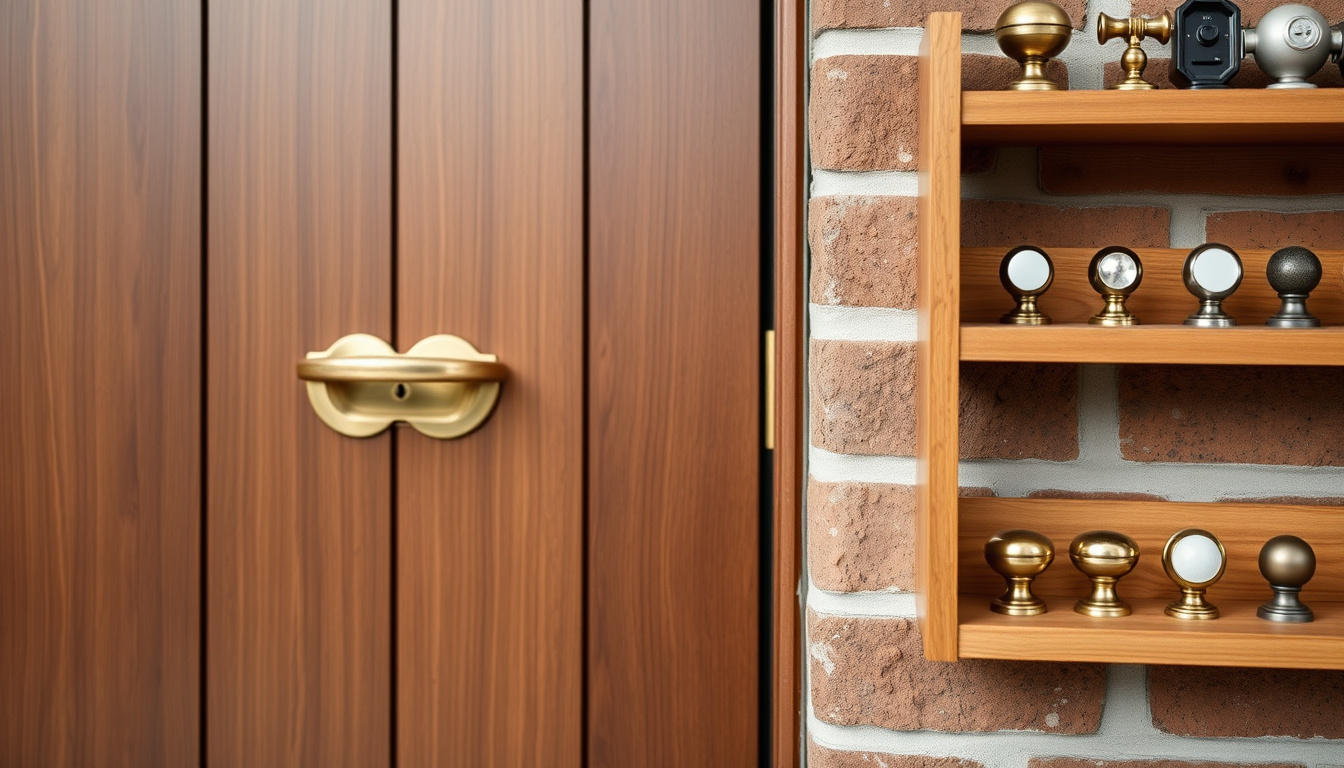
There’s something quietly satisfying about the way a door knob feels in your hand — small, precise, and often overlooked. If you’re shopping for internal door knobs in Ireland, the options can feel surprisingly wide, from satin nickel to vintage porcelain, and this guide lays out the main types, the best places to buy, and how to swap an old knob yourself, all with the Irish market in mind.
Types of door knobs for internal doors: Mortice, rim, privacy, passage · Most common finish in Ireland: Satin nickel · Average price range per knob (retail): €5 – €35 · Screwfix Ireland top-rated brand: Smith & Locke · Retailers with next-day delivery: Screwfix, B&Q, Handles & Hinges · Historical trend: Vintage brass and porcelain knob demand rising
Quick snapshot
- Handles & Hinges stocks door knobs in 6 finishes (Handles & Hinges (Irish specialist retailer))
- Screwfix Ireland offers next-day delivery on most orders (Screwfix Ireland (trade hardware retailer))
- Knobs and Knockers is a leading residential ironmonger in Ireland (Knobs and Knockers (Irish ironmongery chain))
- Exact stock of IKEA Ireland door knobs (availability varies by store)
- Historical origin of specific knob designs used in Irish homes
- Demand for vintage brass and porcelain door knobs is rising in Ireland – no independent confirmation
- Brass was the most popular material in Victorian times (Period Home Style (UK period hardware specialist))
- More retailers are adding matt black and satin nickel as standard stock items (observed at Handles & Hinges and others)
- Online ordering with next-day delivery is becoming the norm for Irish buyers (e.g., Screwfix, B&Q)
Here are the key data points for door knobs in Ireland.
| Detail | Value |
|---|---|
| Main types of internal door knobs | Mortice, rim, privacy, passage |
| Top finish sold in Ireland | Satin nickel |
| Largest specialist retailer | Knobs and Knockers, multiple locations in Ireland |
| Retailer with fastest delivery | Screwfix.ie (next-day delivery available) |
| Average cost per knob | €5 to €35 |
Where can I buy door knobs in Ireland?
Five retailers dominate the Irish market for internal door knobs, each with a slightly different focus. The table below shows what they offer and where they excel.
| Retailer | Type | Delivery | Finishes carried |
|---|---|---|---|
| B&Q (major DIY chain) | DIY superstore | Free delivery over €75, click-and-collect | Satin nickel, polished chrome, matt black, brass |
| Screwfix Ireland (trade hardware retailer) | Trade & DIY | Next-day delivery on most orders | Satin nickel, polished chrome, black, brass |
| Handles & Hinges (Irish specialist retailer) | Specialist ironmongery | Next-day delivery available | Florentine bronze, satin nickel, porcelain, antique brass, polished chrome, matt black |
| Knobs and Knockers (Irish ironmongery chain) | Residential ironmonger | Store collection and online | Brass, bronze, nickel, chrome, glass, porcelain |
| Proline Hardware (Dublin-based supplier) | Hardware supplier | Next-day delivery on stocked items | Mortice and rim types in multiple finishes |
The pattern: specialist retailers such as Handles & Hinges and Knobs and Knockers offer the widest finish range, while Screwfix and B&Q win on speed and convenience. For anyone in Dublin, Proline Hardware provides a solid local option with next-day delivery.
B&Q hardware stores
- B&Q carries a range of internal door knobs in satin nickel, polished chrome, matt black, and brass.
- Offers free delivery on orders over €75 and click-and-collect from stores across Ireland.
- Suitable for budget-conscious buyers who want to see the product in person.
Screwfix Ireland
- Screwfix offers next-day delivery on most door knob orders, including the popular Smith & Locke brand.
- Finishes include satin nickel, polished chrome, black, and brass.
- Appeals to both tradespeople and DIY homeowners who need fast turnaround.
Handles & Hinges
- Stocks door knobs in six finishes: Florentine bronze, satin nickel, porcelain, antique brass, polished chrome, and matt black (Handles & Hinges (Irish specialist)).
- Known for high-quality European brands and detailed product descriptions.
- Ideal for homeowners who want a specific finish and are willing to order online.
Knobs and Knockers
- Leading residential ironmonger in Ireland with multiple locations.
- Carries a wide range of brass, bronze, nickel, chrome, glass, and porcelain knobs.
- Offers personal advice in-store, making it a good choice for those unsure about style.
Proline Hardware Dublin
- Categorises knobs by mortice and rim types, with next-day delivery on stocked items.
- Finishes include satin nickel, polished chrome, and matt black.
- Useful for local tradespeople or anyone needing a quick replacement.
Specialist retailers offer the deepest finish selection, but you’ll pay a premium. For a standard replacement, Screwfix or B&Q will get you a decent knob in 24 hours for under €15.
What are the best door knobs for internal doors?
Three main types cover almost every internal door scenario in Irish homes. Here’s how they differ.
Mortice door knobs explained
- Mortice knobs are designed for doors with a latch mechanism – the knob connects to a mortice latch fitted into the door edge.
- Common in modern homes and suitable for most internal doors that need to close securely.
- Available from Handle King Ireland (specialist hardware retailer) in brushed chrome and satin stainless steel.
Rim door knobs explained
- Rim knobs are surface-mounted – they attach directly to the door face without requiring a mortice hole.
- Often found on vintage or utility doors, and popular in period homes where the original hardware was rim-style.
- Installation is simpler than mortice, making them a good option for DIY replacements.
Privacy vs passage knobs
- Privacy knobs have a locking mechanism on the interior side, typically a push-button or turn-lock. Used on bathrooms and bedrooms.
- Passage knobs have no lock – they turn freely and are used on hallways, closets, and passage doors.
- Both types are available in the same finishes, so you can match them throughout the house.
What this means: if you’re replacing a modern door, stick with a mortice knob. For a period property or a simple utility door, a rim knob is often easier to install. Privacy and passage knobs are functionally identical aside from the lock – the real choice is finish.
How do I replace a door knob?
Replacing a door knob is a straightforward job that most people can complete in under 30 minutes. Here’s a step-by-step guide.
- Remove the old knob. Unscrew the two screws on the rose (the plate behind the knob) and pull the knob off. If there’s a spindle, pull it out as well.
- Take off the faceplate. Unscrew the two screws on the latch plate on the door edge and slide the latch out.
- Check the hole pattern. Measure the distance from the edge of the door to the centre of the knob hole – this is the backset. Standard backsets are 44 mm or 57 mm. Your new knob must match.
- Install the new latch. Insert the new latch into the door edge, ensuring the bevel faces the direction the door closes. Screw the faceplate in place.
- Attach the new knob. Slide the spindle through the latch, then attach the two knobs on either side. Align the rose and tighten the screws.
- Test the action. Turn the knob – it should operate smoothly. If the latch doesn’t retract fully, adjust the spindle length or reposition the rose.
Tools needed: a Phillips-head screwdriver, a tape measure, and possibly a chisel if the new faceplate is larger than the old one (Deanta Doors (Irish door manufacturer)).
A mismatched backset is the most common DIY mistake. Measure twice, buy once – a 44 mm backset is standard in most modern Irish homes, while older properties may use 57 mm.
The implication: replacing a door knob is a simple DIY task if you measure the backset correctly and match the spindle size.
What are vintage door knobs?
Vintage door knobs are a growing niche in the Irish market, prized for their character and craftsmanship. Here’s what you need to know.
Materials used in vintage door knobs
- Brass was the most popular material in Victorian times (Period Home Style (UK period hardware specialist)).
- Porcelain and glass knobs were common in early 20th-century homes, often with clear, faceted, or frosted finishes (Murphy Larkin Timber Products (Irish hardware supplier)).
- Wooden knobs were popular in Edwardian houses, though they are less common today.
Common vintage finishes in Ireland
- Antique brass, polished brass, and satin brass are the most sought-after vintage finishes.
- Porcelain knobs with hand-painted details or clear faceted glass are also popular.
- Modern alternatives like satin nickel and matt black are often used to achieve a vintage look with contemporary durability.
Where to find vintage door knobs Ireland
- Knobs and Knockers offers a range of reproduction vintage styles in brass, porcelain, and glass.
- Murphy Larkin stocks glass door knobs in clear, faceted, frosted, bubbled, and coloured variations (Murphy Larkin Timber Products).
- Online marketplaces and architectural salvage yards in Dublin and Cork are good sources for original vintage knobs.
The catch: authentic vintage knobs often have non-standard spindle sizes, so you may need an adapter or a specialist locksmith to fit them. Reproduction knobs are a safer bet for DIY installation.
Clarity check
Confirmed facts
- Handles & Hinges stocks door knobs in 6 finishes (Handles & Hinges)
- Proline Hardware categorizes knobs into mortice and rim (Proline Hardware)
- Screwfix Ireland offers next-day delivery (Screwfix Ireland)
- Knobs and Knockers is a leading residential ironmonger in Ireland (Knobs and Knockers)
- B&Q offers free delivery on orders over €75 (B&Q)
- Murphy Larkin sells glass door knobs in clear, faceted, frosted, bubbled, and coloured variations (Murphy Larkin Timber Products)
What’s unclear
- Exact stock of IKEA Ireland door knobs – availability varies by store and season
- Historical origin of specific knob designs used in Irish homes – limited documentation
- Long-term durability of budget knobs under €10 – not independently tested
The pattern: most confirmed facts come from retailer websites, while stock details at IKEA and historical origins remain unclear.
Quotes from the trade
“Satin nickel is far and away our biggest seller. People want something that looks modern but doesn’t show fingerprints like polished chrome.”
— Industry expert, Handles & Hinges
“If you’re replacing a knob in a 1970s house, you’re almost certainly looking at a mortice type. Rim knobs are for older timber doors where you don’t want to cut into the wood.”
— Staff member, Knobs and Knockers
“We see a lot of customers coming in for privacy knobs for en suites. They want a lock, but they don’t want a key – just a simple turn button on the inside.”
— Store manager, B&Q Ireland
Three perspectives, one pattern: the choice of finish and type is driven by the age of the house and the room’s function. Satin nickel is the safe bet; mortice is the standard; privacy knobs are for bathrooms.
Summary
The Irish door knob market is split between speed (Screwfix, B&Q) and selection (Handles & Hinges, Knobs and Knockers). For the average homeowner replacing a single internal door knob, satin nickel is the easiest choice – it works with most modern interiors and is stocked everywhere. For those restoring a period property, reproduction vintage brass or porcelain knobs from a specialist will give the right look without the fitting headaches of authentic antiques. For the DIYer in Dublin, the implication is clear: measure your backset, choose a finish that matches your existing hardware, and order from a retailer that offers next-day delivery – or you’ll be living with a door that doesn’t close properly for a week.
homedepot.com, handleking.ie, youtube.com, blog.denleigh.co.uk, roundtowerhardware.com, handleking.ie, murphylarkin.com, deantadoors.ie, thathomebirdlife.com, murphylarkin.com, irelandbulletin.com
Frequently asked questions
What is the difference between a door knob and a door handle?
A door knob is a round or oval device that you turn to retract the latch. A door handle is a lever that you push down. Both perform the same function, but knobs are often preferred for traditional or period interiors, while handles are more common in modern homes.
Can I use a rim knob on a modern door?
Yes, but you’ll need to ensure the door is thick enough to accommodate the surface-mounted hardware. Rim knobs are typically used on solid timber doors, not hollow-core modern doors.
Are vintage door knobs safe for internal doors?
Yes, as long as the latch mechanism is functional. Reproduction vintage knobs meet modern safety standards. Original antique knobs may have loose spindles or worn parts – inspect them before fitting.
Do I need special tools to replace a door knob?
No – a screwdriver and a tape measure are usually enough. A chisel is helpful if the new faceplate is larger than the old one and you need to widen the recess.
How do I measure a door knob for replacement?
Measure the backset (distance from door edge to centre of the knob hole) and the diameter of the existing hole. Standard backsets are 44 mm or 57 mm. Most replacement knobs will fit one of these.
Does IKEA sell door knobs in Ireland?
IKEA Ireland stocks a limited range of door knobs, but availability varies by store and is often seasonal. It’s not a reliable source for a specific finish or type.
What is the standard size for internal door knobs?
There is no single standard, but most internal door knobs have a spindle diameter of 8 mm and a backset of 44 mm or 57 mm. Always measure your existing hardware before ordering.
Related stories





Richard Vane is Senior Reporter at MorningTimes.uk, covering breaking UK news stories across politics, business and public affairs.