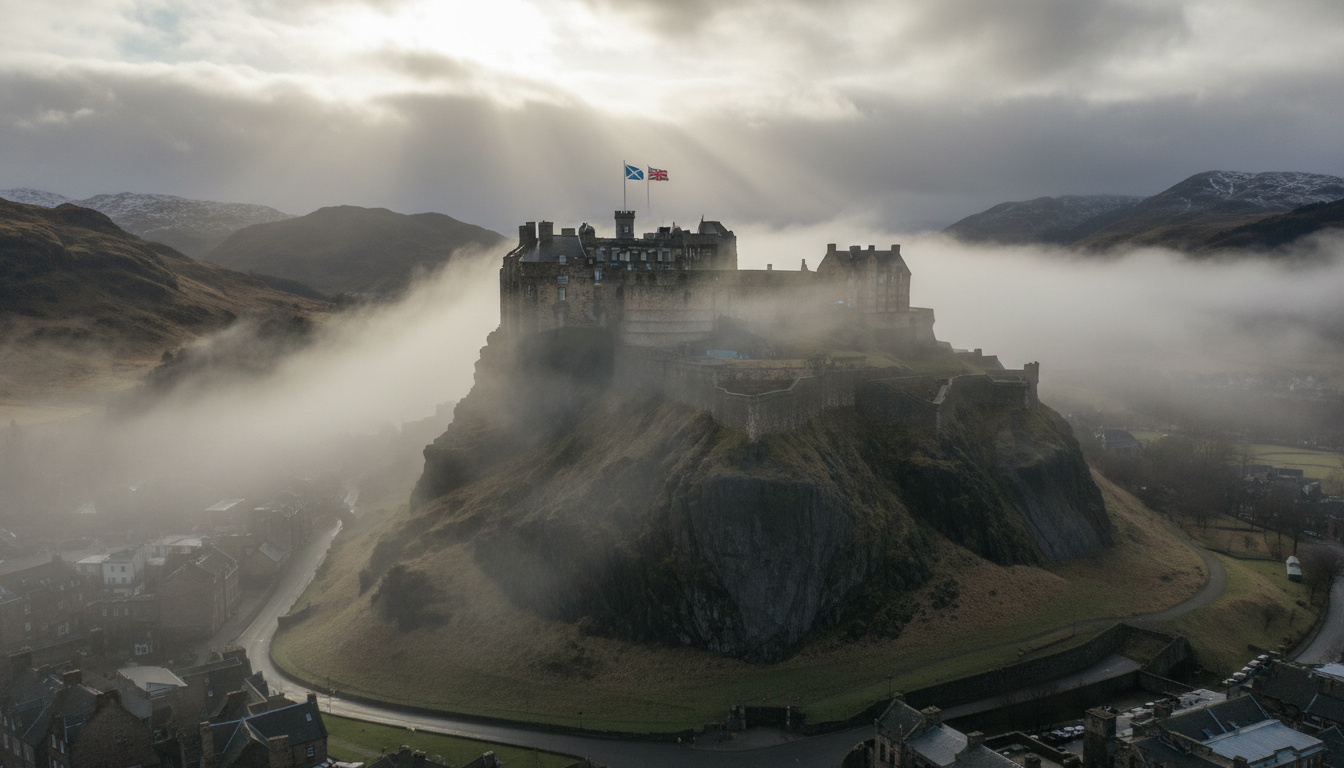

Scotland is a constituent country of the United Kingdom, sharing sovereignty with England, Wales, and Northern Ireland. While it possesses distinct legal systems, educational frameworks, and religious institutions, it does not function as a sovereign state in international law. The question of its status generates significant confusion, particularly regarding its relationship with the Acts of Union 1707 and its current constitutional standing within the British state.
Contemporary Scotland operates under a devolved governmental structure established in 1999, following the Scotland Act 1998. This arrangement grants the Scottish Parliament authority over education, health, and local government, while reserved matters including defense, foreign policy, and currency remain under Westminster jurisdiction. The distinction between being a “country” in cultural and historical terms versus a “sovereign state” under international law remains central to understanding Scotland’s unique position.
Visitors planning to explore this distinct national identity can reference practical travel guides such as Hop On Hop Off Edinburgh – Best 2025 Tours and Routes to experience the capital’s governance and cultural landmarks firsthand.
Is Scotland a Country? Yes or No
Yes. Scotland qualifies as a country according to standard definitions that emphasize historical continuity, cultural distinctiveness, and institutional autonomy. However, it functions politically as a constituent country within a larger sovereign state rather than an independent nation.
Several defining characteristics establish Scotland’s country status:
- Separate legal system (Scots Law) distinct from English common law
- Independent educational and religious institutions predating the 1707 Union
- Devolved Parliament with legislative authority over domestic policy
- Representation in international sporting competitions (FIFA, UEFA, etc.)
- Distinct cultural identity including language, literature, and national symbols
- Historic national territory with defined borders predating the United Kingdom
- Separate banking and currency issuance rights (though using Pound Sterling)
| Aspect | Scotland | United Kingdom |
|---|---|---|
| Government | Devolved Parliament (Holyrood) | Sovereign Parliament (Westminster) |
| Legal System | Scots Law (separate) | Multiple systems under Crown |
| UN Recognition | Not listed separately | Member State since 1945 |
| Head of State | Monarch (Charles III) | Monarch (Charles III) |
| Foreign Policy | No independent capacity | Full international sovereignty |
| Currency Control | Uses Pound Sterling (no central bank) | Bank of England authority |
| Military Defense | UK Armed Forces | Independent nuclear and conventional forces |
| EU Membership | No (exited with UK 2020) | No (exited 2020) |
Is Scotland a Sovereign Country?
No. Scotland does not possess sovereignty in the international legal sense. Sovereignty—the supreme authority to govern and conduct foreign relations—resides with the United Kingdom as a unitary state, not with its constituent parts.
Where Does Sovereignty Lie?
The Acts of Union 1707 extinguished the independent sovereignty of the Scottish and English states, creating a new sovereign entity: the Kingdom of Great Britain. The Scottish Parliament dissolved itself in 1707, transferring ultimate authority to Westminster. The modern Scottish Parliament, established in 1999, derives its powers from UK legislation rather than inherent sovereignty.
The Claim of Right for Scotland (1988) asserts that sovereignty ultimately rests with the Scottish people rather than Parliament alone, a doctrine distinct from English parliamentary sovereignty. This declaration, signed by numerous Scottish political figures, maintains that the Scottish people retain the right to determine their constitutional future.
Self-Determination vs. Sovereignty
Contemporary political movements, particularly the Scottish National Party, have advanced arguments for Scottish self-determination. The constitutional framework allows for debates regarding independence referenda, though the authority to hold legally binding votes remains contested between Holyrood and Westminster. The Scottish Government’s position, outlined in “Your Right to Decide,” asserts popular sovereignty—the right of the Scottish people to choose their constitutional destiny.
Is Scotland Recognised by the UN as a Country?
No. Scotland does not appear as an independent member state in United Nations records. The UN recognizes the United Kingdom of Great Britain and Northern Ireland as a single sovereign member state, not its internal divisions.
International Legal Status
Under international law, Scotland functions as a territory within a metropolitan state. While it possesses distinct cultural and legal characteristics, it lacks the treaty-making capacity, diplomatic recognition, and independent UN membership that define sovereign statehood. The United Kingdom represents Scotland in all international forums, including the Security Council, General Assembly, and specialized agencies.
Exceptions and Special Cases
Scotland maintains separate representation in certain international sporting and cultural organizations. It fields distinct national teams in football, rugby, and cricket, and participates independently in the Commonwealth Games. These arrangements reflect historical sporting traditions rather than political sovereignty, operating under specific organizational bylaws that permit non-sovereign entities to compete.
How Can Scotland Be a Country if the UK Is a Country?
The term “country” carries multiple meanings. In political geography, it can denote a sovereign state (the UK) or a constituent national unit with distinct institutions (Scotland). This semantic overlap creates confusion, but the concepts operate at different constitutional levels.
Scotland functions as a “country” in the sense of a historic nation with defined territory, culture, and institutions. The UK functions as a “country” in the sense of a sovereign state under international law. This nested arrangement—countries within a country—reflects the unique “union state” framework established in 1707, distinct from federal systems like the United States or unitary states like France.
The union state model treats Scotland’s relationship with the UK as a voluntary association requiring consent, rather than simple subordination to parliamentary sovereignty. This framework acknowledges Scotland’s prior existence as an independent kingdom and preserves its legal distinctiveness.
Why Is Scotland Considered a Country but Not Northern Ireland?
Both Scotland and Northern Ireland hold status as constituent countries of the UK, though their constitutional histories differ significantly. Scotland entered the Union in 1707 as a previously independent sovereign state with defined borders and institutions. Northern Ireland emerged in 1921 from the partition of Ireland, initially as an autonomous region within the UK with a devolved parliament (Stormont).
Scotland’s country status derives from its centuries-long existence as an independent kingdom prior to Union. Northern Ireland’s status reflects its position as one of two traditional countries of Ireland, partitioned following the Anglo-Irish Treaty. While Wales shares devolved governance, it was historically a principality rather than a kingdom, though it is now widely recognized as a constituent country.
Northern Ireland maintains separate legal systems reflecting its distinct historical trajectory, similar to Scotland. However, its devolution history has been more turbulent, with periods of direct rule from Westminster interrupting autonomous governance in ways Scotland has not experienced since 1999.
How Did Scotland’s Constitutional Status Evolve?
Scotland’s position within the British state has transformed significantly since 1707, marked by key legislative milestones and political developments.
- : The Acts of Union 1707 take effect, uniting the Scottish and English Parliaments into the Kingdom of Great Britain. The Scottish Parliament ratified the act on 16 January 1707 by 110 votes to 69, while the English Parliament passed its equivalent on 6 March 1707.
- : The Scotland Act 1998 receives Royal Assent, establishing the legal framework for devolution. Section 28 grants legislative power to Scotland while Section 28(7) preserves Westminster’s ultimate authority.
- : The Scottish Parliament convenes for the first time since 1707, with the Scotland Act indicating that the modern constitutional settlement supersedes the original 1707 framework.
- : Scotland holds an independence referendum. Voters rejected independence by 55.3% to 44.7%, maintaining the Union.
- : Ongoing constitutional debates continue regarding the balance of powers between Holyrood and Westminster, particularly concerning the limits of devolved competence.
What Is Definite and What Remains Unclear?
Certain aspects of Scotland’s status are constitutionally settled, while others remain subject to political contestation and legal ambiguity.
| Established Facts | Uncertain or Contested Areas |
|---|---|
| Scotland is a constituent country of the UK | Whether Holyrood can hold a binding independence referendum without Westminster consent |
| Scotland has a separate legal system (Scots Law) | The precise limits of devolved powers under the Scotland Act |
| Scotland is not a UN member state | Future EU membership status if independence were achieved |
| Westminster retains sovereignty over reserved matters | The constitutional validity of the Claim of Right 1988 in modern law |
| The Acts of Union 1707 created the current framework | Whether Scotland could unilaterally declare independence |
What Historical Context Shapes Scotland’s Position?
The 1707 Union represented a distinctive constitutional event: two sovereign states merging by mutual consent of their respective parliaments rather than through conquest. This consensual basis differentiates the Anglo-Scottish Union from many European territorial consolidations of the era.
Despite England’s greater demographic and economic power, Scotland negotiated retention of its legal and religious distinctiveness. The separate Presbyterian Church of Scotland and the independent Scots legal system survived the Union, preserving institutional continuity that sustains Scottish national identity today. The Treaty of Union technically expired in international law upon the disappearance of its two signatory states in 1707, leaving Scotland’s position based on Acts passed by sovereign parliaments rather than binding international treaty.
Those examining the UK’s regional variations during holiday periods might consult October Half Term 2025 UK – Dates for England, Scotland, Wales & NI to observe how devolved administrations manage separate educational calendars.
What Do Official Sources Say About Scotland’s Status?
Academic and governmental sources provide varying perspectives on Scotland’s constitutional nature, reflecting the complexity of its position.
The Acts of Union 1707 established Scotland’s current constitutional relationship with England, creating the unified kingdom of Great Britain with a single Parliament based in Westminster.
— Encyclopedic Records
The people of Scotland should determine their own constitutional future.
Scotland retained legal and religious distinctiveness despite England’s greater power dynamics.
— Historical Analysis, EBSCO Research
The Bottom Line: Is Scotland a Country?
Scotland is indeed a country—a historic nation with distinct institutions, legal systems, and cultural identity—yet it is not a sovereign state. It functions as a constituent country within the United Kingdom, sharing sovereignty with England, Wales, and Northern Ireland. This dual status as both a cultural nation and a political region of a larger state defines its unique constitutional position in the modern world. Those planning visits to experience this distinct national character can start with Hop On Hop Off Edinburgh – Best 2025 Tours and Routes to explore the seat of Scotland’s devolved government.
Common Questions About Scotland’s Status
Is Scotland a country flag?
Yes, Scotland has its own flag, the Saltire (Saint Andrew’s Cross), a white X-shaped cross on a blue field. It represents Scotland internationally in sporting and cultural contexts, though the Union Jack represents the UK politically.
Is Scotland a country Reddit discussions say?
Online forums like Reddit often debate Scotland’s status, with users noting it is a country in the cultural sense but not a sovereign state. These discussions typically emphasize the difference between constituent countries and independent nations.
Does Scotland have its own currency?
No. Scotland uses the Pound Sterling issued by the Bank of England. However, Scottish banks retain the right to issue their own banknotes, which are legal currency but not legal tender even in Scotland.
Can Scotland join the EU independently?
If Scotland became independent, it would need to apply for EU membership under Article 49 of the Treaty on European Union. It would not automatically inherit the UK’s former membership and would require unanimous consent from existing member states.
Why does Scotland have a separate football team?
Scotland fields separate national teams in football and rugby due to historical precedent established before the modern Olympic era and FIFA regulations. These sporting distinctions reflect Scotland’s status as a historic nation rather than political sovereignty.
What is the difference between Scotland and England as countries?
Both are constituent countries of the UK, but Scotland maintains separate legal, educational, and religious institutions. England has no devolved legislature, whereas Scotland has the Scottish Parliament with powers over domestic policy.
Was Scotland ever an independent country?
Yes. Scotland was an independent sovereign state from the 9th century until 1 May 1707, when the Acts of Union created the Kingdom of Great Britain.
Related stories





James Holloway covers culture, lifestyle and society for MorningTimes.uk.