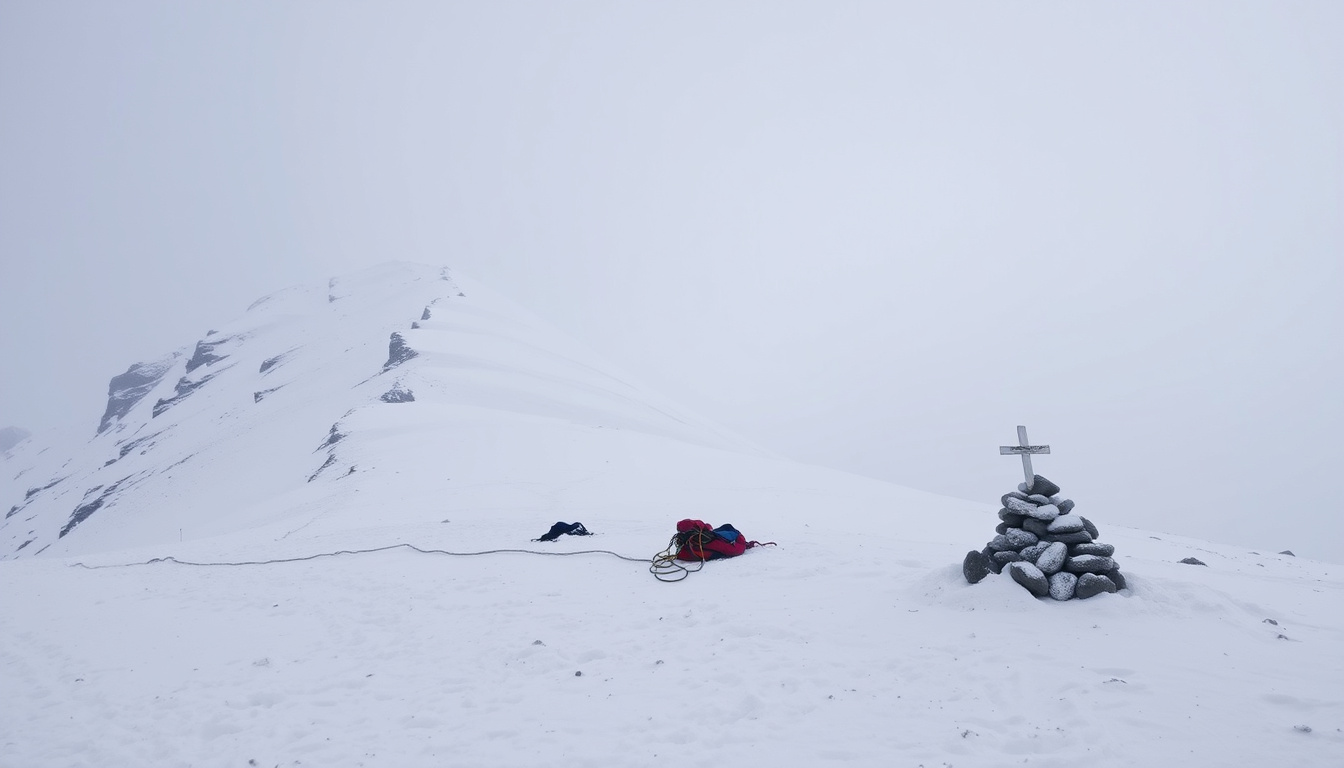
Everest draws climbers for its challenge, but its slopes hold a quieter, grimmer legacy: the mountain has claimed hundreds of lives since the 1920s, and the bodies of many remain where they fell, frozen in high-altitude silence. This article explores the most famous corpses, recovery challenges, and safety rules.
Total deaths on Mount Everest (as of 2024): at least 346 ·
Estimated bodies still on the mountain: over 200 ·
Most famous corpse known as ‘Green Boots’: died in 1996 ·
Year of first recorded death: 1922
Quick snapshot
- Rob Hall near South Summit (Wikipedia – comprehensive list of fatalities)
- Green Boots (likely Tsewang Paljor) (All That’s Interesting – notable Everest corpses)
- Oldest remains from 1920s-1930s (Adrex – early expedition deaths)
- Extreme altitude and weather (Himalayan Recreation – recovery difficulty)
- Frozen bodies cemented to rock (Adrex – retrieval logistics)
- High cost and risk of retrieval missions (Himalayan Recreation – dangerous recovery)
- 2 PM turn-around rule (Wikipedia – 1996 disaster context)
- Oxygen and acclimatization protocols (Himalayan Recreation – altitude risks)
- Fixed ropes and guided climbs (CBS News – standard climbing practices)
- 346+ deaths (Wikipedia – death toll)
- 200+ bodies remain (Apple Podcasts – estimate of bodies left)
- Fewer than 100 recovered (Climbing Kilimanjaro – recovery statistics)
Five key facts, one pattern: the death toll is well documented, but the number of bodies still on the mountain remains an estimate, and identification is often uncertain.
| Fact | Value |
|---|---|
| Total deaths | at least 346 |
| Bodies remaining | estimated 200+ |
| Most famous corpse | Green Boots (1996) |
| Year of first death | 1922 |
| Latest body retrieval | 2024 (BBC report) |
Where is Rob’s body on Everest today?
What happened during Rob Hall’s final climb?
Rob Hall, a New Zealand mountaineer and leader of the 1996 Adventure Consultants expedition, died near the South Summit on May 11, 1996, after being caught in a severe blizzard. His body has never been recovered. According to the Wikipedia list of Everest fatalities, Hall’s remains lie in the area known as the Death Zone, above 8,000 meters.
Why has his body not been recovered?
Retrieving a body from the Death Zone is extraordinarily dangerous. The Himalayan Recreation guide on Everest bodies explains that frozen corpses are often cemented to the rock, and any recovery attempt at that altitude risks the lives of rescuers. No formal recovery mission for Rob Hall has been mounted due to the extreme conditions.
Families of climbers who die in the Death Zone face a stark choice: accept that their loved one’s remains will stay on the mountain, or risk more lives in a recovery attempt that may still fail.
The implication: Rob Hall’s remains are a permanent fixture on the mountain, a silent testament to the perils of the Death Zone.
How many bodies on Everest have been identified?
What is the total number of deaths on Everest?
As of 2024, at least 346 people have died climbing Mount Everest, according to the Wikipedia tally of Everest fatalities. A more recent community count in 2026 reported 339 deaths since the 1920s, as noted by Breeze Adventure (Everest body guide).
How many bodies are recovered?
Only a fraction of the dead are ever brought down. The Climbing Kilimanjaro article on Everest deaths estimates that roughly 200 bodies remain on the mountain, with fewer than 100 recovered. Identification is often tentative, relying on clothing, personal items, or DNA when possible.
Many bodies are never formally identified. The exact number of unidentified remains is unknown, making the true death toll—and the count of those still on the slopes—an estimate at best.
The pattern: the gap between confirmed deaths and identified bodies underscores the difficulty of cataloging the dead.
What is the most famous corpse on Everest?
Who is ‘Green Boots’?
Green Boots is the nickname given to a body that lay near the North Route’s limestone cave for years, serving as a grim landmark for climbers. The All That’s Interesting feature on Everest corpses states that the body is most widely believed to be that of Tsewang Paljor, an Indian climber who died in the 1996 disaster. A 2025 source from Zara Tanzanian Adventures repeats that identification.
What is the oldest body still on Everest?
The oldest known remains date back to the 1920s and 1930s. George Mallory’s body, found in 1999, is one of the oldest to be positively identified. Mallory died in 1924, and his body was discovered 75 years later, as reported by All That’s Interesting.
How did Green Boots die?
Tsewang Paljor (or possibly another climber) died during the 1996 Everest storm that also claimed Rob Hall. The Wikipedia entry on the 1996 disaster details how a sudden blizzard trapped climbers high on the mountain, leading to multiple fatalities.
What Is the 2 PM Rule on Everest?
Why can’t you climb after 2pm?
The 2 PM rule is a safety guideline: climbers must turn around by 2 PM regardless of their progress, to avoid being caught in darkness or deteriorating weather. The rule was widely adopted after the 1996 disaster, as documented in the Wikipedia article on the 1996 disaster.
How does the rule prevent deaths?
Violating the turn-around time contributed directly to the 1996 tragedy. The CBS News report on Everest deaths notes that overcrowding and late descents are recurring factors in fatalities. The 2 PM rule is now a standard part of expedition plans.
For every climber above 8,000 meters after 2 PM, the odds of a safe descent drop sharply. The rule is a life-or-death boundary that experienced guides enforce rigorously.
The consequence: late summits are the most common preventable cause of death in the Death Zone.
Do you see bodies when you climb Everest?
Where are most bodies located?
Yes, bodies are visible on the standard climbing routes, especially in the Death Zone above 8,000 meters. The Adrex article on body removal says that on the North Route, remains are concentrated in the Death Couloir below the Second Step. Some bodies are covered by snow and may not be visible during a given season.
Is it common to encounter remains?
Many climbers report passing the same bodies year after year. The Himalayan Recreation guide notes that the sight of frozen corpses is a stark reminder of the mountain’s dangers. However, the exact number of bodies encountered on any given ascent varies with route and snow conditions.
The implication: climbers must be psychologically prepared for the reality that the trail to the summit is, in places, a graveyard.
Timeline signal
- 1922 – First recorded death on Everest (unknown climber). (BBC News – early deaths context)
- 1996 – 1996 disaster; Rob Hall and Green Boots die. (Wikipedia – 1996 disaster)
- 2024 – BBC reports recovery of four bodies. (BBC News – 2024 recovery)
Confirmed facts vs. what’s unclear
Confirmed facts
- At least 346 deaths recorded (Wikipedia)
- Rob Hall’s body lies near South Summit
- Green Boots died in 1996
What’s unclear
- Exact identity of Green Boots
- Number of unidentified bodies
- Future recovery plans
Voices from the mountain
“Bodies were frozen in place, and their limbs could not be moved.”
— BBC report on 2024 body recovery
“At least 346 people have died climbing Mount Everest since records began.”
— Wikipedia – list of Everest fatalities
For anyone planning to climb Everest, the reality is sobering: the mountain will never give up all its dead. The bodies that remain are not just statistics—they are markers of the human cost of high-altitude ambition. For future climbers, the choice is clear: respect the 2 PM rule, be prepared for the Death Zone, and understand that the summit may come at a price that lasts forever.
explorersweb.com, endorfeen.com, youtube.com, mountgloryadventures.com, breezeadventure.com, presselinie.de
Frequently asked questions
Did Rob Hall’s wife remarry?
Yes, Jan Arnold, Rob Hall’s widow, later remarried. She remains a prominent figure in the mountaineering community.
Why can’t you boil an egg at the top of Mount Everest?
At the summit, the atmospheric pressure is so low that water boils at about 68°C (154°F), not hot enough to cook an egg.
Can bodies be recovered from Everest?
Yes, but recovery is extremely dangerous and expensive. Fewer than 100 bodies have ever been brought down.
What is the death zone on Everest?
The Death Zone is the area above 8,000 meters where the lack of oxygen can cause severe physical and cognitive impairment, and where most fatalities occur.
How long do bodies last on Everest?
In the cold, dry conditions of the Death Zone, bodies can remain preserved for decades, often mummified by the wind and sun.
Are there any bodies below the death zone?
Yes, some bodies have been found at lower elevations, but the vast majority are in the Death Zone or near the summit routes.
Related stories





Richard Vane is Senior Reporter at MorningTimes.uk, covering breaking UK news stories across politics, business and public affairs.