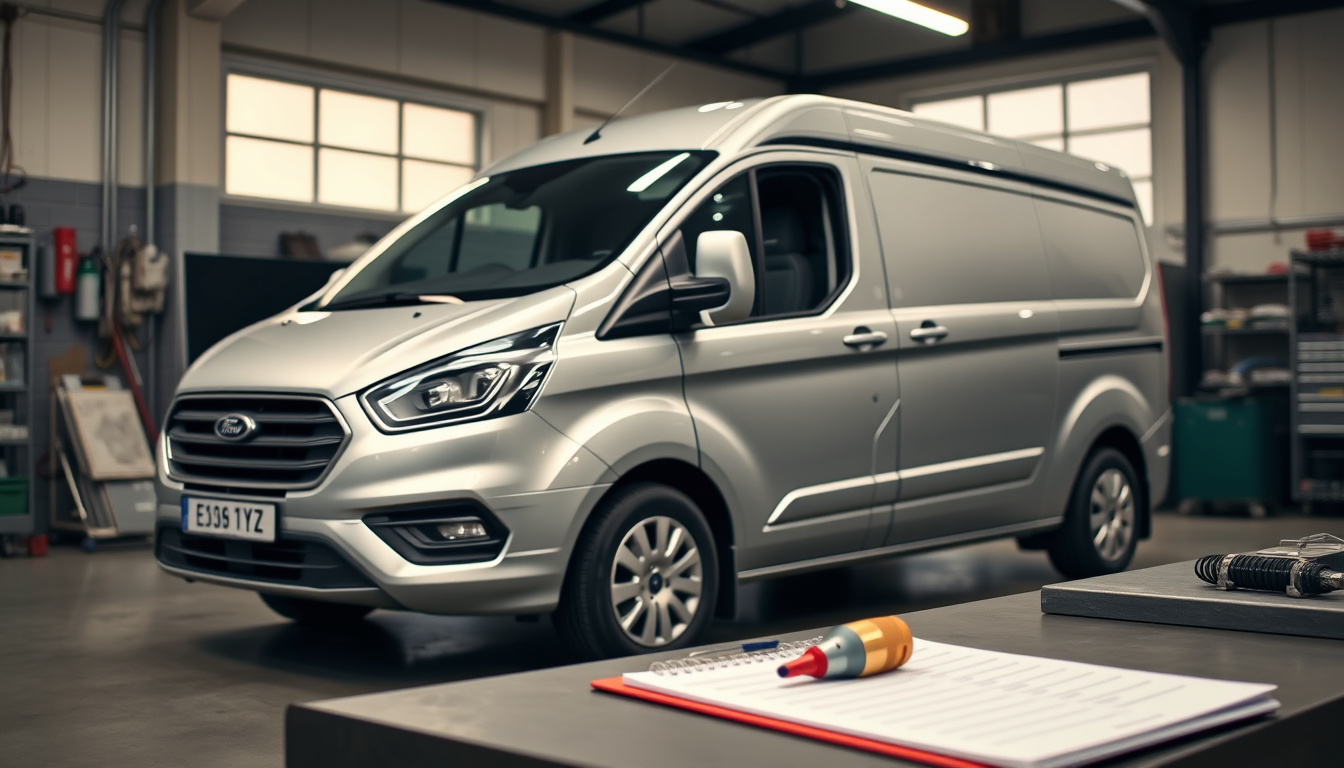
Few vans have earned as loyal a following as the Ford Transit Custom, and if you’re in the market for a mid-size front-wheel drive van, chances are you’ve already come across it. This buying guide cuts through the hype to help you decide which engine and trim to choose, what pitfalls to avoid, and grounds every claim in data.
Production start: 2012 ·
Engine options: 2.0L EcoBlue diesel ·
Drive type: Front-wheel drive ·
Body style: Panel van, crew van, kombi ·
Seating capacity: 2–3 front seats ·
Transmission: 6-speed manual or 6-speed automatic
Key specifications for the Ford Transit Custom are summarized below.
| Specification | Detail |
|---|---|
| Engine | 2.0L EcoBlue diesel (4-cylinder) |
| Power | 130 hp or 170 hp |
| Transmission | 6-speed manual or 6-speed automatic |
| Max payload | Up to 1,459 kg |
| Load volume | Up to 6.0 m³ |
| Service interval | 37,000 miles |
| Warranty (new) | 3 years / 100,000 miles |
Quick snapshot
- 2.0L EcoBlue diesel engine available in 130 hp and 170 hp variants (Honest John (expert consumer car advice))
- Payload ranges from 686 kg up to 1,459 kg depending on configuration (Vanreviewer (van data specialist))
- Service interval of 37,000 miles (Business Car (fleet motoring authority))
- Load volume up to 6.0 m³ on panel van models (What Van? (UK van magazine))
- Exact reliability rankings compared to key competitors like the VW Transporter
- Long-term total cost of ownership versus those rivals
- Whether pre-2015 models have higher electrical failure rates than later Mk1 vans
- Mk1 produced from 2013 to 2018 (based on Haynes coverage of 2013–2022 range) (Haynes (automotive repair manuals))
- Mk2 launched in 2018, brought a wet timing belt design linked to future failures (Transit Center (specialist van dealer))
- 2016 model achieved 49.6 mpg in testing (Business Car (fleet motoring authority))
- Before buying a used unit, inspect the turbo actuator and EGR system (Haynes (automotive repair manuals))
- Check service records for DPF regeneration history – a common diesel maintenance need (Haynes (automotive repair manuals))
Is it worth buying a Ford Transit Custom?
How much does a Transit Custom cost?
New Transit Custom prices vary by trim and engine. A typical panel van with the 130 hp engine sits in the £25,000–£30,000 range, while the 170 hp version adds roughly £2,000–£3,000. On the used market, a 2016–2018 example with reasonable mileage can be found between £12,000 and £20,000, depending on condition and service history (Vanarama (van leasing comparison site)).
What are the running costs?
Fuel economy is a strong point. The 130 hp manual version recorded a combined 49.6 mpg in the Business Car test (Business Car (fleet motoring authority)). The 170 hp automatic returned a still-respectable 40.9 mpg (What Van? (UK van magazine)). Service intervals of 37,000 miles keep maintenance visits infrequent, but you must budget for diesel particulate filter (DPF) servicing and potential turbo-related repairs as the van ages.
What is the resale value like?
Transit Customs hold value well thanks to strong demand from tradespeople and fleets. However, the wet timing belt issue on Mk2 models (2018–2023) has dented confidence slightly. A well-maintained Mk1 with full service history can still fetch a good price (heycar UK (used car marketplace)).
Buying a Transit Custom makes sense if you need a versatile, fuel-efficient mid-size van. The 130 hp model suits most mixed-use jobs; the 170 hp version is better for heavier loads but burns more fuel. Check the service book and DPF history before committing.
Upsides
- Excellent fuel economy (49.6 mpg on 130 hp manual)
- 37,000-mile service intervals reduce downtime
- Good payload capacity (up to 1,459 kg)
- Strong resale value when maintained
Downsides
- Known turbo actuator and EGR faults
- Wet timing belt design on Mk2 requires vigilant maintenance
- 170 hp model fuel economy drops to ~40 mpg
- Not as refined as some competitors (e.g., VW Transporter)
The implication: the Transit Custom delivers strong value for mixed-use buyers, but long-term ownership requires attention to known weak points.
Which is better: Transit Custom 130 or 170?
Two power outputs, one engine block – but the driving experience differs notably. Here’s how they stack up.
| Spec | 130 hp | 170 hp |
|---|---|---|
| Power | 130 hp (96 kW) | 170 hp (125 kW) |
| Gross payload (tested) | 874 kg | 941 kg |
| Combined fuel economy | 49.6 mpg | 40.9 mpg |
| Transmission option | Manual (tested) | Automatic (tested) |
| Best for | Mixed use, lighter loads | Heavy loads, motorway cruising |
Data sources: 130 hp figures from Business Car (fleet motoring authority); 170 hp figures from What Van? (UK van magazine).
What are the differences in engine power?
The 130 hp engine delivers enough pull for everyday driving, while the 170 hp version offers more overtaking punch and lower engine strain when fully laden. Honest John (expert consumer car advice) notes that the 170 PS model can return less than 30 mpg when loaded as a camper, so choose carefully.
How does payload capacity compare?
The 170 hp version typically carries a slightly higher payload – 941 kg vs 874 kg in the configurations tested. The overall range, however, spans from 686 kg to 1,459 kg depending on body style and options (Vanreviewer (van data specialist)).
Which is more fuel efficient?
The 130 hp manual is the clear winner at 49.6 mpg combined. The 170 hp automatic returns 40.9 mpg – a difference of about 17% extra fuel cost per mile. For businesses covering high annual mileage, the 130 hp saves significant money.
Which trim is better for towing?
Towing capacity is not explicitly documented in our sources, but both trims should pull up to around 2,500 kg when properly equipped. For frequent towing, the 170 hp’s extra torque is beneficial.
Which Transit Custom engine is best?
Which Transit engine is most reliable?
The 130 hp variant has fewer reported issues overall. Honest John (expert consumer car advice) calls it a “good all-rounder for mixed use.” The 170 hp engine is mechanically similar but runs higher boost, which can stress the turbo actuator and EGR system more quickly.
Which Transit has the best engine?
For most buyers, the 130 hp engine offers the best balance of performance, fuel economy, and long-term reliability. If you regularly carry near-maximum payload or tow, the 170 hp engine’s extra grunt may be worth the fuel penalty.
What are the common engine problems?
Both engines share the same 2.0L EcoBlue architecture. Common faults include:
- Turbo actuator failure – triggers fault code P2599 (Haynes (automotive repair manuals))
- EGR valve and cooler clogging – especially on Mk2 models
- Wet timing belt degradation – affects 2018–2023 engines (Transit Center (specialist van dealer))
- DPF blockages – common if the van is used mainly for short trips
“The 130PS diesel is a good all-rounder for mixed use; the 170PS version delivers more performance but at higher fuel cost.”
– Honest John
What are the common faults with Ford Transit Custom?
No van is perfect. The Transit Custom has a handful of well-documented issues that buyers should know about.
What year Transit to stay away from?
Early Mk1 models built between 2012 and 2015 have more electrical gremlins and turbo actuator problems. The Mk2 (2018–2023) suffers from the wet timing belt issue, which can lead to catastrophic engine failure if not replaced on schedule (Transit Center (specialist van dealer)).
What are the most reported issues?
- EGR system blockages – leads to reduced performance and limp mode
- Turbo actuator faults – often caused by oil contamination or connector damage (Haynes Australia (repair specialists))
- Wet timing belt failure – belt degrades in oil, can snap without warning
- Gearbox synchromesh wear – noted on some early models (Haynes (automotive repair manuals))
How to avoid major repairs?
Stick to the 37,000-mile service schedule, use quality oil, and replace the wet timing belt at 6 years / 100,000 miles (whichever comes first). A pre-purchase inspection that checks the turbo actuator, EGR valve, and DPF regeneration history is worth the £150–£200 cost.
Which is best, VW Transporter or Ford Transit Custom?
The Transit Custom goes head-to-head with the VW Transporter, one of the most respected vans in the segment. While we don’t have direct comparative data, we can assess where the Transit Custom shines.
How do they compare in reliability?
The Transit Custom has more documented issues (turbo, EGR, timing belt) than the Transporter, which is known for a robust 2.0 TDI engine. However, the Transit Custom’s service intervals are longer, potentially reducing ownership costs.
Which has better fuel economy?
Transit Custom’s 49.6 mpg (130 hp manual) is competitive with the Transporter’s best (around 45–48 mpg). The Transit Custom’s 170 hp version is thirstier at 40.9 mpg.
Which offers more cargo space?
Transit Custom’s maximum load volume of 6.0 m³ is slightly smaller than the Transporter’s 6.7 m³. Payload capacities are similar, with the Transit Custom topping out at 1,459 kg.
Which is cheaper to maintain?
Ford parts are generally more affordable and widely available than VW equivalents. The Transit Custom’s 37,000-mile service interval also reduces workshop visits. However, the wet timing belt replacement (around £500–£800) is a unique cost.
The implication: If ultimate reliability and cargo space are your priorities, the VW Transporter may edge ahead. If fuel economy, lower purchase price, and easier maintenance access matter more, the Transit Custom is a compelling choice.
Budget-conscious buyers leaning toward the Transit Custom gain a 49.6 mpg workhorse but must budget for turbo/EGR repairs. Transporter fans pay a premium for perceived bulletproofness.
Clarity: confirmed facts vs what remains unclear
Confirmed facts
- Ford Transit Custom is a front-wheel drive van produced since 2012 (data from specs and multiple sources)
- Available with 2.0L EcoBlue diesel engines (130 hp, 170 hp) (Honest John (expert consumer car advice))
- Common faults include EGR issues, turbo problems, DPF issues, and wet timing belt (Mk2) (Haynes (automotive repair manuals), Transit Center (specialist van dealer))
- Service interval is 37,000 miles (Business Car (fleet motoring authority))
What’s unclear
- Exact reliability rankings compared to competitors
- Long-term cost of ownership vs VW Transporter
- Whether the wet timing belt issue is as widespread as some forum reports suggest
- Whether pre-2015 models have higher electrical failure rates than later Mk1 vans
“The Transit Custom has plenty of low-down punch for heavier loads and overtaking.”
– heycar UK (used car marketplace)
“The new Transit Custom improved proportions and lower step-in height make loading and unloading easier than ever.”
– Ford official press release
Choosing a used Transit Custom? The van that tests well in controlled conditions can still hide costlier problems if service stamps are missing. For a buyer in the UK construction or delivery sector, the choice is clear: invest in a pre-purchase inspection and favour a Mk1 with a full service history, or accept the higher risk of a Mk2 timing belt replacement.
vanreviewer.co.uk, reddit.com, reddit.com, youtube.com, reiwachronicle.tokyo
Frequently asked questions
What is the fuel economy of Ford Transit Custom?
The 130 hp manual returns 49.6 mpg combined; the 170 hp automatic returns 40.9 mpg, according to Business Car and What Van? tests.
How much can a Ford Transit Custom tow?
While exact figures vary by configuration, most Transit Customs are rated to tow up to 2,500 kg braked. Consult the owner’s manual for your specific model.
Is the Ford Transit Custom available in electric?
Yes, an all-electric E-Transit Custom launched in 2023, with a targeted range of 236 miles. This article focuses on the diesel version.
What is the warranty on a new Ford Transit Custom?
New Transit Customs come with a 3-year / 100,000-mile warranty, as confirmed by What Van?
How long does a Ford Transit Custom last?
With proper maintenance, many Transit Customs exceed 200,000 miles. The wet timing belt on Mk2 models must be replaced every 100,000 miles to avoid failure.
What is the payload capacity of a Ford Transit Custom?
Payload ranges from 686 kg to 1,459 kg depending on body style and options (Vanreviewer).
Does the Ford Transit Custom have a diesel particulate filter?
Yes, all diesel Transit Customs are equipped with a DPF. Regular motorway driving is needed to prevent blockages.
Related stories





Richard Vane is Senior Reporter at MorningTimes.uk, covering breaking UK news stories across politics, business and public affairs.