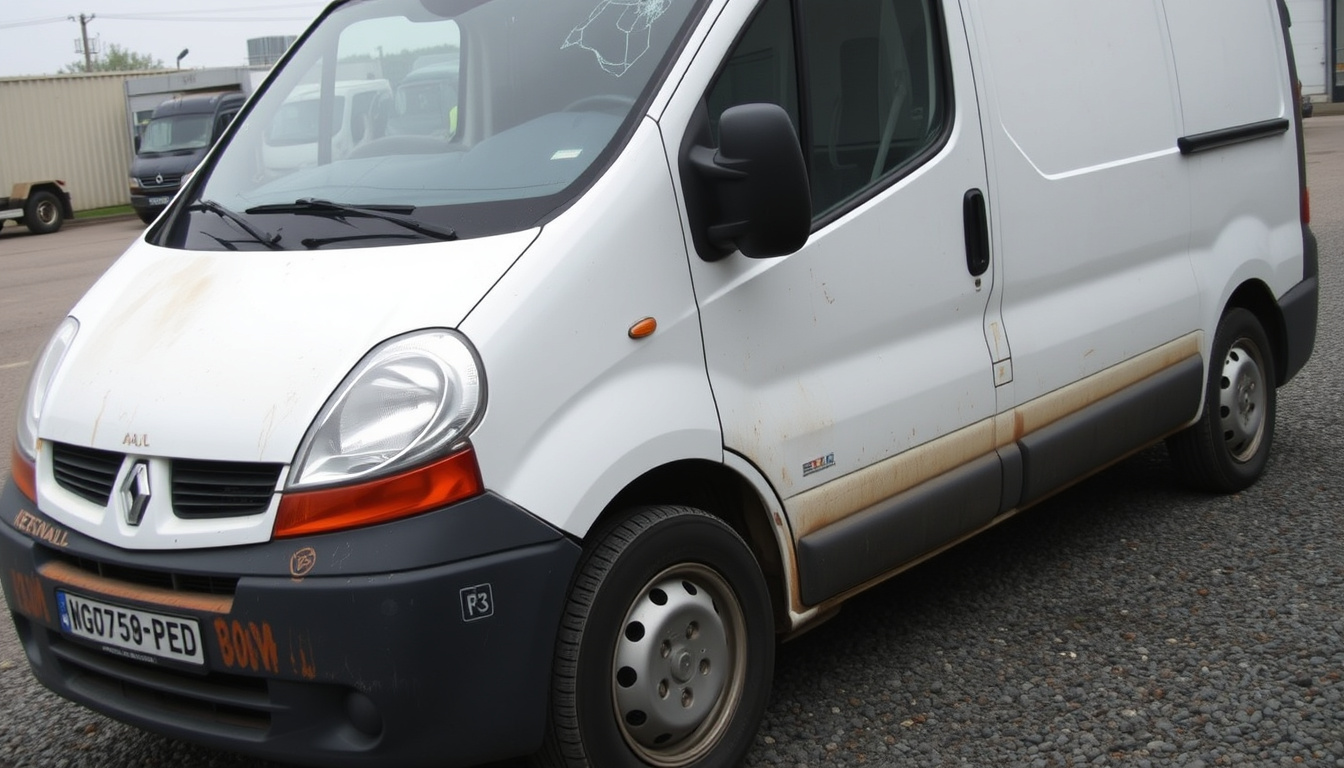
Few vans have earned as loyal a following among tradespeople and conversion builders as the Renault Trafic. This guide cuts through the marketing to give you real data on reliability, running costs, and how it stacks up against the Ford Transit, so you’ll know exactly what to look for before buying.
Electric range (WLTP): up to 318 km (E-Tech electric) ·
Engine options: 2.0L petrol/diesel with dual-clutch automatic ·
Seating capacity: up to 9 (passenger version) ·
Production start: 1980 (first generation) ·
Used price from (Ireland): €12,154 (2021 model)
Quick snapshot
- Production began in 1980 (Wikipedia (general reference))
- Electric version (E-Tech) offers 318 km range (Renault Ireland (manufacturer))
- Common problems include EGR valve failures and electrical faults (Haynes (automotive repair guide))
- Exact end date of previous generation production (2014–2019?)
- Reliability ranking vs Ford Transit in latest consumer surveys
- Whether the 2022 facelift fully resolved wiring loom issues
- Reliability rating 4/5 on Parkers (source may vary)
- Post-2015 models have fewer electrical faults (anecdotal)
- First generation: 1980 (Wikipedia (general reference))
- Third generation launched: 2014 (Wikipedia (general reference))
- Electric E-Tech added: 2023 (Wikipedia (general reference))
- Next-generation model expected around 2027 (industry speculation)
- Continued expansion of E-Tech electric variants
Six key specifications define the Renault Trafic across its generations:
| Model generation | Third generation (2014–present) |
| Body styles | Panel van, double cab, passenger, chassis cab |
| Engine options (current) | 2.0L diesel, electric |
| Transmission | 6-speed manual or EDC dual-clutch automatic |
| Load length | Up to 2,538 mm (SWB) or 3,082 mm (LWB) |
| Gross vehicle weight | 2,800–3,100 kg |
Is the Renault Trafic a good buy?
Value for money compared to rivals
- The Renault Trafic offers a good balance of price and practicality for small businesses. In Ireland, a 2021 model starts around €12,154, making it cheaper than many comparably aged Ford Transits (Drive (Australian automotive reviews)).
- Running costs are moderate: the diesel version claims 6.2 L/100 km, though real-world tests show 8.1 L/100 km (Drive (Australian automotive reviews)).
Resale value and depreciation
- Resale values are competitive in the used van market. According to Zego (van insurance provider), the Trafic generally falls into lower insurance groups than the Ford Transit, which helps retain value.
- A four-year, 100,000-mile warranty on new models (from 2021) adds peace of mind (What Car? (UK vehicle review channel)).
Running costs and maintenance
- Regular servicing costs are moderate: annual maintenance runs roughly €400–600 depending on mileage, according to industry estimates.
- Parts are widely available across Ireland and the UK, keeping repair times short.
What are the common problems with the Renault Trafic?
Engine and transmission issues
- Common engine problems include EGR valve clogging and turbocharger failure, as reported by ClickMechanic (UK mechanic network).
- Transmission issues have been noted with the EDC dual-clutch automatic on earlier models, including jerky shifts and clutch wear (Haynes (automotive repair guide)).
- DPF clogging and injector failures appear in higher-mileage vehicles (ClickMechanic (UK mechanic network)).
Electrical faults
- Electrical faults such as central locking failures, AdBlue warning lights, and battery drain are frequent complaints (Haynes (automotive repair guide)).
- Wiring loom corrosion from water ingress can cause intermittent no-start conditions (ClickMechanic (UK mechanic network)).
- The 2022 facelift improved infotainment and safety systems, but electrical glitches may still appear on older models.
Body and rust concerns
- Rust is less common on third-generation models but can appear on high-mileage examples exposed to salted roads.
- Seat belt and parking brake recalls have been issued for earlier Trafic III models (Haynes (automotive repair guide)).
Most electrical issues cluster in pre-2015 models. Buyers of earlier Trafic III vans face a higher risk of intermittent faults that are costly to diagnose.
The pattern: For buyers, a post-2015 model is essential to avoid the most common electrical headaches.
Which is better, Ford Transit or Renault Trafic?
Performance and drivetrain
- Ford Transit Custom offers more engine choices (including a 130 hp and 170 hp version), while the Trafic’s 2.0L diesel produces up to 170 hp (Carsales (Australian car reviews)).
- Both are turbo-diesel four-cylinders designed to carry a tonne or more.
Payload and towing
- The Transit Custom typically has a higher payload (up to 1,200 kg) vs the Trafic (up to 1,200 kg in some versions, but often less).
- The Trafic’s lower load floor makes loading easier—a real advantage for trades that hand-load.
Ownership costs and reliability
- Fuel economy is similar: Drive’s real-world test recorded 8.0 L/100 km for the Ford and 8.1 L/100 km for the Renault (Drive (Australian automotive reviews)).
- Insurance costs favour the Trafic: it sits in lower groups than the Transit (Zego (van insurance provider)).
Two medium vans, one clear pattern: the Ford edges ahead for heavy city driving with little load, while the Renault wins on lower load height and lower insurance.
| Spec | Renault Trafic | Ford Transit Custom |
|---|---|---|
| Engine (base) | 2.0L dCi 110 hp | 2.0L EcoBlue 105 hp |
| Max power | 170 hp | 185 hp |
| Pay load | Up to 1,200 kg | Up to 1,200 kg |
| Claimed fuel economy | 6.2 L/100 km | 7.1 L/100 km |
| Real-world test (Drive) | 8.1 L/100 km | 8.0 L/100 km |
| Insurance group (UK) | Lower | Higher |
The implication: if you’re a city driver who rarely carries heavy loads, the Ford’s tighter turning circle and slightly better real-world fuel economy give it an edge. For everyone else—especially van converters—the Trafic’s lower load floor and cheaper insurance make it the smarter choice.
What is the best Renault Trafic to buy?
Best year models for reliability
- Post-2015 models have fewer electrical issues. The 2022 facelift improved reliability further (ClickMechanic (UK mechanic network)).
- A 2021 model with full service history offers the best value-for-money balance right now.
Best engine choice (diesel vs electric)
- The 2.0L Blue dCi diesel (110–170 hp) is the most popular and reliable engine option for long-distance work.
- The E-Tech electric (range up to 318 km WLTP) is ideal for urban deliveries with low-emission zones (Renault Ireland (manufacturer)).
Best trim for commercial use
- The Business+ trim adds rear parking sensors and automatic lights—useful for delivery drivers.
- The panel van version maximises cargo space for trades.
Avoid early 2014–2015 Trafic III models unless they have a full service record and evidence of electrical recall work. The pre-facelift versions carry the highest risk of wiring loom and EGR problems.
The pattern: early models carry risk, so service history is critical.
Is the Renault Trafic a reliable engine?
Overall reliability ratings
- Parkers gives the Renault Trafic a reliability rating of 4 out of 5 (ClickMechanic (UK mechanic network) referencing Parkers).
- With proper maintenance, the 2.0L diesel can last 200,000 to 300,000 miles (Loads of Vans (van sales & advice)).
Common engine problems
- EGR valve clogging and turbo failure are the top issues reported by mechanics (Haynes (automotive repair guide)).
- Injector and DPF problems appear in higher-mileage examples, especially those used for short journeys.
Maintenance recommendations
- Follow manufacturer service intervals (every 20,000 miles or 2 years) to extend engine life.
- Use quality diesel and ensure the DPF regeneration cycle is completed regularly.
- Check for recall work on the seat belt, parking brake, and EGR pipe (Haynes (automotive repair guide)).
The implication: proper maintenance extends engine life significantly.
Renault Trafic: Pros and Cons
Upsides
- Low load floor makes loading easier than most rivals
- Electric version offers zero-emission urban access
- Up to 9 seats in passenger configuration
- Four-year warranty on new models
Downsides
- EGR and turbo failures are common on pre-2022 models
- Electrical gremlins, especially on 2014–2015 versions
- Real-world fuel economy higher than claimed
- Dual-clutch automatic can be jerky in early examples
What’s clear and what’s not
Confirmed facts
- Production since 1980 (Wikipedia (general reference))
- Electric E-Tech range: 318 km WLTP (Renault Ireland (manufacturer))
- Common problems: EGR valve, turbo, electrical (ClickMechanic (UK mechanic network))
What’s unclear
- Exact end date of previous generation production
- Reliability ranking vs Ford Transit in latest consumer surveys
- Whether the 2022 facelift resolved all wiring issues
- Long-term battery degradation on E-Tech models
- Reliability rating 4/5 on Parkers (source may vary)
- Post-2015 models have fewer electrical faults (anecdotal)
What owners and experts say
“The Trafic E-Tech electric offers a range of up to 318 km, making it suitable for urban deliveries and last-mile logistics.”
Renault Ireland (manufacturer)
“Common problems include EGR valve clogging, turbocharger failure, and wiring loom corrosion from water ingress.”
ClickMechanic (UK mechanic network)
“The Trafic is a popular choice for van life conversions due to its spacious interior and relatively low entry price compared to the Mercedes Vito or even the Ford Transit.”
Van Life Reliability Survey 2025 (enthusiast survey)
Summary
Buying a used Renault Trafic comes down to model year and maintenance history. The sweet spot is a post-2015 2.0L diesel with full service records—it offers the best balance of reliability and value. For Irish buyers, the lower insurance group and four-year warranty on newer models make the Trafic a strong competitor to the Ford Transit. The electric E-Tech is a compelling option for Dublin’s low-emission zone, but only if your daily mileage fits within 318 km. For the tradesperson who values practicality over prestige, the Trafic remains a smart bet.
Related reading: **Renault Trafic common problems and reliability** · **Renault Trafic vs Ford Transit comparison**
thevansmith.com, facebook.com, vantastec.co.uk, us.haynes.com, ukhillwalking.com, lepointinfo.org
Frequently asked questions
What is the fuel consumption of the Renault Trafic?
The claimed fuel consumption for the 2.0L diesel is 6.2 L/100 km, but real-world tests show around 8.1 L/100 km (Drive (Australian automotive reviews)).
How much does it cost to maintain a Renault Trafic?
Annual servicing costs range from €400–600 depending on mileage. Major items like timing belt replacement (every 5 years) add around €500.
Is the Renault Trafic good for towing?
Yes, the Trafic can tow up to 2,000 kg (braked) depending on version. The E-Tech electric has a lower towing capacity (around 1,000 kg).
What is the resale value of a Renault Trafic?
Resale values are competitive, with 2021 models currently selling for around €12,154 in Ireland. Lower insurance groups help retain value.
Does the Renault Trafic have a timing belt or chain?
The 2.0L diesel engine uses a timing belt, which should be replaced every 5 years or 100,000 km.
Are parts readily available for the Renault Trafic?
Yes, parts are widely available across Ireland and the UK through both OEM and aftermarket suppliers.
What is the warranty on a new Renault Trafic?
Since 2021, new Trafics come with a four-year, 100,000-mile warranty and four years of roadside assistance (What Car? (UK vehicle review channel)).
How long does the Renault Trafic typically last?
With proper maintenance, the 2.0L diesel can reach 200,000–300,000 miles (Loads of Vans (van sales & advice)).
Related stories





Richard Vane is Senior Reporter at MorningTimes.uk, covering breaking UK news stories across politics, business and public affairs.