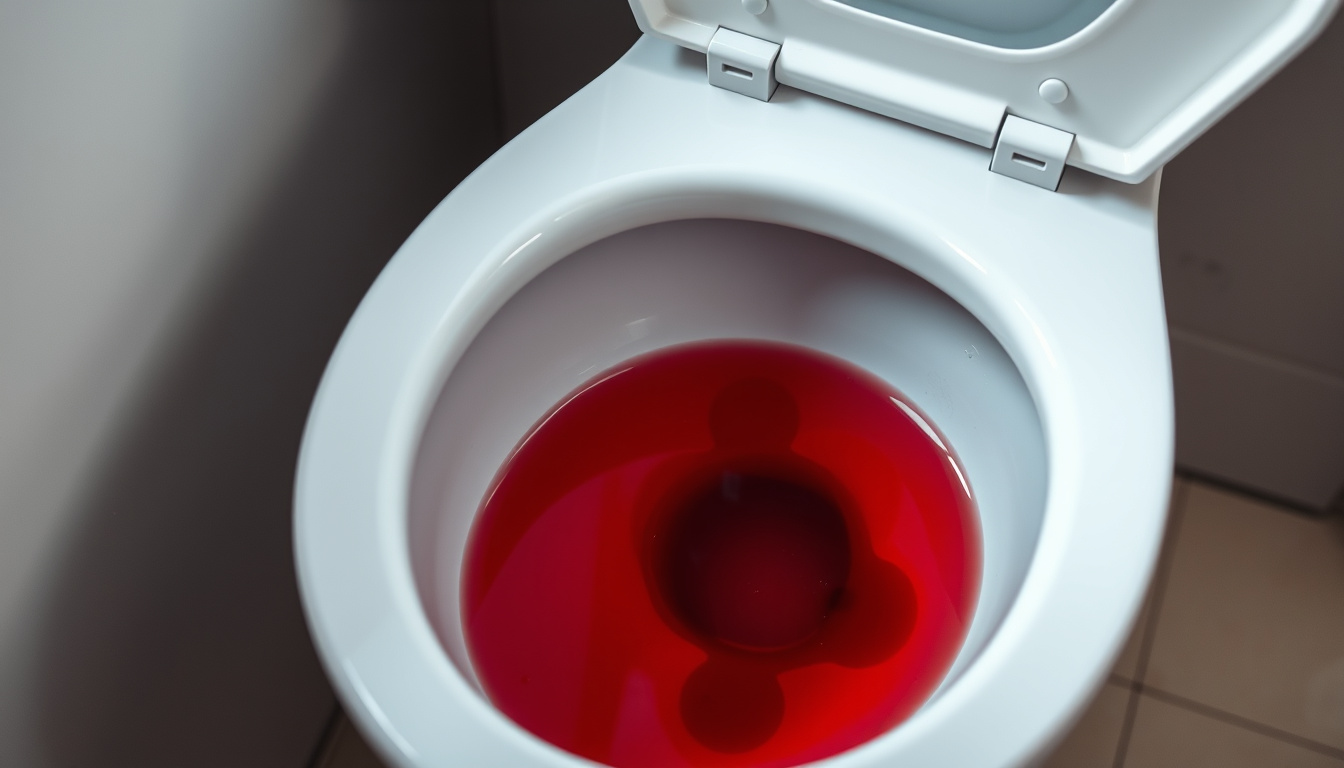

Finding a large amount of bright red blood in the toilet is alarming—and dismissing it as “just hemorrhoids” without evaluation can be risky. Bright red bleeding almost always originates from the lower rectum or anus, where internal hemorrhoids are the most common culprit, but the volume and pattern determine whether you need same-day medical attention.
Most common cause of bright red rectal blood: Hemorrhoids (haemorrhoids) ·
Typical sign of lower GI source: Bright red color ·
When painless bleeding occurs: Often from anal fissures or polyps ·
Concerning volume threshold: Large amounts or persistent ·
Bright red vs dark blood difference: Near anus vs higher intestine
Quick snapshot
- Bright red indicates bleeding from the lower rectum or anus (NYGA Health medical team)
- About 50% of adults experience hemorrhoids by age 50 (Keck Medicine of USC gastroenterology department)
- Internal hemorrhoids cause painless bleeding due to fewer pain-sensitive nerves (Mayo Clinic clinical resource)
- Exact volume threshold defining “large amount” without physical examination
- Whether isolated painless bleeding with no other symptoms requires urgent vs. routine evaluation
- Cleveland Clinic rectal bleeding guidance last updated June 2023 (Cleveland Clinic health library)
- Colorectal cancer risk increases significantly with age (Houston Methodist oncology team)
- See a doctor if bleeding fills the toilet bowl or recurs despite self-care measures
- Colonoscopy remains the gold standard for identifying the source of unexplained rectal bleeding
The following table summarizes key clinical distinctions between benign and serious causes of bright red rectal bleeding.
| Fact | Value |
|---|---|
| Bright red blood source | Lower rectum or anus (NHS health authority) |
| Painless common in | Internal hemorrhoids (HSE Ireland clinical guidance) |
| Cancerous blood typically | Dark red or black (MD Anderson Cancer Center) |
| Concerning if | Fills toilet bowl or persists (NYGA Health clinical team) |
Why is my toilet full of blood but no pain?
Bright red blood in the toilet means bleeding is happening close to the surface—usually in the last few inches of your digestive tract. The further blood travels before leaving the body, the darker it becomes, which is why bright red almost always signals a lower GI source like hemorrhoids or anal fissures (Cleveland Clinic clinical resource).
Common causes like hemorrhoids
Hemorrhoids are swollen veins in the lower rectum or anus. Internal hemorrhoids develop above the dentate line, where there are fewer pain-sensitive nerves, which is why they bleed without causing discomfort (Mayo Clinic clinical resource). About 50% of adults experience hemorrhoids by age 50, making them by far the most common cause of painless bright red bleeding (Keck Medicine of USC gastroenterology department).
When straining or hard stool scrapes against these veins, they can ulcerate or rupture, causing bleeding that ranges from a few drops to more significant amounts (Manhattan Gastroenterology practice). Thrombosed hemorrhoids—those where a blood clot has formed—can burst, producing a alarming volume of bright red blood (Manhattan Gastroenterology practice).
Hemorrhoid bleeding typically happens during or immediately after a bowel movement, coating the stool or dripping into the water. A few drops is common in mild cases; larger amounts suggest more significant hemorrhoid swelling.
Anal fissures and polyps
Anal fissures—small tears in the anal lining—usually cause sharp pain during bowel movements, so they rarely fit the “no pain” picture. However, very small fissures or those healing without inflammation might produce blood without significant discomfort in some individuals (Ubie Health clinical guide).
Colon polyps are pre-cancerous growths that can bleed intermittently. Unlike hemorrhoids, polyp-related bleeding may not correlate with bowel movements and often goes unnoticed until it becomes significant. Large polyps are more likely to bleed, and a large amount of blood without pain could indicate a substantial polyp requiring evaluation (NYGA Health medical team).
Other lower GI sources
Less common causes include diverticular bleeding, angiodysplasia (abnormal blood vessels), and proctitis (rectal inflammation). These typically produce bright red blood when they occur in the rectum or sigmoid colon. While each has distinct characteristics, all share the key feature: bleeding from the distal colon without necessarily causing pain (Healthdirect Australia government resource).
How to tell the difference between hemorrhoid bleeding and colon bleeding?
Distinguishing between hemorrhoid bleeding and signs of something more serious like colon cancer comes down to three factors: color, timing, and associated symptoms. While no home observation replaces medical evaluation, these differences help you assess urgency.
Color and appearance differences
Hemorrhoid blood is characteristically bright red—the same vivid shade as arterial blood—because it comes from surface veins close to the anus. The blood often appears on toilet paper, around the stool, or drips into the water. It frequently coats the stool surface rather than mixing throughout (Houston Methodist oncology team).
Colon cancer bleeding tends to be darker—maroon, dark red, or black (tarry) from partial digestion as blood travels through the intestines. This blood mixes throughout the stool rather than coating its surface. When bleeding is bright red but heavy and persistent, it may indicate a larger bleeding source higher in the colon (Houston Methodist oncology team).
A large amount of bright red blood is less likely to come from colon cancer—dark red or black stool is the more typical cancer pattern. However, larger tumors or those near the rectum can occasionally produce brighter blood, so color alone never rules out serious pathology.
Amount and frequency
Hemorrhoid bleeding tends to be intermittent, often linked to straining or hard bowel movements. The amount varies from small streaks to several tablespoons. Hemorrhoid symptoms don’t worsen over time or cause systemic changes like weight loss (Lawson Surgical clinical resource).
Cancer-related bleeding is more likely to be persistent or progressive—occurring with increasing frequency or volume. The blood may appear at any time, not just during bowel movements, and the pattern typically worsens rather than staying stable (Keck Medicine of USC gastroenterology department).
Associated symptoms
Hemorrhoids may cause itching, mild discomfort, or a feeling of incomplete evacuation, but they don’t produce abdominal pain, cramps, weight loss, or fatigue. The bleeding stays local to the anorectal area (USA Hemorrhoid Centers medical team).
Colon cancer more commonly produces a cluster of symptoms: persistent diarrhea or constipation, narrowing of stool caliber, abdominal cramping, unexplained weight loss, fatigue, and gas pain that doesn’t resolve. Early colon cancer is often asymptomatic—cancer may have already begun to spread by the time symptoms emerge (Keck Medicine of USC gastroenterology department).
Cancer symptoms persist or worsen over weeks; hemorrhoid symptoms tend to wax and wane. If bleeding continues for more than a week despite dietary changes, or if any systemic symptoms develop, schedule a medical evaluation.
This comparison table consolidates the key distinguishing features between hemorrhoid bleeding and colon cancer bleeding.
| Feature | Hemorrhoid Bleeding | Colon Cancer Bleeding |
|---|---|---|
| Color | Bright red, on stool surface | Dark red, maroon, or black (tarry) |
| Pattern | During/after bowel movements | Any time, throughout stool |
| Consistency | Intermittent, stable amount | Persistent or progressive |
| Other symptoms | Itching, local discomfort | Weight loss, fatigue, cramps, stool changes |
| Systemic effects | None | Common with advancing disease |
When to worry about bright red blood in the toilet?
The decision to seek medical care isn’t just about the sight of blood—it’s about context. Volume, frequency, accompanying symptoms, and personal risk factors all shape whether you call your doctor this week or head to urgent care today.
Volume thresholds
A few drops of bright red blood occasionally is common with hemorrhoids and rarely indicates emergency-level blood loss. When blood fills the toilet bowl, soaks through toilet paper repeatedly, or you notice your heart racing or feel lightheaded after bleeding, the volume moves into territory that warrants prompt evaluation (NYGA Health medical team).
The challenge is that “large amount” is subjective. What looks alarming may represent a small absolute volume, but any bleeding significant enough to cause visible pooling or that continues beyond a single episode deserves professional assessment. Even painless bleeding should not be dismissed without medical evaluation (NYGA Health medical team).
Contact your healthcare provider for any rectal bleeding that fills the toilet bowl, persists beyond one episode, or occurs with other symptoms—even if there’s no pain.
Persistence and patterns
One-time bleeding that doesn’t recur, comes after obvious straining, and self-resolves within hours is lower concern. Bleeding that recurs over days or weeks, appears without obvious triggers, or increases in frequency or volume requires investigation (Cleveland Clinic health library).
Watch for patterns: Does bleeding happen only after bowel movements, or at random times? Is the amount stable or increasing? Does it coincide with dietary changes, stress, or medication changes? This information helps your doctor narrow the cause faster.
Age and risk factors
Colorectal cancer risk increases with age, with most cases occurring in people over 50. African Americans carry a 20% higher colorectal cancer risk compared to other populations, and colorectal cancer is more prevalent in men (Houston Methodist oncology team). The lifetime risk of colorectal cancer is about 4% in the general population (Keck Medicine of USC gastroenterology department).
Family history is a critical factor. A first-degree relative with colorectal cancer or polyps substantially increases your risk and may warrant earlier or more frequent screening. Personal history of inflammatory bowel disease, previous polyps, or radiation to the abdomen also elevates concern.
Is bright red blood in the toilet serious?
Bright red blood is alarming by appearance, but its color actually suggests a less alarming source—bleeding near the surface rather than deeper in the intestines. That said, serious conditions can occasionally produce bright red blood, and the stakes of missing cancer or advanced polyps are high enough that ignoring any significant bleeding carries real risk.
Benign vs serious indicators
Benign indicators: bright red color, blood on stool surface, bleeding only during/after bowel movements, no other symptoms, self-resolving episodes, stable amount over time, itching or mild local irritation.
Serious indicators: large volume, persistent or worsening pattern, blood mixed throughout stool, additional symptoms (weight loss, fatigue, abdominal pain, changes in bowel habits), dark red or black coloration at any point (Everlywell health resource).
Cancerous stool appearance
While colon cancer typically produces darker blood—dark red, maroon, or black and tarry—it’s worth noting that early colon cancer is often asymptomatic. By the time bleeding becomes noticeable, the cancer may have been developing for months or years. “You might feel a lot of itching or irritation in the anus area, and you might have painful bowel movements” is how one physician describes hemorrhoid symptoms, but cancer-related bleeding may have no local symptoms at all (Houston Methodist oncology team).
Professional evaluation is essential for proper diagnosis and peace of mind. Bright red blood alone is unlikely to be cancer, but persistent bleeding without clear hemorrhoid confirmation warrants colonoscopy to rule out polyps or cancer before attributing bleeding to hemorrhoids.
Diagnostic next steps
Your doctor will likely perform a digital rectal exam and may visualize the lower rectum with an anoscope. If the source isn’t clear or if you’re over 45-50, colonoscopy is typically recommended. This procedure allows direct visualization of the entire colon, identification of polyps, and biopsy of any suspicious areas (Northwestern Medicine clinical resource).
For patients who can’t undergo full colonoscopy, CT colonography or flexible sigmoidoscopy may be alternatives. Stool-based tests like FIT (fecal immunochemical test) or FIT-DNA tests detect hidden blood or cancer DNA markers but don’t identify the bleeding source and may miss polyps that aren’t actively bleeding.
How much blood in the toilet is concerning?
Quantifying “concerning” blood loss is surprisingly difficult because the threshold varies by person, duration, and what else is happening in your body. A volume that one person barely notices might alarm another. Medical urgency isn’t purely about quantity—it’s about the context surrounding the bleeding.
Normal vs alarming volumes
Small streaks of bright red blood on toilet paper or a few drops in the water after straining are common with mild hemorrhoids and fall within normal variation for most adults. A large amount of bleeding—enough to turn water pink or red, or that continues beyond a single episode—warrants closer attention (Manhattan Gastroenterology practice).
When bleeding is significant enough to cause visible pooling in the toilet bowl or blood dripping after wiping, the volume moves beyond routine self-management. If you feel dizzy, notice your heart racing, or find yourself needing to change underwear due to leakage, these suggest more substantial blood loss requiring prompt medical evaluation (NYGA Health medical team).
Colors signaling urgency
Bright red blood typically signals lower GI bleeding (hemorrhoids, fissures, or distal colon sources) and, by itself, suggests a less urgent source than darker blood. However, large-volume bright red bleeding can represent significant blood loss even when the source is benign.
Dark red, maroon, or black (tar-like) stool indicates blood that has been partially digested higher in the intestines. This pattern requires more urgent evaluation regardless of volume, as upper GI bleeding sources can be serious (Cleveland Clinic health library).
Burst hemorrhoid specifics
Thrombosed external hemorrhoids can burst under pressure, producing a surprising amount of bright red blood. The blood loss can look dramatic but is usually self-limiting as the vessel collapses. If bleeding doesn’t slow within 10-15 minutes or if you feel unwell, seek care. A burst hemorrhoid isn’t dangerous in itself but confirms significant hemorrhoid disease that may benefit from treatment to prevent recurrence (Manhattan Gastroenterology practice).
Any persistent amount of bleeding warrants medical attention. “See a doctor for heavy, persistent bleeding or with changes in bowel habits, weight loss, fatigue” summarizes the threshold that most health sources recommend—persistent bleeding, regardless of pain level, deserves evaluation (NYGA Health medical team).
“"cancer may have already begun to spread by the time symptoms emerge"”
“"You might feel a lot of itching or irritation in the anus area, and you might have painful bowel movements"”
Related reading: Benign Rashes vs Cancer Signs · Symptoms of Liver Cancer
This symptom of large bright red blood in the toilet without pain often relates to painless anus bleeding causes such as hemorrhoids, though serious issues like colorectal polyps require evaluation.
Frequently asked questions
What causes bleeding from anus no pain no bowel movement?
Bleeding without a bowel movement can occur with internal hemorrhoids, which may release blood intermittently regardless of defecation. Polyps, angiodysplasia, and rectal varices can also cause bleeding without stool passage. Any significant bleeding warrants medical evaluation to determine the source.
What color is blood from a burst hemorrhoid?
Blood from a burst hemorrhoid is typically bright red—same as active hemorrhoid bleeding generally—because it comes from superficial veins close to the anus. The volume may look alarming but is usually self-limiting. If bleeding doesn’t slow within 10-15 minutes, seek medical care.
What does cancerous blood in the stool look like?
Cancerous blood in stool is typically darker than hemorrhoid bleeding—dark red, maroon, or black (tarry). The blood mixes throughout the stool rather than coating its surface. However, early cancer may not produce visible blood at all, which is why screening colonoscopy is important for people at average or elevated risk.
How much blood in poo is alarming?
Any amount of blood that fills the toilet bowl, persists beyond one episode, or occurs with other symptoms (dizziness, fatigue, weight loss, changes in bowel habits) is concerning. Small streaks on toilet paper after straining are common with hemorrhoids and less alarming. When in doubt, contact your healthcare provider.
What is bleeding from anus treatment?
Treatment depends on the cause. Hemorrhoid bleeding often responds to dietary fiber, adequate hydration, sitz baths, and topical treatments. Persistent or large-volume bleeding may require office procedures (rubber band ligation, sclerotherapy) or surgery. Colon cancer treatment involves surgery, chemotherapy, and/or radiation based on stage.
Why am I pooping blood no pain?
Painless rectal bleeding is most commonly caused by internal hemorrhoids, which lack pain-sensitive nerves. Less commonly, it may indicate polyps, angiodysplasia, or (less frequently) rectal cancer. The lack of pain doesn’t rule out serious causes—any significant or persistent bleeding should be evaluated by a healthcare provider.
What color is cancerous blood in stool?
Cancerous blood in stool is typically dark red, maroon, or black (tarry from partial digestion). Bright red blood alone is unlikely to be from cancer, though larger rectal tumors occasionally produce brighter blood. The absence of visible blood doesn’t rule out cancer—colon cancer may be present without visible bleeding, which is why screening matters.
Related stories





James Holloway covers culture, lifestyle and society for MorningTimes.uk.