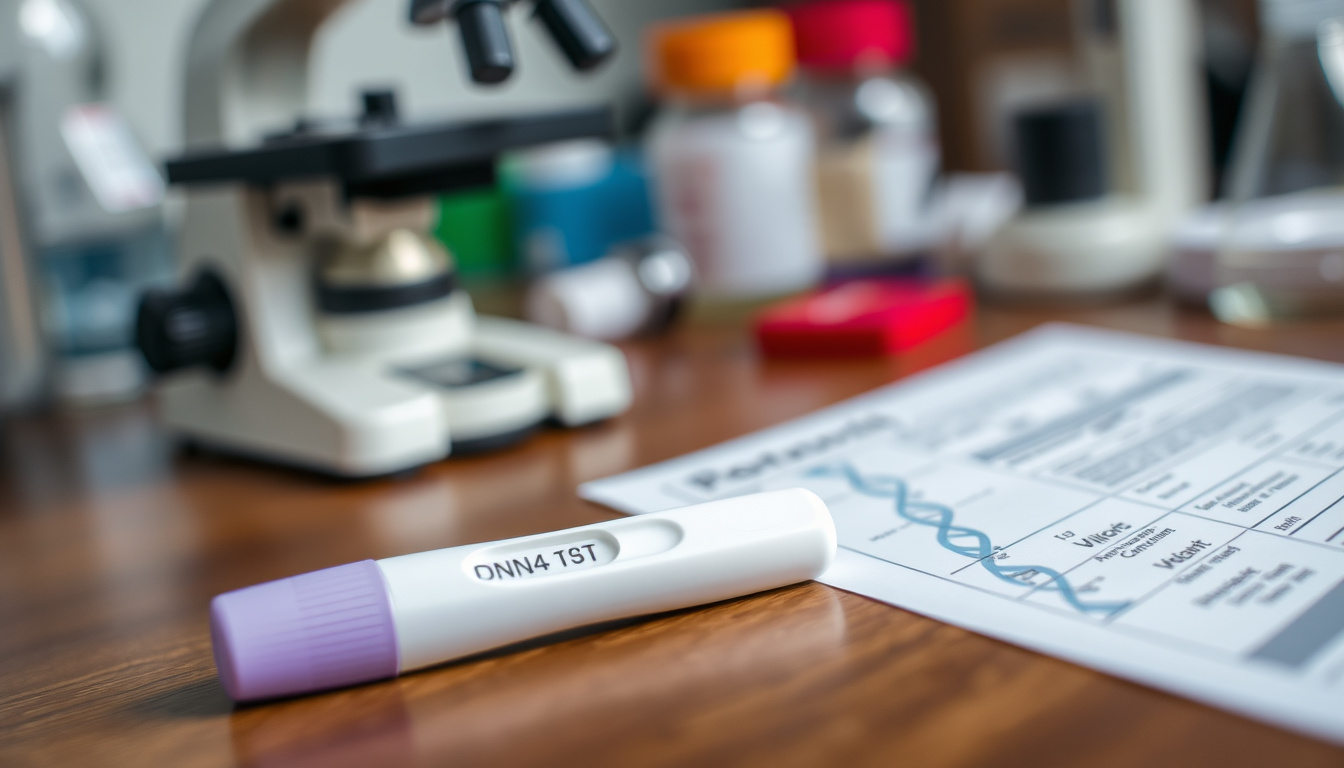
You’ve probably seen ads for a DNA test that promises to reveal your ancestry, your health risks, or even who your father is — all from a simple cheek swab. But behind the slick marketing, there’s a tangle of accuracy claims, price tags, and privacy trade-offs that can leave anyone confused, so this guide cuts through the noise using real numbers and expert sources to help you decide whether a DNA test is worth your time and money.
Paternity test accuracy: >99.9% with 45 markers ·
Home test cost range: €119 – €299 ·
Processing time: 2–3 days (paternity) to 6 weeks (ancestry) ·
Number of markers analyzed: 16–45 (paternity) ; millions (genotyping) ·
DNA test types: Ancestry, health, paternity, nutrition
Quick snapshot
- Paternity tests with 45 markers achieve >99.9% accuracy in accredited labs (AlphaBiolabs Ireland (ISO-accredited provider))
- Home DNA test kits can provide ancestry information from a cheek swab (EasyDNA Ireland (ISO 17025 lab))
- Accuracy of direct-to-consumer health tests for specific conditions like MTHFR (CDC Genomics (public health authority))
- Whether all DNA tests are worth the cost for individuals without specific needs (FDA (regulator of DTC tests))
- Results available in 2–3 business days for paternity (AlphaBiolabs Ireland)
- Ancestry results typically take 4–6 weeks (Wikipedia (general reference))
- Growth of FDA-regulated direct-to-consumer health tests (FDA)
- More emphasis on privacy and data consent in genetic testing (National Human Genome Research Institute)
Four key facts summarise the landscape of at-home DNA testing:
| Factor | Details |
|---|---|
| Most accurate method | SNP genotyping (ancestry) / STR analysis (paternity) |
| Average cost | $100 – $200 (€119 – €299 in Ireland) |
| Processing time | 2–6 weeks |
| Legal validity | Only with chain of custody and accredited lab |
What is the most accurate DNA test available?
Accuracy depends on the number of genetic markers analysed and whether the laboratory holds accreditation like ISO 17025. For paternity tests, the magic number is 45 markers — when used by an accredited lab, the probability of paternity exceeds 99.9%. Providers like AlphaBiolabs Ireland (ISO-accredited lab) claim this level, while others like EasyDNA Ireland (ISO 17025 partner lab) use 21 markers and still report >99.99% for inclusion. For ancestry tests, accuracy isn’t a single number — it’s about reference populations and genotyping chip quality.
Can a 99.9 DNA test be wrong for paternity?
Yes, but the error margin is vanishingly small. A 99.9% probability leaves a 0.1% chance of a false inclusion — roughly 1 in 1,000. When labs test 45 markers, the probability jumps to >99.99% (1 in 10,000 chance of error). However, home tests lack chain of custody, so the sample could be mixed up or tampered with. For legal purposes, an accredited lab must witness the sample collection — otherwise the result is for peace of mind only.
A 99.9% result from a home kit is scientifically solid but legally worthless in an Irish court. The Treoir (Irish national federation for unmarried parents) notes that legal paternity testing with chain of custody costs €449–€600, compared to €119–€179 for a home kit.
The implication: If you need the result for a court order, pay for the legal test. If you just want to know, a home kit with ≥21 markers is reliable enough.
Does sequencing DNA test for MTHFR?
Whole genome sequencing can detect MTHFR variants, but the vast majority of direct-to-consumer health tests use genotyping — they scan specific SNPs rather than read every base. The CDC Genomics (U.S. public health agency) explains that MTHFR variants are incredibly common: about 30–40% of the population carries at least one copy, and most people have no symptoms. Testing for MTHFR without clinical indication is generally not recommended by bodies like the American College of Obstetricians and Gynecologists (professional medical society).
What are the signs that you have MTHFR?
There are no unique signs. Elevated homocysteine levels can indicate a problem, but they’re measured in blood, not by a DNA swab. Many online articles link MTHFR to fatigue, brain fog, and depression — but those symptoms have dozens of other causes. The Mayo Clinic (leading medical centre) states that testing for MTHFR is not routinely recommended because the link between common variants and disease is weak.
Why don’t doctors believe in MTHFR?
It’s not that doctors deny the gene exists — they’re sceptical of the overblown claims. Some wellness companies sell expensive supplements (“methylfolate”) based on MTHFR results, despite limited evidence. The Harvard Health (trusted medical publisher) points out that most MTHFR variants are harmless, and that routine testing leads to unnecessary worry and spending.
A DNA test can tell you your MTHFR status with high accuracy, but knowing it rarely changes medical advice. The CDC (public health authority) says clinicians should focus on homocysteine levels, not the gene.
The pattern: MTHFR is a case study in how DNA tests can create false certainty. The gene is real; the marketed consequences often are not.
How do I check my DNA for free?
Strictly speaking, there is no free DNA test — someone always pays. Some companies offer “free” kits but charge for shipping, analysis, or a subscription. For example, many ancestry services require you to upload raw data (from a paid test) to access free matching databases. The National Human Genome Research Institute (U.S. federal research body) warns that free tests often monetise your genetic data, raising privacy concerns.
Can I test my DNA at home?
Yes. At-home DNA test kits are widely available — you order online, swab your cheek, and mail the sample to a lab. The whole process takes 5 minutes of your time. Results arrive by email in days or weeks. Providers like AlphaBiolabs Ireland (accredited lab) offer paternity results in 2–3 business days from lab receipt.
Here’s how the typical at-home process works:
- Order a kit online from a reputable provider (check for ISO accreditation).
- Register the kit using the unique barcode — this links your sample to your account.
- Collect a cheek swab following the instructions exactly (no eating, drinking, or smoking beforehand).
- Place the swab in the provided tube and mail it back in the prepaid envelope.
- Wait for results — typically 2–5 days for paternity, 4–6 weeks for ancestry.
- Access results via a secure online portal. For legal tests, an official report is sent.
How much does it cost to check your DNA?
In Ireland, home paternity tests range from €119 (AlphaBiolabs) to €179 (homeDNAdirect). EasyDNA Ireland (ISO 17025 lab) charges €169, and OQPS (Irish provider) lists its peace-of-mind test at €175. For legal paternity testing, Treoir (Irish information body) quotes €449–€600. Ancestry kits from major brands typically cost $79–$200, plus shipping.
The trade-off: A free “upload your data” option saves money upfront but hands your genetic information to a third party. The FDA (U.S. regulator) advises consumers to read the privacy policy before buying any kit.
Can DNA tests confirm a father?
Yes, with very high accuracy. A paternity test compares the child’s DNA with the alleged father’s. If the man shares enough markers, the lab calculates a probability of paternity. With accredited labs using 21–45 markers, inclusion probabilities exceed 99.9% — and reach 99.99% when the mother’s sample is included. International Biosciences Ireland (genetic testing provider) states that without the mother, inclusion is >99.9%; with her, it exceeds 99.99%. Exclusion is always 100% — if the markers don’t match, the man is not the father.
Can a paternity test be done with only father and child samples?
Absolutely. The mother does not need to participate. However, including her sample increases the statistical power. International Biosciences Ireland (testing lab) offers the mother’s sample free on its home paternity test. Without her, the lab still gets a definitive result — just with a slightly lower inclusion number (99.9% vs 99.99%). For legal tests, a mother’s sample is often required to fill the chain, but not always.
A father‑only test is scientifically valid. But if you plan to use the result in an Irish family law case, you need a legal test with witnessed collection — that means extra cost and paperwork.
What this means: For peace of mind, a home test with father and child is enough. For court-admissible evidence, pay for the legal chain-of-custody process.
Are DNA tests worth it?
It depends on what you want to know. For ancestry enthusiasts, a DNA test can uncover ethnic origins and connect you with distant relatives — that’s a clear yes. For paternity, a home test gives a definitive answer for a few hundred euros. For health, the picture is murkier. Harvard Health (respected medical publisher) notes that many direct-to-consumer health tests have limited clinical utility — they might tell you you’re at increased risk for a disease that never materialises, or miss variants that matter.
What factors determine DNA test value?
- Goal: Are you confirming paternity, exploring heritage, or screening for health risks? Each has different cost and accuracy profiles.
- Privacy: Once your DNA is analysed, companies may share or sell your data. The National Human Genome Research Institute (ethics-focused research body) recommends checking whether you can delete your data.
- Clinical actionability: For most healthy people, a health DNA test won’t change what a doctor recommends. The CDC (public health authority) says only a small fraction of genetic findings lead to a change in medical management.
The catch: You may learn something fascinating about your genes — but you may also open a can of worry that no one can close. The FDA (medical device regulator) has flagged false positives and misleading risk reports from some DTC tests.
Upsides
- High accuracy for paternity when using accredited labs
- Affordable peace of mind (€119–€179)
- Ancestry tests reveal rich historical context
- Simple at-home process, no blood draw
Downsides
- Health tests often lack clinical utility
- Privacy risks — data may be shared or sold
- Home paternity results not admissible in court
- Unclear or exaggerated marketing claims
The implication: DNA tests are valuable for specific goals but require caution regarding privacy and clinical relevance.
poplix.uk, homednadirect.ie, thehealthlab.ie, homednadirect.ie, easydna.ie, newstakt.de
For those considering a DNA test, understanding regional variations in cost and legal validity is crucial, as discussed in our dedicated guide on DNA testing in Ireland.
Frequently asked questions
Can DNA tests reveal your ethnic background accurately?
Yes, but accuracy depends on the size of the reference populations used by the testing company. The Wikipedia article on DNA testing (general encyclopaedia) explains that your results can shift as companies update their databases.
How long does it take to get DNA test results?
Paternity tests: 2–5 days from lab receipt. Ancestry tests: 4–8 weeks from mailing the kit. EasyDNA Ireland (accredited lab) quotes 3–5 days for paternity.
Is a cheek swab DNA test reliable?
Yes, a cheek swab collects enough cells for DNA analysis. It’s as reliable as a blood sample when processed by an accredited lab. AlphaBiolabs Ireland (ISO-accredited lab) uses buccal swabs for all its paternity tests.
Can DNA tests be used for legal purposes like child support?
Only if the test follows a strict chain of custody (witnessed sample collection, secure transport, lab accreditation). Home tests are not admissible. The Treoir (Irish family information service) outlines the legal requirements for Irish courts.
Do DNA tests require a blood sample?
No. Most at-home kits use a cheek swab (buccal swab). Some health tests may ask for a saliva sample. Blood is rarely required for consumer DNA tests.
What is the difference between genotyping and whole genome sequencing?
Genotyping reads specific markers (SNPs) — it’s cheaper and faster, used by most DTC companies like AncestryDNA and 23andMe. Whole genome sequencing reads all 3 billion base pairs — it’s more comprehensive but costs $1,000+. The National Human Genome Research Institute (research authority) explains both methods.
Can DNA tests detect diseases?
Some health DNA tests screen for carrier status for diseases like cystic fibrosis, or for variants like BRCA (breast cancer). But they do not diagnose disease — they indicate risk. The FDA (medical devices regulator) has authorised only a few DTC health tests for direct marketing.
Are DNA test results private?
It depends on the company’s privacy policy. Many share de-identified data with research partners. Some allow you to delete your data. Always read the fine print. The National Human Genome Research Institute (ethics-focused body) advises consumers to check if and how their data can be withdrawn.
“Direct-to-consumer genetic tests provide information for informational purposes only and are not intended to diagnose disease or determine medical treatment.”
— FDA spokesperson, FDA (U.S. regulator of medical devices)
“The CDC does not recommend routine MTHFR genetic testing for the general population. Most people with MTHFR variants have no health problems.”
— CDC Genetics Team, CDC Genomics (public health authority)
DNA tests are powerful tools — but only when you use them for the right question. For paternity confirmation, a home kit with an accredited lab gives you a near-certain answer for under €200. For ancestry, it’s a fascinating window into your past. For health, tread carefully: many results are not clinically actionable and may lead to unnecessary worry. For anyone in Ireland considering a DNA test, the choice is clear: match your test to your need, verify the lab’s accreditation, and read the privacy policy — or risk paying for information you can’t act on.
Related stories




Richard Vane is Senior Reporter at MorningTimes.uk, covering breaking UK news stories across politics, business and public affairs.