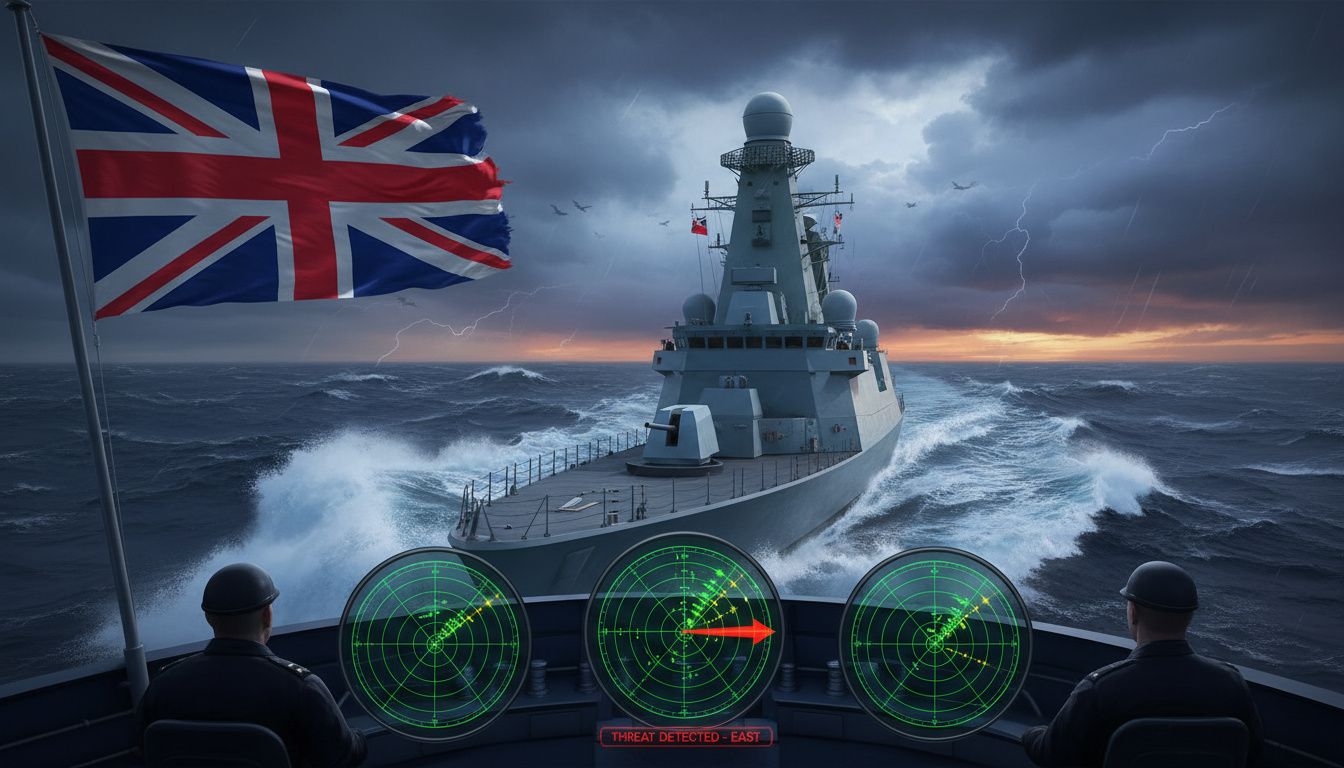
The United Kingdom is actively preparing for the possibility of direct military threat to the homeland while official channels maintain that no wider declared war is imminent. Prime Minister Keir Starmer has denied intentions to expand Middle East engagements, yet the National Security Strategy 2025 explicitly calls for readiness against potential wartime scenarios involving Russia and other adversaries.
Senior military leaders acknowledge a “remote” but non-zero probability of Russian attack, while hybrid warfare tactics—including cyber intrusions, sabotage of critical infrastructure, and disinformation campaigns—already target British interests. This assessment examines verified government positions, expert analysis, and the factual basis for current threat perceptions.
Is the UK preparing for war?
Middle East Position
Prime Minister Starmer ruled out wider regional war involvement in March 2026, despite tensions with Iran.
Russia Context
UK forces support Ukraine and conduct NATO deterrence operations on Russia’s borders.
Strategic Framework
The 2025 National Security Strategy mandates preparation for homeland threats.
Threat Status
Active preparation continues without imminent declaration of war against state actors.
- Active Preparation Mandate: The National Security Strategy 2025 states that “for the first time in many years, we have to actively prepare for the possibility of the UK homeland coming under direct threat, potentially in a wartime scenario.”
- Defense Leadership Assessment: Air Chief Marshal Sir Richard Knighton notes a “remote” probability of significant Russian attack while emphasizing “that does not mean the chances are zero.”
- NATO Timeline Warnings: NATO Secretary General Mark Rutte has warned allies to prepare for potential Russian attack within five years.
- End of Peace Dividend: Strategic assessments confirm the post-Cold War “peace dividend” has concluded, replaced by recognition of peer conflict risk.
- Shadow Fleet Operations: British forces received approval to seize Russian shadow fleet tankers involved in sanction-busting operations.
- Forward Deployment: British troops are exercising in Finland on Russia’s border while NATO boosts eastern flank deployments.
| Development | Source | Date |
|---|---|---|
| UK rules out wider Middle East war | The Guardian | March 2026 |
| National Security Strategy warns of wartime preparation | Gov.uk | August 2025 |
| Chief of Defence Staff assesses remote attack chance | GlobalSitu | December 2025 |
| NATO five-year attack warning issued | Britainsworld | February 2026 |
| UK described as “already at war” via sub-threshold conflict | Britainsworld | February 2026 |
| War sustainability analysis published | BBC | December 2025 |
How likely is war with Russia and the UK?
Direct armed conflict between the United Kingdom and Russia remains unlikely due to nuclear deterrence and mutual assured destruction capabilities. However, the spectrum of confrontation below open warfare presents persistent risks requiring sustained military readiness.
Strategic Deterrence and Risk Assessment
Air Chief Marshal Sir Richard Knighton cautioned in December 2025 that while there is “only a remote chance of a significant direct attack or invasion by Russia on the UK, that does not mean the chances are zero.” This assessment reflects the stabilizing effect of nuclear arsenals alongside the destabilizing potential of miscalculation or escalation.
Dr Ruth Deyermond of King’s College London argues the UK has “no choice but to prepare for war” given Russia’s central positioning of existential conflict with Western nations. She contends that through sustained support for Ukraine and direct targeting of British infrastructure, “the UK is already at war” in a sub-threshold capacity.
Hybrid Warfare Tactics
Rather than conventional invasion, the UK faces coordinated campaigns operating below the threshold of Article 5 mutual defense triggers. These tactics aim to disrupt critical functions without provoking unified military response.
The National Cyber Security Centre head warned in May 2025 of a “direct connection between Russian cyber attacks and physical threats to our security.” Russian activity specifically targets energy networks, communications infrastructure, and defense capabilities through sabotage and espionage.
Russian incursions into NATO airspace have doubled over the past year. Surveillance ships operate near British undersea cables, with documented incidents involving lasers aimed at British pilots.
NATO Coordination and Forward Posture
NATO has boosted eastern flank deployments and drawn up new defense plans to defend every inch of allied territory. The alliance’s enhanced readiness serves as both deterrent and preparation for scenarios where sub-threshold conflict escalates beyond control.
The Ukrainian navy will join a Joint Expeditionary Force exercise for the first time in autumn 2026, demonstrating UK-led coalition coordination and interoperability in high-threat environments.
Is the UK going to war with Iran?
Iran poses a secondary but escalating threat distinct from the Russian military challenge. While the UK maintains diplomatic channels, Iranian hostile activity on British soil is increasing as part of the regime’s efforts to silence critics abroad and directly threaten the UK.
Prime Minister Starmer stated the West faces a “war on two fronts” – Ukraine and Iran – requiring coordinated allied response. However, this characterization refers to concurrent strategic pressures rather than imminent declaration of war against Tehran.
The UK has authorized military actions affecting Iranian interests primarily through sanction enforcement. Starmer approved British forces to begin seizing Russian shadow fleet tankers—vessels often involved in Iranian oil smuggling operations—yet official policy explicitly rejects wider Middle Eastern military expansion.
What is the timeline of UK war preparedness?
- : The National Security Strategy 2025 is published, formally ending the post-Cold War “peace dividend” and mandating active preparation for homeland threats. Gov.uk
- : Chief of Defence Staff Air Chief Marshal Sir Richard Knighton assesses the probability of significant Russian attack as remote but non-zero, while BBC publishes analysis on war sustainability. GlobalSitu; BBC
- : Strategic experts identify China, Russia, Iran, and North Korea as primary adversarial threats, with academic analysis describing the UK as “already at war” through sub-threshold conflict. Britainsworld
- : Prime Minister Starmer explicitly states the UK will not be drawn into wider war in the Middle East, distinguishing preparation from declaration. The Guardian
- : Ukrainian navy scheduled to participate in Joint Expeditionary Force exercises for the first time, signaling long-term coalition readiness. Morningstar
What is certain and what remains unclear?
| Established Facts | Uncertain Elements |
|---|---|
| The UK is actively preparing for potential wartime scenarios per official strategy | Specific triggers that would activate Article 5 mutual defense guarantees |
| Russia is identified as the primary and most immediate threat to UK security | Exact scope and location of Iranian intelligence operations on British soil |
| Hybrid warfare including cyber attacks and sabotage is ongoing | Whether shadow fleet seizures could escalate to open naval conflict |
| Nuclear deterrence makes direct invasion unlikely but not impossible | Precise timeline within the five-year NATO warning window |
| No wider Middle East war will be declared per March 2026 government position | Full extent of critical infrastructure vulnerabilities to Russian probing |
Why is the UK reassessing its security posture?
The United Kingdom’s strategic recalculation reflects the definitive end of the post-Cold War “peace dividend” that enabled defense budget reductions and expeditionary counter-terrorism focus. Contemporary assessments identify a return to peer-state competition requiring conventional deterrence capabilities abandoned during decades of asymmetric warfare.
As a sovereign state comprising multiple nations, the UK’s defense posture involves complex constitutional responsibilities. The status of Is Scotland a Country – UK Status and Sovereignty Explained illustrates the internal constitutional framework within which national security decisions are made, with defense remaining a reserved matter for the unified state rather than devolved administrations.
This shift recognizes that sub-threshold attacks—ranging from cyber intrusions to sabotage of undersea cables—constitute warfare requiring national mobilization even without declared hostilities. The Strategic Defence Review and National Security Strategy collectively acknowledge that deterrence requires visible preparation rather than diplomatic assurances alone.
What are authorities saying about UK defense threats?
“The West faces a war on two fronts – Ukraine and Iran – requiring coordinated allied response.”
— Prime Minister Keir Starmer, Morningstar
“The UK is already at war by backing Ukraine and experiencing sustained sub-threshold attacks on industry and critical national infrastructure.”
— Dr Ruth Deyermond, King’s College London, Britainsworld
“Only a remote chance of a significant direct attack or invasion by Russia on the UK, that does not mean the chances are zero.”
— Air Chief Marshal Sir Richard Knighton, Chief of Defence Staff, GlobalSitu
What is the bottom line on UK war prospects?
The United Kingdom is not entering declared war against Russia or Iran, but has transitioned to active preparation for potential direct conflict after decades of reduced readiness. Nuclear deterrence and NATO collective defense maintain the threshold against conventional invasion, yet sub-threshold hybrid warfare already targets British infrastructure daily. As policymakers navigate between What Is a Fascist – Definition, Ideology, Leaders historical contexts and modern authoritarian challenges, the 2026 outlook remains defined by persistent confrontation rather than open warfare.
Frequently asked questions
What will happen if the UK goes to war with Russia?
Official assessments suggest direct conflict would likely involve hybrid tactics initially, including cyber attacks on infrastructure and sabotage, rather than immediate conventional invasion. The UK’s nuclear deterrent and NATO’s Article 5 collective defense framework remain primary safeguards against existential threats.
Will the UK go to war in 2026?
No declared war is anticipated for 2026. The government maintains that while preparation for potential conflict continues, nuclear deterrence makes direct Russian attack unlikely, and Prime Minister Starmer has explicitly ruled out entering a wider Middle East war.
Is the UK going to war in 3 years?
NATO Secretary General Mark Rutte has warned allies to prepare for potential Russian attack within five years, though UK defense officials characterize the probability of direct invasion as “remote.” Specific timelines remain speculative and subject to geopolitical developments.
What are the current UK war warnings?
The National Security Strategy 2025 warns that the UK must “actively prepare for the possibility of the UK homeland coming under direct threat, potentially in a wartime scenario.” The current threat level reflects hybrid warfare risks rather than imminent invasion.
How is the UK already at war despite no declaration?
According to Dr Ruth Deyermond of King’s College London, the UK is experiencing “sustained sub-threshold attacks” through support for Ukraine and direct targeting of critical infrastructure, constituting a state of conflict below traditional war declarations.
Related stories





James Holloway covers culture, lifestyle and society for MorningTimes.uk.